Close Menu
Illustrated Curiosity | Economics, History, Science, Space, Technology, Health, Physics, Earth
    Facebook X (Twitter) Instagram YouTube
    Illustrated Curiosity | Economics, History, Science, Space, Technology, Health, Physics, Earth
    • Earth
    • Economics
    • Environment
      • Environmental Tech
      • Pollution
      • Wildlife
    • Health
      • Health Tech
      • Medicine
      • Nutrition
      • Exercise
    • History
      • Prehistory
      • Ancient History
      • Postclassical Era
      • Modern History
    • Humans
      • Human Brain
      • Psychology
    • Life
      • Animals & Plants
      • Genetics
      • Paleontology
      • Evolution
      • Genetic Engineering
    • Physics
    • Space
      • Astrobiology
      • Astronomy
      • Extrasolar Planets
      • Space Tech
      • Spaceflight
    • Technology
      • Artificial Intelligence
      • Energy
      • Engineering
      • Materials
      • Robotics
      • Vehicles
    Illustrated Curiosity | Economics, History, Science, Space, Technology, Health, Physics, Earth
    Home » NASA Will Launch a Lunar VIPER to Hunt Moon Water in 2022
    Spaceflight

    NASA Will Launch a Lunar VIPER to Hunt Moon Water in 2022

    November 12, 20193 Mins Read
    Credits: NASA Ames/Daniel Rutter
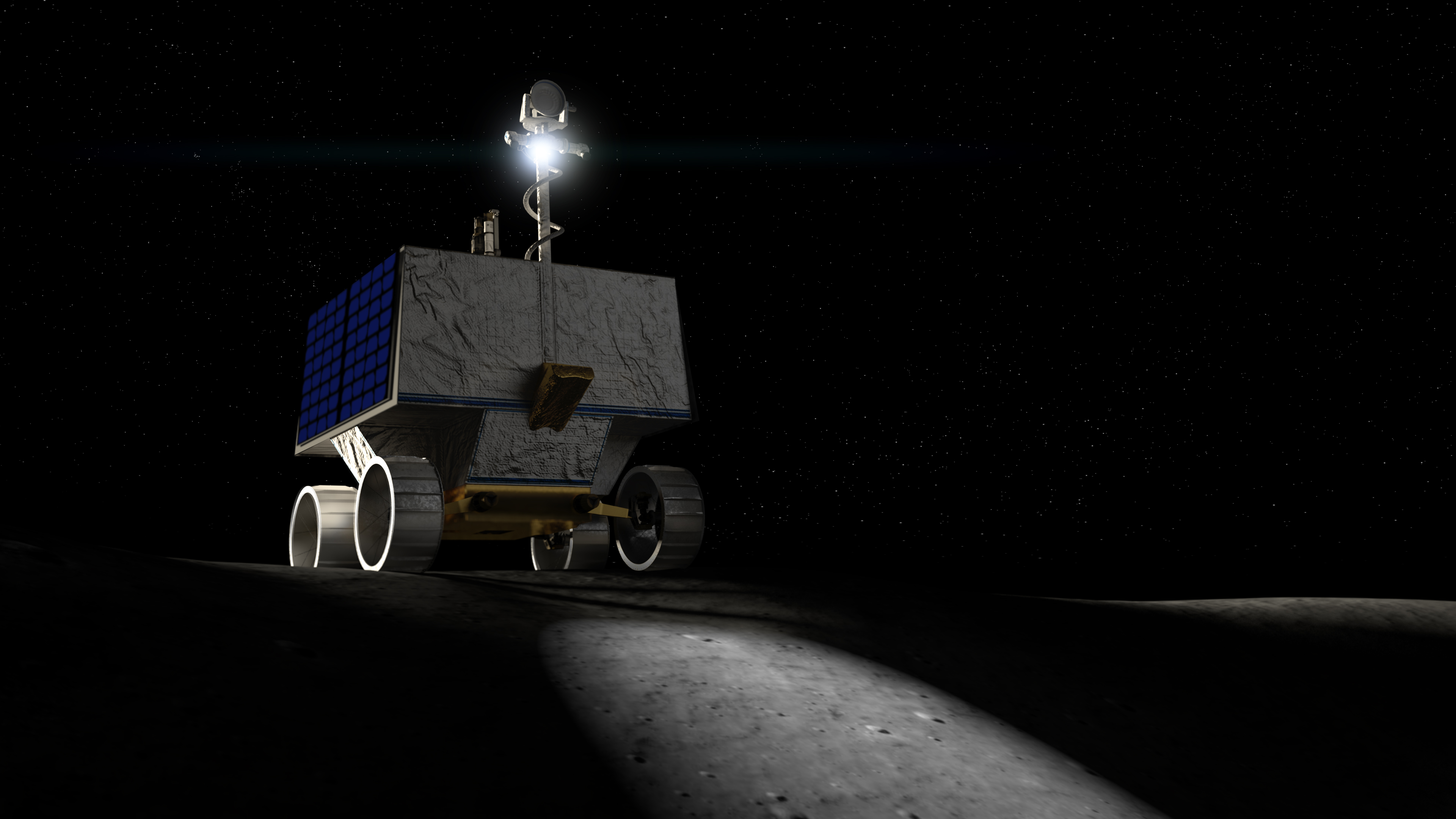
    NASA’s Volatiles Investigating Polar Exploration Rover, or VIPER, is a mobile robot that will roam around the Moon’s south pole looking for water ice. 
    Share
    Facebook Twitter LinkedIn Pinterest Email
    Credits: NASA Ames/Daniel Rutter
    NASA’s Volatiles Investigating Polar Exploration Rover, or VIPER, is a mobile robot that will roam around the Moon’s south pole looking for water ice. Image: NASA

    NASA Administrator Jim Bridenstine announced Oct. 25 that the agency would send a robotic rover to the moon in 2022 to look for water ice.

    The announced robotic mission named the Volatiles Investigating Polar Exploration Rover (VIPER) will head to the lunar south pole to hunt for water ice and characterize the lunar soil.

    The four-wheeled rover will be about the size of a golf cart and will be built at the Johnson Space Flight Center. The VIPER project is projected to cost an estimated $250 million dollars but is part of a much larger program that entails the return on the moon for man.

    The Resource Prospector mission concept was scrapped in 2018, that too was a robotic rover mission that would have performed a survey expedition on a polar region of the Moon. The rover was to attempt to detect and map the location of volatiles such as hydrogen, oxygen and lunar water which could foster more affordable and sustainable human exploration to the Moon, Mars, and other Solar System bodies.[

    It was scrapped but its instruments are being repurposed for other missions. VIPER scheduled for a late 2022 landing, which would put it on the lunar surface before NASA’s ambitious “boots back on the Moon” goal for the Artemis program, currently set for late 2024. Data collected by the rover will help to construct global water resource maps of the lunar south pole.

    “It’s incredibly exciting to have a rover going to the new and unique environment of the South Pole to discover where exactly we can harvest that water,”

    “VIPER will tell us which locations have the highest concentrations and how deep below the surface to go to get access to water.”

    – Anthony Colaprete, VIPER’s project scientist.

    VIPER will spend 100 days on the Moon, charting out a map of accessible water sources. It will drill into the Moon’s surface to analyze soil samples using its TRIDENT instrument, at various locations around the South Pole and help determine just how much water future astronauts will have at their disposal.

    TRIDENT stands for The Regolith and Ice Drill for Exploring New Terrain. It is a meter-long drill that will bring up samples for analysis by the rover’s two other instruments, a pair of spectrometers that will evaluate the contents of the soil.

    Operating at the poles means there’s no sunlight to harvest with solar panels, so the rover will carry all the power it needs to last about a hundred days there.


    Reference:
    NASA Pressrelease

    The Moon Water on the Moon
    Share. Facebook Twitter Pinterest LinkedIn Tumblr Email Copy Link

    Related Posts

    Europa Clipper: NASA’s Mission to Unlock the Secrets of Jupiter’s Icy Moon

    October 20, 2024

    Spinlaunch Hurls Satellites into Orbit With a Giant Centrifuge

    December 6, 2021

    There Is Now Rigorous Evidence for Water on the Moon

    November 2, 2020

    SpaceX Capsule and NASA Crew Make Historic Splashdown

    August 3, 2020

    NASA and SpaceX are Making History Launching Astronauts to Space! | NASA Live

    May 27, 2020

    Red Space Salad Given Green Light

    May 26, 2020
    Recent Posts
    • The Day the Alliance Died
    • Evaluating Heart Disease: How Cumulative Diet Choices Compound Your Risk
    • What Would Happen If China Attacked Taiwan?
    • Geopoliticisation as a Structural Tailwind for Commodity Prices
    • America’s Economic Remodel: Who’s Really Paying the Bill?
    • Why Inflation May Be Preparing for a Second Act
    • How the End of Bretton Woods Reshaped Our Economies — and Our Politics
    • Can the U.S. Really Handle 250% Debt-to-GDP? Why Jackson Hole’s Daring Paper Is Wrong
    • Japan’s Fiscal Trap: What Happens If Austerity Is No Longer an Option?
    • The Rise of Range Extended Electric Vehicles (REEVs): A New Era of Hybrid Mobility
    © 2025 Illustrated Curiosity

    Type above and press Enter to search. Press Esc to cancel.