Close Menu
Illustrated Curiosity | Economics, History, Science, Space, Technology, Health, Physics, Earth
    Facebook X (Twitter) Instagram YouTube
    Illustrated Curiosity | Economics, History, Science, Space, Technology, Health, Physics, Earth
    • Earth
    • Economics
    • Environment
      • Environmental Tech
      • Pollution
      • Wildlife
    • Health
      • Health Tech
      • Medicine
      • Nutrition
      • Exercise
    • History
      • Prehistory
      • Ancient History
      • Postclassical Era
      • Modern History
    • Humans
      • Human Brain
      • Psychology
    • Life
      • Animals & Plants
      • Genetics
      • Paleontology
      • Evolution
      • Genetic Engineering
    • Physics
    • Space
      • Astrobiology
      • Astronomy
      • Extrasolar Planets
      • Space Tech
      • Spaceflight
    • Technology
      • Artificial Intelligence
      • Energy
      • Engineering
      • Materials
      • Robotics
      • Vehicles
    Illustrated Curiosity | Economics, History, Science, Space, Technology, Health, Physics, Earth
    Home » World’s Blackest Material will Supercharge Telescopes
    Materials

    World’s Blackest Material will Supercharge Telescopes

    March 15, 20182 Mins Read
    Illustration: Illustrated Curiosity
    Share
    Facebook Twitter LinkedIn Pinterest Email

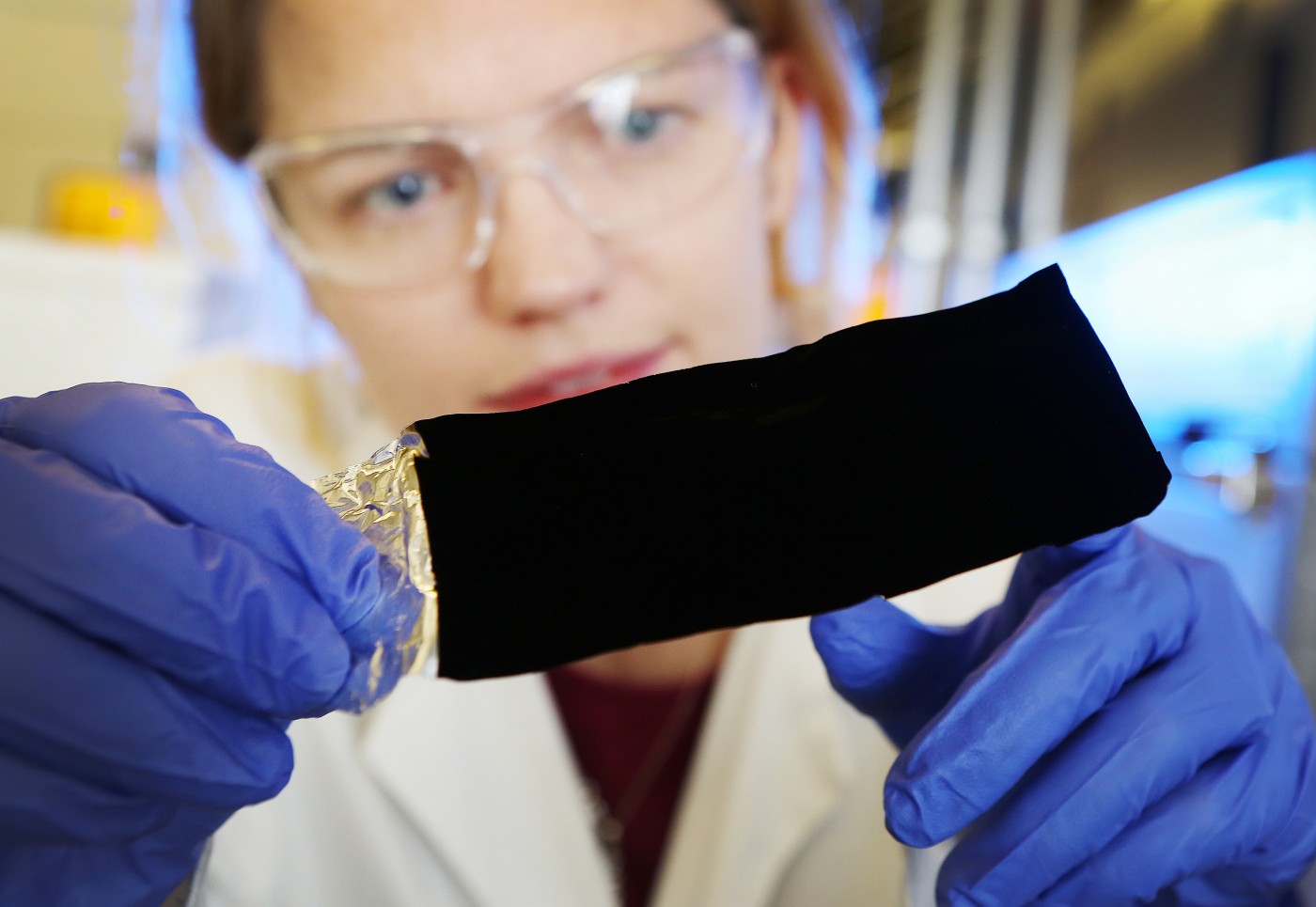
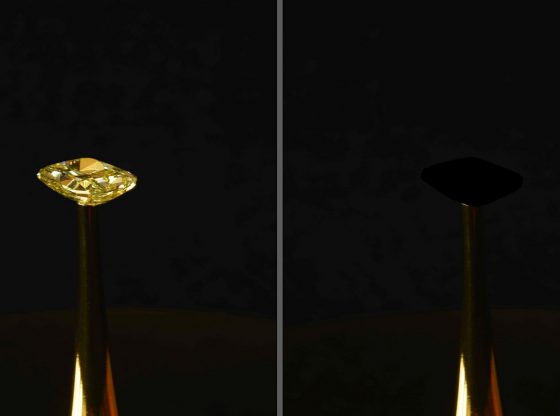
    Vantablack is the world’s blackest material, and now researchers have made it even darker. The new material will be used to make the inside of space telescopes pitch black so that the telescope cameras can take super-sharp images of distant and weak stars.

    In 2014, researchers from Surrey NanoSystems developed the material Vantablack that absorbs 99.96 percent of all visible light that hits it. The new material was thus the world’s ‘blackest black’.

    Now, the researchers are back with an even blacker enhanced edition of the material, so dark that even their own instruments cannot measure how black it is.

    The light is caught in a forest of nanotubes. Vantablack consists of a dense forest of carbon nanotubes attached to aluminum foil.

    Each tube is 3,500 times thinner than a human hair and is so tightly packed that one billion nanotubes occupy every square centimeter.

    When the material is hit by light, only a fraction of the light is reflected. Most of the light disappears between the tubes, caught and reflected, thrown around until converted into heat.


    The material is good news for astronomers struggling with light pollution when looking at distant stars. Unwanted light often hits the telescope and makes the measurements less accurate.

    Therefore, the interior of optical telescopes in space often has a dark coating that absorbs the false light before it reaches the camera.

    Since ‘vantablack’ is 17 times less reflective than the coating in the Hubble telescope, the future telescope will be able to measure distant stars much more accurately using the new and improved blacker than black.

    Ground-based Telescopes Space Telescopes
    Share. Facebook Twitter Pinterest LinkedIn Tumblr Email Copy Link

    Related Posts

    Microsoft Stored a Movie on Glass — And It Could Last Centuries

    February 19, 2026

    New Commercial-like White Lime Paint Lowers Temperature

    November 9, 2020

    New Concrete Developed using Graphene by Engineers at the University of Exeter

    May 22, 2018

    This Plastic Can Be Recycled An “Infinite” Number of Times

    May 8, 2018

    The U.S. ‘ Next Tank Could Be Protected by ‘Steel Foam’

    April 18, 2018

    Self-Healing Glass Discovered by Accident

    January 9, 2018
    Recent Posts
    • Oil Shocks, Policy Mistakes, and the Risk of a Second Inflation Wave (Part II)
    • Oil Shocks, Policy Mistakes, and the Risk of a Second Inflation Wave (Part I)
    • Microsoft Stored a Movie on Glass — And It Could Last Centuries
    • AI, Automatic Stabilizers & Inflation
    • Largest Battles in History: Cannae — Rome’s Darkest Day
    • The Day the Alliance Died
    • Evaluating Heart Disease: How Cumulative Diet Choices Compound Your Risk
    • What Would Happen If China Attacked Taiwan?
    • Geopoliticisation as a Structural Tailwind for Commodity Prices
    • America’s Economic Remodel: Who’s Really Paying the Bill?
    © 2025 Illustrated Curiosity

    Type above and press Enter to search. Press Esc to cancel.