Close Menu
Illustrated Curiosity
    Facebook X (Twitter) Instagram YouTube
    Illustrated Curiosity
    • Earth
    • Economics
    • Environment
      • Climate
      • Environmental Tech
      • Pollution
      • Wildlife
    • Health
      • Health Tech
      • Medicine
      • Nutrition
      • Exercise
    • History
      • Prehistory
      • Ancient History
      • Postclassical Era
      • Modern History
    • Humans
      • Human Brain
      • Psychology
    • Life
      • Animals & Plants
      • Genetics
      • Paleontology
      • Evolution
      • Genetic Engineering
    • Physics
    • Space
      • Astrobiology
      • Astronomy
      • Extrasolar Planets
      • Space Tech
      • Spaceflight
    • Technology
      • Artificial Intelligence
      • Energy
      • Engineering
      • Materials
      • Robotics
      • Vehicles
    Illustrated Curiosity
    Home » How to make cows environmental friendly
    Climate

    How to make cows environmental friendly

    October 29, 2016No Comments3 Mins Read
    Share
    Facebook Twitter LinkedIn Pinterest Email

    How to reduce the methane emissions of cows by 99 percent – let them munch on dried seaweed.
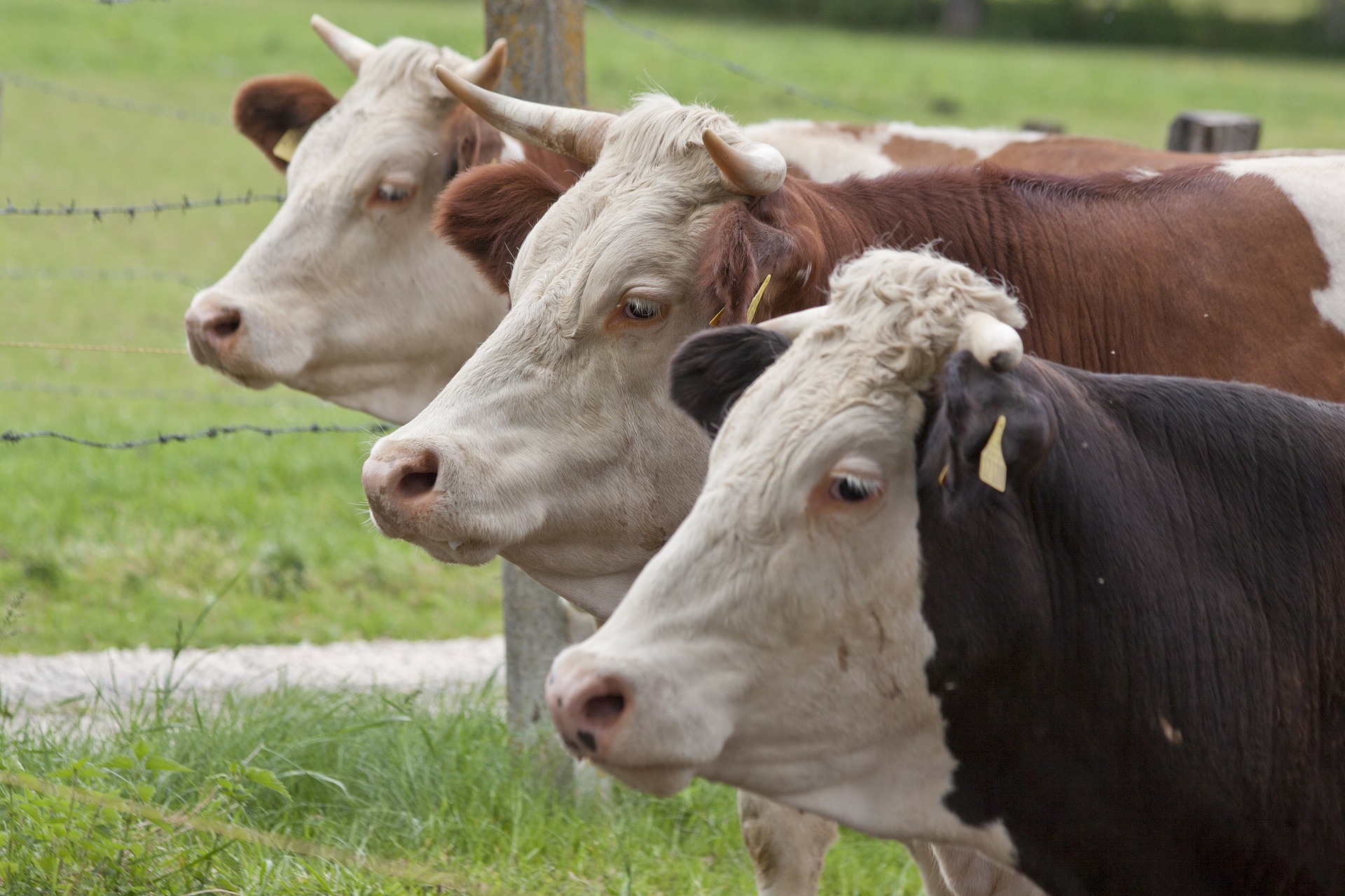
    CC0 Public Domain

    As the world’s consumption of meat and dairy products increases, emissions of the greenhouse gas methane also increase.

    Methane is formed in the stomach of cows and is released when they burp and fart. Although, most cow methane comes from burps (90%) rather than farts (10%).

    A potent greenhouse gas

    Methane is an important greenhouse gas, much more so than the infamous carbon dioxide. It has a so-called global warming potential (GWP) of 34 compared to CO2 over a 100-year period, and 72 over a 20-year period. GWP is expressed as a factor of carbon dioxide, standardized to 1.

    One cow produces just over half a cubic meter of methane a day and it adds up to quite a large amount considering there are 971 million cows in the world in 2016 according to USDA and this number is expected to increase.

    Since the turn of the 19th century, methane gas emissions have increased by 150%, according to NASA’s Goddard Institute.

    A report from 2006 ( Steinfeld, H. et al) from the Food and Agriculture Organization (FAO) states that the livestock sector is “responsible for 18% of greenhouse gas emissions” The report concludes, unless changes are made, the damage thought to be linked to livestock may more than double by 2050, as demand for meat increases.

    Another study from 2013 (Gerber, P.J., Steinfeld, H. et al) estimated that livestock accounted for 44 percent of human-induced methane and 14.5 percent of human-induced greenhouse gas emissions.

    Seaweed to the rescue?

    Now, a team of researchers in Australia has found that it is possible to reduce the proportion of methane produced by cows by up to 99 percent – by adding dried red algae to their diet.

    “If we can get this out on the market, agriculture can be one of the first sectors that can reduce emissions dramatically”, said researcher Rob Kinley to ABC.

    The researchers constructed an artificial rumen (the first chamber in the alimentary canal of ruminant animals) and experimented with varieties of grass, substrate and dried seaweed/algae. They then studied the fermentation process that ensued.

    When the gas is produced by bacteria, pressure occurs, so the scientists could notice how much methane that is produced based on the pressure. The red algae Asparagopsis taxiformis produced the best results.

    Asparagopsis taxiformis reduces methane production by more than 99% in the lab. Unlike other seaweeds where the effect diminishes at low doses, this species works at doses of less than 2%.

    The algae and seaweed experiments have not been limited to artificial stomachs, the concept has also been tested on live sheep. When scientists added a small amount of red algae – 2 percent of the daily energy requirement – the sheep produced between 50 to 70 percent less methane over a period of 72 days.

    References:

    Livestock Long shadow Environmental issues and options
    Gerber, P.J., Steinfeld, H. et al. Tackling Climate Change through Livestock A global assessment of emissions and mitigation opportunities
    Robert D. Kinley A C , Rocky de Nys et al. The red macroalgae Asparagopsis taxiformis is a potent natural antimethanogenic that reduces methane production during in vitro fermentation with rumen fluid

    Cattle Cows Factory farming Livestock Methane
    Share. Facebook Twitter Pinterest LinkedIn Tumblr Email Copy Link

    Related Posts

    COVID-19 Recovery Funds Dwarf Clean Energy Investment Needs

    October 26, 2020

    Mont Blanc Glacier in Danger of Collapse, Experts Warn

    September 26, 2019

    The Absorption of Carbon Dioxide by the Sea Is Increasing with Emissions

    March 19, 2019

    Antarctic Ice Is Melting Six Times Faster Than in 1979

    February 12, 2019

    U.N. Says 2018 Will Be Earth’s 4th-Warmest Year on Record, Predicts a 5- to 9-Degree Temperature Rise This Century

    December 12, 2018

    Temperatures to Rise 1.5 Degrees Celsius by 2030-2052 without Rapid Steps According to U.N. Report

    October 19, 2018
    Recent Posts
    • How the End of Bretton Woods Reshaped Our Economies — and Our Politics
    • Can the U.S. Really Handle 250% Debt-to-GDP? Why Jackson Hole’s Daring Paper Is Wrong
    • Japan’s Fiscal Trap: What Happens If Austerity Is No Longer an Option?
    • The Rise of Range Extended Electric Vehicles (REEVs): A New Era of Hybrid Mobility
    • The Great Capital Rotation: A Shift from U.S. Treasuries to Gold and Real Assets
    • The Hidden Risks of Short-Term Debt: A Balancing Act in U.S. Fiscal Policy
    • The Looming U.S. Debt Spiral: Understanding the Risks
    • The Looming Recession: Seven Economic Indicators Flashing Red for 2025
    • Europa Clipper: NASA’s Mission to Unlock the Secrets of Jupiter’s Icy Moon
    • Could Hedge Funds Cause Chaos in the U.S. Treasury Market? And What About Inflation?
    © 2025 Illustrated Curiosity

    Type above and press Enter to search. Press Esc to cancel.

    This website uses cookies to improve your experience. We'll assume you're ok with this, but you can opt-out if you wish.Accept Reject Read More
    Privacy & Cookies Policy

    Privacy Overview

    This website uses cookies to improve your experience while you navigate through the website. Out of these, the cookies that are categorized as necessary are stored on your browser as they are essential for the working of basic functionalities of the website. We also use third-party cookies that help us analyze and understand how you use this website. These cookies will be stored in your browser only with your consent. You also have the option to opt-out of these cookies. But opting out of some of these cookies may affect your browsing experience.
    Necessary
    Always Enabled
    Necessary cookies are absolutely essential for the website to function properly. This category only includes cookies that ensures basic functionalities and security features of the website. These cookies do not store any personal information.
    Non-necessary
    Any cookies that may not be particularly necessary for the website to function and is used specifically to collect user personal data via analytics, ads, other embedded contents are termed as non-necessary cookies. It is mandatory to procure user consent prior to running these cookies on your website.
    SAVE & ACCEPT