Close Menu
Illustrated Curiosity
    Facebook X (Twitter) Instagram YouTube
    Illustrated Curiosity
    • Earth
    • Economics
    • Environment
      • Climate
      • Environmental Tech
      • Pollution
      • Wildlife
    • Health
      • Health Tech
      • Medicine
      • Nutrition
      • Exercise
    • History
      • Prehistory
      • Ancient History
      • Postclassical Era
      • Modern History
    • Humans
      • Human Brain
      • Psychology
    • Life
      • Animals & Plants
      • Genetics
      • Paleontology
      • Evolution
      • Genetic Engineering
    • Physics
    • Space
      • Astrobiology
      • Astronomy
      • Extrasolar Planets
      • Space Tech
      • Spaceflight
    • Technology
      • Artificial Intelligence
      • Energy
      • Engineering
      • Materials
      • Robotics
      • Vehicles
    Illustrated Curiosity
    Home » Caterpillar found eating shopping bags, may help clean up pollution
    Pollution

    Caterpillar found eating shopping bags, may help clean up pollution

    May 4, 20172 Mins Read
    Share
    Facebook Twitter LinkedIn Pinterest Email

    Tiny holes discovered in plastic bags prompted researchers in Spain to begin investigating whether caterpillar larvae can be used to break down plastic.
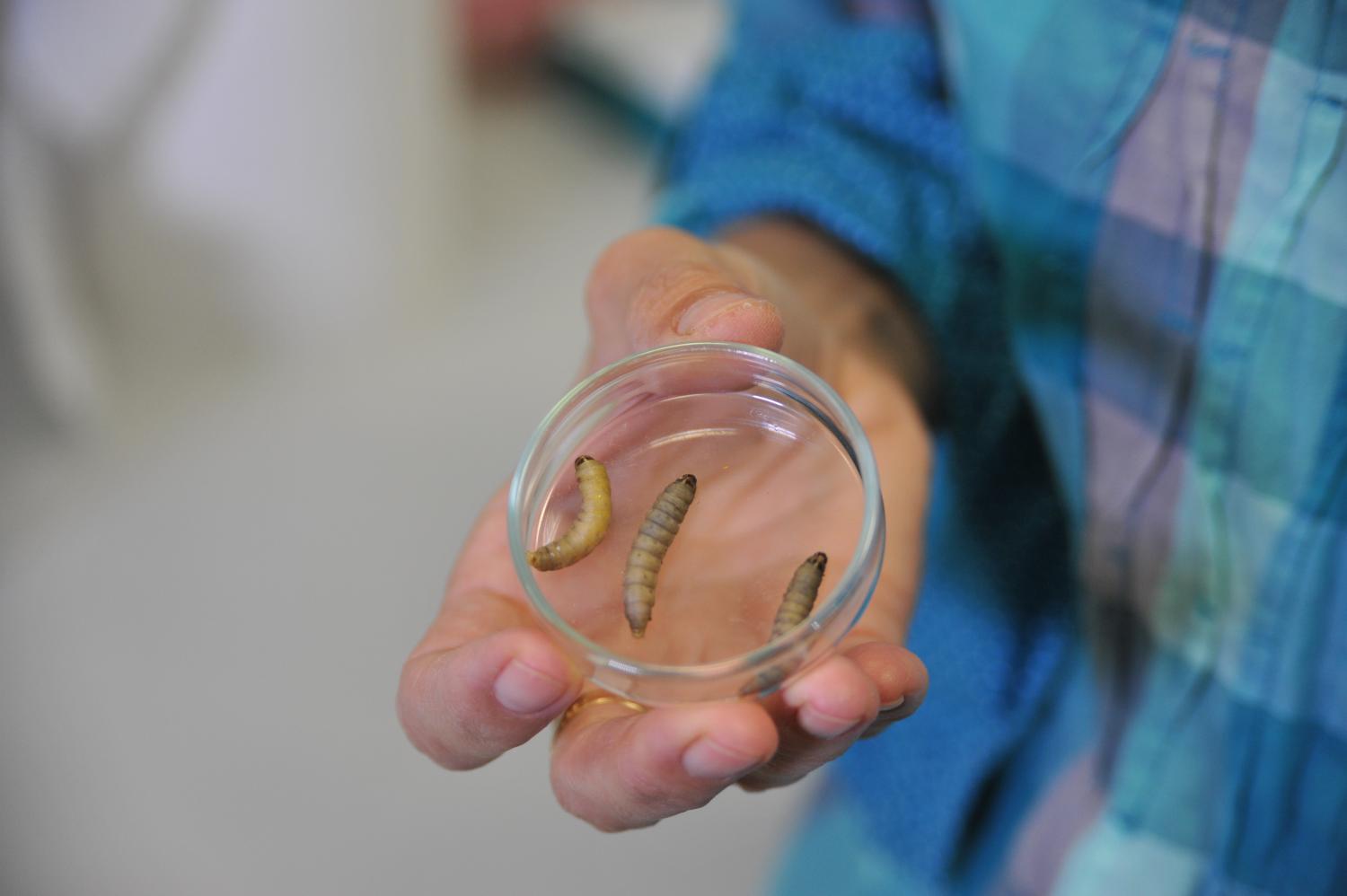
    Greater Wax Moth caterpillars in a Petri dish. Credit: César Hernández/CSIC

    A curious beehive cleaner made the discovery by chance when larvae of a common caterpillar species ‘Greater Wax Moth’ (Galleria mellonella) hatched inside a regular plastic bag and noticed that the bag was full of holes.

    They discovered that the larvae do not only chew through plastics by themselves, they also seem to have an ability to break it down chemically.

    The larvae produce and use an enzyme to break down wax, which can also be used to break down plastic. The researchers describe the larva’s ability to break down even the toughest plastic particles as “very exciting”, saying that the discovery could be used to solve plastic pollution on an industrial scale.

    The researchers hope to identify the enzyme used by the wax larva and the genes involved in its production, it would then theoretically be possible to insert these into bacteria or in marine organisms – giving them the ability to break down plastic in nature.
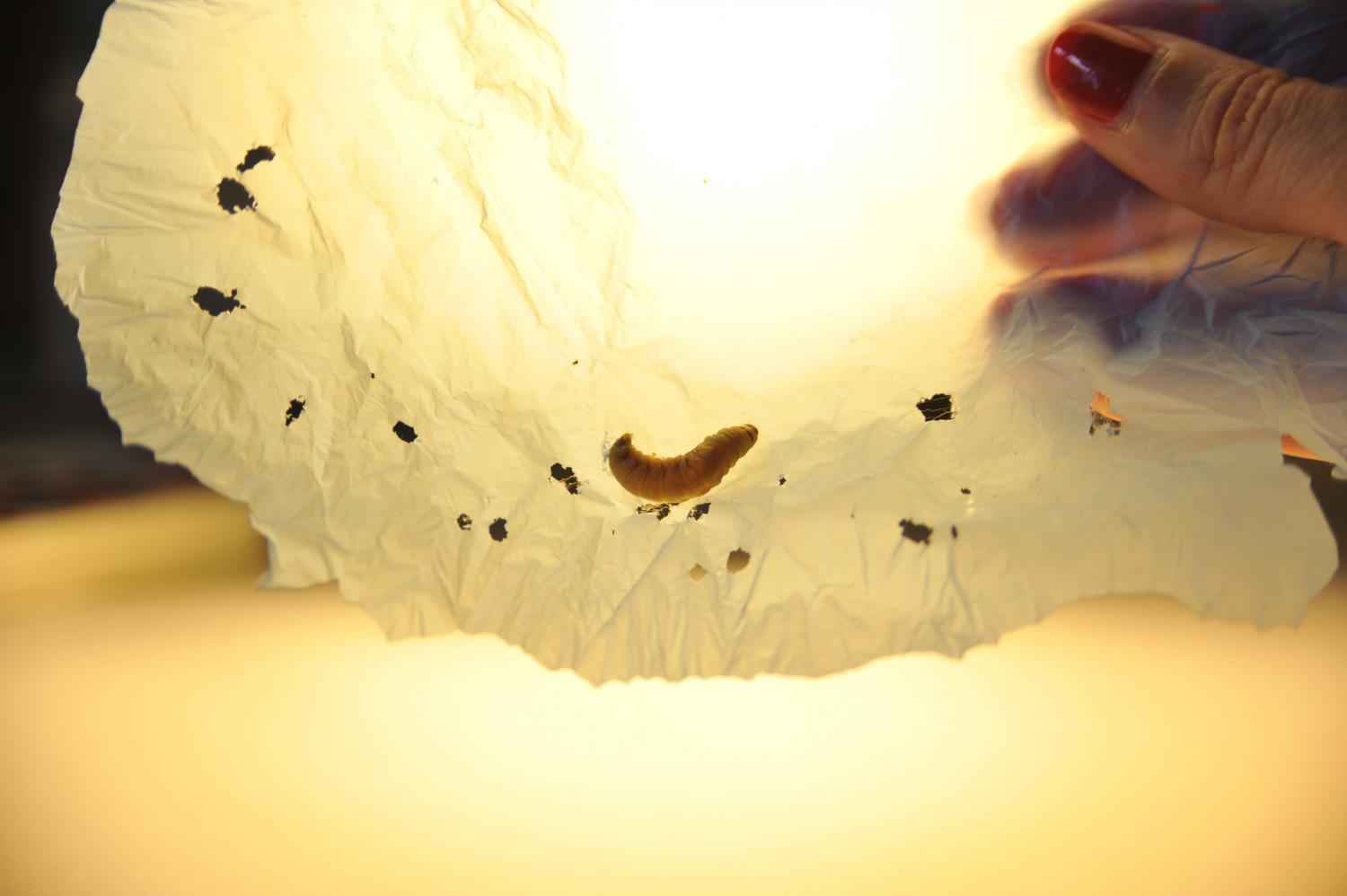
    100 larvae can break down to 92 milligrams of polyethylene in 12 hours. Credit: César Hernández/CSIC

    An explanation to their remarkable ability could be that the digestive system of the larvae has evolved to break down the same kind of chemical bonds found in the plastic, as in beeswax. Since this species of moth are hatched in beehives surrounded by beeswax.

    Microplastics from, among other things, plastic bags are a huge environmental problem and take hundreds of years to break down in nature. About a trillion plastic bags are used around the world every year. When they are thrown, many end up in the world’s ocean.

    Reference:

    Paolo Bombelli et al. Polyethylene biodegradation by caterpillars of the wax moth Galleria mellonella. Current Biology April 24, 2017.
    Microplastics Plastics Sustainability Waste
    Share. Facebook Twitter Pinterest LinkedIn Tumblr Email Copy Link

    Related Posts

    Biodegradable Bags Can Hold a Full Load of Shopping after 3 Years in the Environment

    June 29, 2020

    Loss of Oxygen in Ocean a Major Threat to Marine Life

    January 7, 2020

    Microbe Chews through PFAS and other Tough Contaminants

    December 30, 2019

    A Highly Radioactive Wild Boar Shoot in Sweden – 33 Years since Chernobyl

    July 4, 2019

    Feeding Cows Seaweed Cut Cut Methane Emissions, Research Finds

    July 4, 2018

    China Is Suspected to Be behind Some of the Increased Chlorofluorocarbons Emissions

    June 25, 2018
    Recent Posts
    • America’s Quiet Shift Into Fiscal Dominance: Why Inflation May Be Preparing for a Second Act
    • How the End of Bretton Woods Reshaped Our Economies — and Our Politics
    • Can the U.S. Really Handle 250% Debt-to-GDP? Why Jackson Hole’s Daring Paper Is Wrong
    • Japan’s Fiscal Trap: What Happens If Austerity Is No Longer an Option?
    • The Rise of Range Extended Electric Vehicles (REEVs): A New Era of Hybrid Mobility
    • The Great Capital Rotation: A Shift from U.S. Treasuries to Gold and Real Assets
    • The Hidden Risks of Short-Term Debt: A Balancing Act in U.S. Fiscal Policy
    • The Looming U.S. Debt Spiral: Understanding the Risks
    • The Looming Recession: Seven Economic Indicators Flashing Red for 2025
    • Europa Clipper: NASA’s Mission to Unlock the Secrets of Jupiter’s Icy Moon
    © 2025 Illustrated Curiosity

    Type above and press Enter to search. Press Esc to cancel.

    This website uses cookies to improve your experience. We'll assume you're ok with this, but you can opt-out if you wish.Accept Reject Read More
    Privacy & Cookies Policy

    Privacy Overview

    This website uses cookies to improve your experience while you navigate through the website. Out of these, the cookies that are categorized as necessary are stored on your browser as they are essential for the working of basic functionalities of the website. We also use third-party cookies that help us analyze and understand how you use this website. These cookies will be stored in your browser only with your consent. You also have the option to opt-out of these cookies. But opting out of some of these cookies may affect your browsing experience.
    Necessary
    Always Enabled
    Necessary cookies are absolutely essential for the website to function properly. This category only includes cookies that ensures basic functionalities and security features of the website. These cookies do not store any personal information.
    Non-necessary
    Any cookies that may not be particularly necessary for the website to function and is used specifically to collect user personal data via analytics, ads, other embedded contents are termed as non-necessary cookies. It is mandatory to procure user consent prior to running these cookies on your website.
    SAVE & ACCEPT