Close Menu
Illustrated Curiosity
    Facebook X (Twitter) Instagram YouTube
    Illustrated Curiosity
    • Earth
    • Economics
    • Environment
      • Climate
      • Environmental Tech
      • Pollution
      • Wildlife
    • Health
      • Health Tech
      • Medicine
      • Nutrition
      • Exercise
    • History
      • Prehistory
      • Ancient History
      • Postclassical Era
      • Modern History
    • Humans
      • Human Brain
      • Psychology
    • Life
      • Animals & Plants
      • Genetics
      • Paleontology
      • Evolution
      • Genetic Engineering
    • Physics
    • Space
      • Astrobiology
      • Astronomy
      • Extrasolar Planets
      • Space Tech
      • Spaceflight
    • Technology
      • Artificial Intelligence
      • Energy
      • Engineering
      • Materials
      • Robotics
      • Vehicles
    Illustrated Curiosity
    Home » The Air Pollution in Beijing is Visible from Space
    Pollution

    The Air Pollution in Beijing is Visible from Space

    January 16, 20133 Mins Read
    Share
    Facebook Twitter LinkedIn Pinterest Email
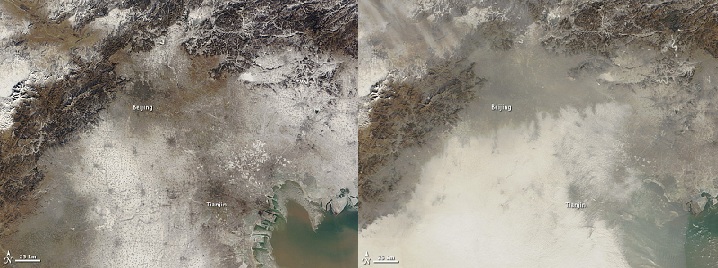
    Acquired January 3 and 14, 2013. Image credit: NASA.


    The air in Beijing has been very bad for the past five days, with a constant extensive haze, low clouds and a fog of smog covering the whole region.

    A Problem for Mega Cities

    The air problem in Beijing has persisted for a very long time to varying degree. It has worsened with continued urbanization, extensive and fast industrialization with more motorized vehicles, industrial production, and coal energy production in the area.

    But even if this development is extreme in Beijing, it is indeed a problem common to many big cities with similar geographical characteristics. And most important of these geographical characteristics being a mountainous surrounding region. Perhaps the worse in this sense is Mexico City which is completely surrounded by mountains, located in the Trans-Mexican Volcanic Belt in the high plateaus of south-central Mexico.

    NASA’s Earth Observatory released photos of northeastern China this week which shows the extent of the problem in the Beijing area. Since the smog is clearly visible from space. The Moderate Resolution Imaging Spectroradiometer (MODIS) on NASA’s Terra satellite acquired these two natural-color images of northeastern China on January 14 (top) and January 3, 2013, as seen above.

    Take A Deep Breath

    The air pollution can have a severe impact on human health. During this past period of extensive haze, the Beijing Shijitan Hospital received 20 percent more patients than usual at its respiratory health department. Most of them coughing and seeking treatment for bronchitis, asthma or other respiratory ailments.

    Schools in several districts were ordered to cancel outdoor activities and sports classes. And also in a public announcement, Beijing authorities advised all residents to “take measures to protect their health.”
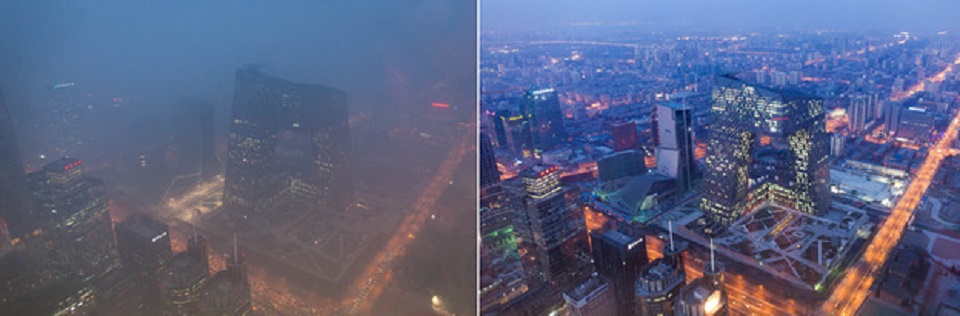
    To the left: Beijing during severe pollution Monday. To the right: The same view taken during clear weather during 2012-02-02. Image credit: Ed Jones/AFP/Getty Images

    Externalities

    Environmental problems can probably often be defined as direct or indirect. Indirect or “invisible” in the sense of affecting us in a long run rather than in the short run, and such problems, to mention a few, global warming (CO2 emissions), over-fertilization and ozone affecting chlorofluorocarbons. These long-run problems have consequences and direct effects often far in the future. This fact of not having a direct effect on present-day economies makes it more difficult for politicians to motivate allocation of resources to impede future potential adverse effects.
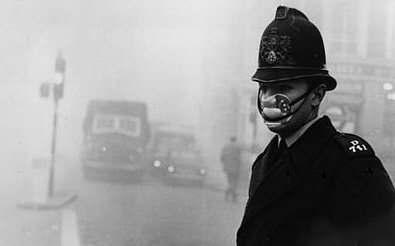
    London’s great fog on December 5, 1952.

    But the problem with smog, however, does affect us both directly and indirectly – which is perhaps good in that sense of creating tangible evidence of a problematic situation. That needs to be solved by politicians today.

    Air pollution can have great adverse effects such demonstrated by the Great Smog of 1952 in London, which combined a period of extraordinary weather phenomena, cold and windless conditions, collected airborne pollutants from the use of coal-forming a thick layer of smog over the city. With an estimated 12,000 people that died as a direct cause of the smog and over 100,000 ill.

    _______________
    NASA Earth Observatory
    ______________________________
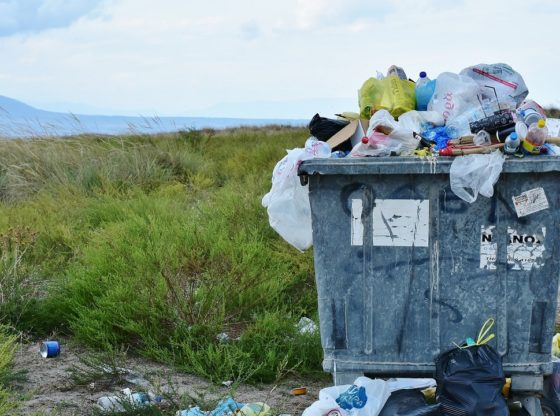
    Air pollution Beijing China
    Share. Facebook Twitter Pinterest LinkedIn Tumblr Email Copy Link

    Related Posts

    Biodegradable Bags Can Hold a Full Load of Shopping after 3 Years in the Environment

    June 29, 2020

    Loss of Oxygen in Ocean a Major Threat to Marine Life

    January 7, 2020

    Microbe Chews through PFAS and other Tough Contaminants

    December 30, 2019

    A Highly Radioactive Wild Boar Shoot in Sweden – 33 Years since Chernobyl

    July 4, 2019

    China Plans to Build a Particle Collider Five Times More Powerful Than the LHC

    November 19, 2018

    Feeding Cows Seaweed Cut Cut Methane Emissions, Research Finds

    July 4, 2018
    Recent Posts
    • America’s Quiet Shift Into Fiscal Dominance: Why Inflation May Be Preparing for a Second Act
    • How the End of Bretton Woods Reshaped Our Economies — and Our Politics
    • Can the U.S. Really Handle 250% Debt-to-GDP? Why Jackson Hole’s Daring Paper Is Wrong
    • Japan’s Fiscal Trap: What Happens If Austerity Is No Longer an Option?
    • The Rise of Range Extended Electric Vehicles (REEVs): A New Era of Hybrid Mobility
    • The Great Capital Rotation: A Shift from U.S. Treasuries to Gold and Real Assets
    • The Hidden Risks of Short-Term Debt: A Balancing Act in U.S. Fiscal Policy
    • The Looming U.S. Debt Spiral: Understanding the Risks
    • The Looming Recession: Seven Economic Indicators Flashing Red for 2025
    • Europa Clipper: NASA’s Mission to Unlock the Secrets of Jupiter’s Icy Moon
    © 2025 Illustrated Curiosity

    Type above and press Enter to search. Press Esc to cancel.

    This website uses cookies to improve your experience. We'll assume you're ok with this, but you can opt-out if you wish.Accept Reject Read More
    Privacy & Cookies Policy

    Privacy Overview

    This website uses cookies to improve your experience while you navigate through the website. Out of these, the cookies that are categorized as necessary are stored on your browser as they are essential for the working of basic functionalities of the website. We also use third-party cookies that help us analyze and understand how you use this website. These cookies will be stored in your browser only with your consent. You also have the option to opt-out of these cookies. But opting out of some of these cookies may affect your browsing experience.
    Necessary
    Always Enabled
    Necessary cookies are absolutely essential for the website to function properly. This category only includes cookies that ensures basic functionalities and security features of the website. These cookies do not store any personal information.
    Non-necessary
    Any cookies that may not be particularly necessary for the website to function and is used specifically to collect user personal data via analytics, ads, other embedded contents are termed as non-necessary cookies. It is mandatory to procure user consent prior to running these cookies on your website.
    SAVE & ACCEPT