Close Menu
Illustrated Curiosity | Economics, History, Science, Space, Technology, Health, Physics, Earth
    Facebook X (Twitter) Instagram YouTube
    Illustrated Curiosity | Economics, History, Science, Space, Technology, Health, Physics, Earth
    • Earth
    • Economics
    • Environment
      • Environmental Tech
      • Pollution
      • Wildlife
    • Health
      • Health Tech
      • Medicine
      • Nutrition
      • Exercise
    • History
      • Prehistory
      • Ancient History
      • Postclassical Era
      • Modern History
    • Humans
      • Human Brain
      • Psychology
    • Life
      • Animals & Plants
      • Genetics
      • Paleontology
      • Evolution
      • Genetic Engineering
    • Physics
    • Space
      • Astrobiology
      • Astronomy
      • Extrasolar Planets
      • Space Tech
      • Spaceflight
    • Technology
      • Artificial Intelligence
      • Energy
      • Engineering
      • Materials
      • Robotics
      • Vehicles
    Illustrated Curiosity | Economics, History, Science, Space, Technology, Health, Physics, Earth
    Home » Newly Found Neurotoxin Is Only Harmful to Malaria Mosquitoes
    Medicine

    Newly Found Neurotoxin Is Only Harmful to Malaria Mosquitoes

    July 3, 20192 Mins Read
    Image: Pixabay
    Share
    Facebook Twitter LinkedIn Pinterest Email

    Researchers at the universities in Stockholm and Lund, in collaboration with researchers from the University of California, have found a new toxin that selectively targets mosquitoes.

    The new discovery could lead to innovative and environmentally friendly approaches to reducing malaria. The results are presented in an article published in Nature Communications.

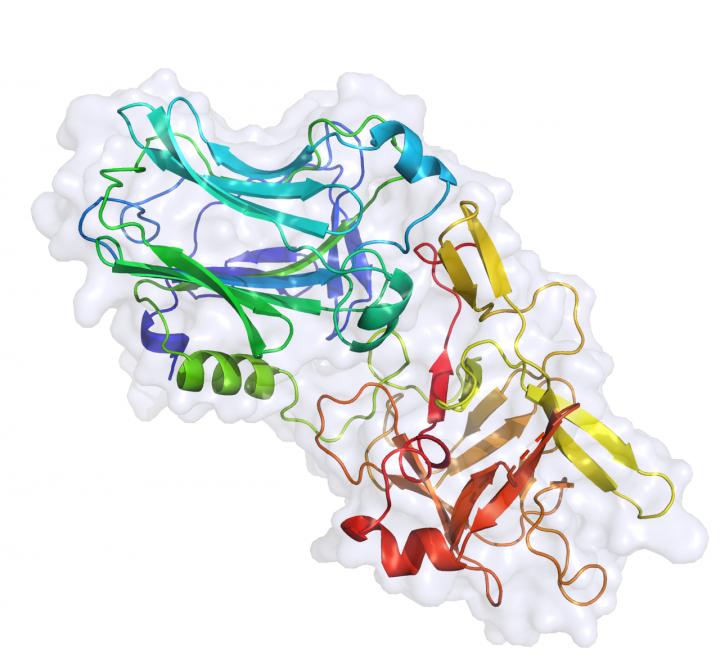
    Botox (Botulinum neurotoxins) and the same family of proteins are among the most toxic substances known. Previously, this family of toxins was believed to only target vertebrates such as humans, mice, and birds. But researchers have now found a toxin that targets the group of mosquitoes that are responsible for transmitting malaria.

    “We have discovered a neurotoxin, PMP1, that selectively targets malaria mosquitos, demonstrating that this family of toxins have a much broader host spectrum than previously believed”

    – Pål Stenmark of Stockholm University and Lund University

    “Identifying the mechanisms by which the bacteria targets Anopheles has not been easy,”

    “We were excited not only to find the neurotoxin, called PMP1, but also several proteins that likely protect PMP1 as it’s being absorbed in the mosquito’s gut.”

    – Sarjeet Gill, professor of molecular, cell, and systems biology at UC Riverside.

    The research team attributes the success to modern gene sequencing techniques; they hit the bacteria with radiation, creating mutant bacterial strains that could not produce the toxin. Then, by comparing the nontoxic strain to the one that kills the malaria mosquito, they found proteins in the bacteria that are the keys to toxin production.

    The PMP1 neurotoxin does not affect humans, vertebrates, fish, or even other insects. The researchers believe that the bacteria that produce PMP1 likely co-evolved along with Anopheles mosquitoes.

    PMP1 makes it possible to reduce the prevalence of malaria in a new and environmentally friendly way. Since these toxins are proteins, they do not leave any harmful residues as they break down, according to the researchers.

    The team has applied for a patent on this discovery and now hopes to find partners that will help them develop their bacteria-based Anopheles insecticide.

    Reference:

    Estefania Contreras, Geoffrey Masuyer, Nadia Qureshi, Swati Chawla, Harpal S. Dhillon, Han Lim Lee, Jianwu Chen, Pål Stenmark & Sarjeet S. Gill A neurotoxin that specifically targets Anopheles mosquitoes DOI: https://doi.org/10.1038/s41467-019-10732-w

    Share. Facebook Twitter Pinterest LinkedIn Tumblr Email Copy Link

    Related Posts

    Groundbreaking Breakthrough: A Potential Cure for Cancer Targets Proliferating Cell Nuclear Antigen (PCNA)

    August 3, 2023

    Data Modeling Can Predict How COVID-19 Will Spread in a Big City

    November 13, 2020

    Air Pollution May Be a Contributing Factor behind High Death Rates in COVID-19

    June 8, 2020

    Evidence of Stray Dogs as Possible Intermediate Host of COVID-19 Pandemic

    April 28, 2020

    Promising Progress on Urine Tests for Prostate Cancer

    March 23, 2020

    Machine Learning Found Surprising Potential New Antibiotics to Combat Resistant Bacteria

    February 25, 2020
    Recent Posts
    • The Day the Alliance Died
    • Evaluating Heart Disease: How Cumulative Diet Choices Compound Your Risk
    • What Would Happen If China Attacked Taiwan?
    • Geopoliticisation as a Structural Tailwind for Commodity Prices
    • America’s Economic Remodel: Who’s Really Paying the Bill?
    • Why Inflation May Be Preparing for a Second Act
    • How the End of Bretton Woods Reshaped Our Economies — and Our Politics
    • Can the U.S. Really Handle 250% Debt-to-GDP? Why Jackson Hole’s Daring Paper Is Wrong
    • Japan’s Fiscal Trap: What Happens If Austerity Is No Longer an Option?
    • The Rise of Range Extended Electric Vehicles (REEVs): A New Era of Hybrid Mobility
    © 2025 Illustrated Curiosity

    Type above and press Enter to search. Press Esc to cancel.