Close Menu
Illustrated Curiosity
    Facebook X (Twitter) Instagram YouTube
    Illustrated Curiosity
    • Earth
    • Economics
    • Environment
      • Climate
      • Environmental Tech
      • Pollution
      • Wildlife
    • Health
      • Health Tech
      • Medicine
      • Nutrition
      • Exercise
    • History
      • Prehistory
      • Ancient History
      • Postclassical Era
      • Modern History
    • Humans
      • Human Brain
      • Psychology
    • Life
      • Animals & Plants
      • Genetics
      • Paleontology
      • Evolution
      • Genetic Engineering
    • Physics
    • Space
      • Astrobiology
      • Astronomy
      • Extrasolar Planets
      • Space Tech
      • Spaceflight
    • Technology
      • Artificial Intelligence
      • Energy
      • Engineering
      • Materials
      • Robotics
      • Vehicles
    Illustrated Curiosity
    Home » Researchers Slowed Down Cellular Aging
    Medicine

    Researchers Slowed Down Cellular Aging

    June 14, 2016No Comments2 Mins Read
    Share
    Facebook Twitter LinkedIn Pinterest Email

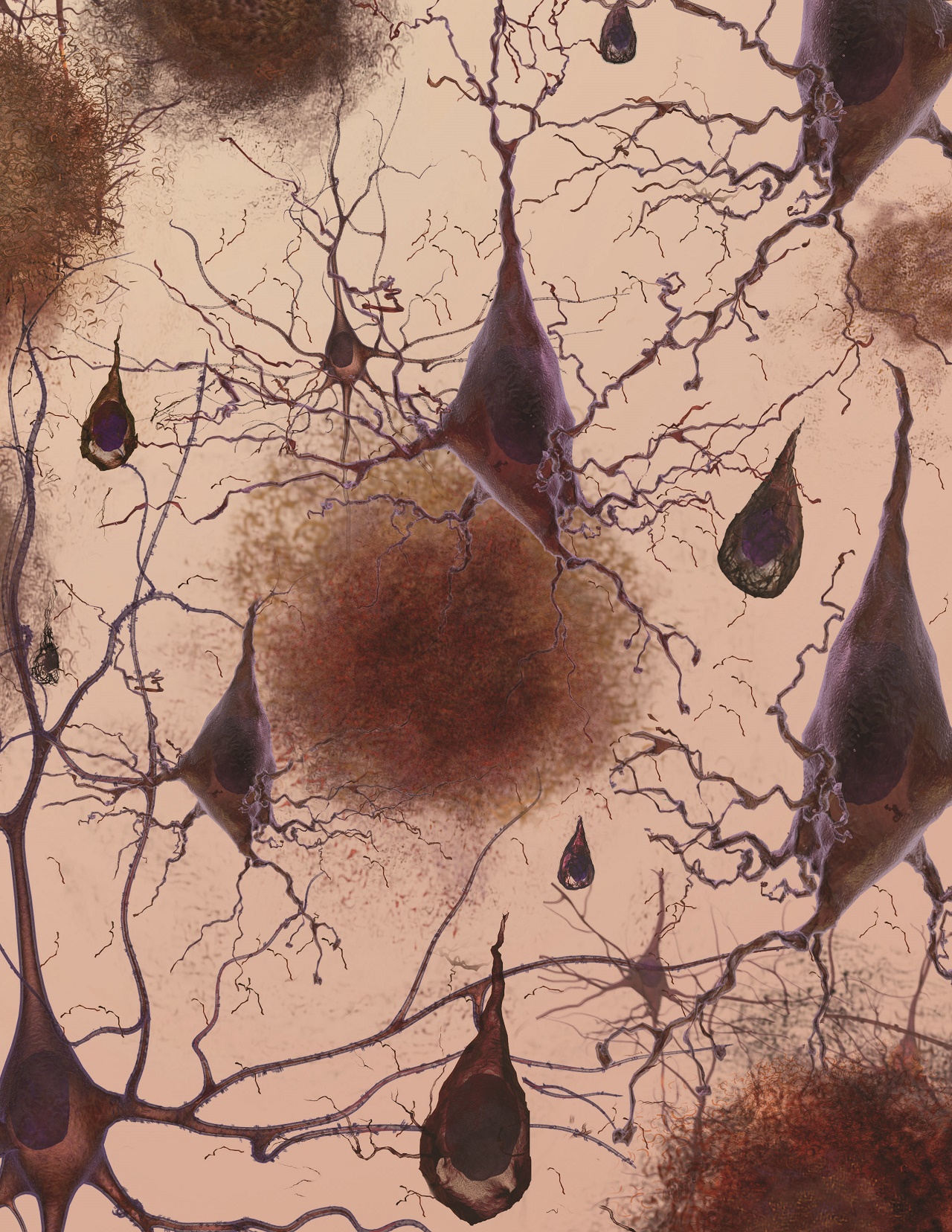
    Loss of connection between brain cells. Image Credit: National Institute on Aging/National Institutes of Health

    A team of researchers has demonstrated a way to counteract aging in cells by reducing their calorie intake.

    When cells are aging enzymes called Peroxiredoxins plays an important role in combating it. The enzymes help prevent the occurrence of damage in the cells, and can also take care of the damage that has already occurred.

    The researchers found that they could stimulate these enzymes’ activity by reducing the calorie intake, and thus slow down the aging of the cells. They tested this on cells for from in yeast, flies, and worms.

    If this same principle is true in human cells, the researchers hope that it could eventually be used to prevent, for example, Alzheimer’s and Parkinson’s disease.

    This is not the first time that reduced calorie intake have been showed to slow aging in yeast, flies, and worms. The underlying biochemical causes for this is still unknown, though.

    These results, published in the scientific journal Cell clearly shows that peroxiredoxin (PrxI) is part of a machine with the task of preventing the formation of protein aggregates when the levels of the harmful oxidant hydrogen peroxide increase in the cells.

    PrxI works by helping other enzymes to find their way to the damaged proteins so that they can be repaired and the accumulation of protein aggregates decrease.

    These protein aggregates are often correlated with diseases. In fact, protein aggregates have been implicated in a wide variety of disease known as amyloidoses, including ALS, Alzheimer’s, Parkinson’s and prion disease.

    _______________
    Lifespan Control by Redox-Dependent Recruitment of chaperones to misfolded proteins
    ______________________________

    http://www.gu.se/omuniversitetet/aktuellt/nyheter/detalj//ny-pusselbit-lagd-for-att-forsta-aldrandet.cid1376148

    Aging Alzheimer's Disease Human Brain
    Share. Facebook Twitter Pinterest LinkedIn Tumblr Email Copy Link

    Related Posts

    Groundbreaking Breakthrough: A Potential Cure for Cancer Targets Proliferating Cell Nuclear Antigen (PCNA)

    August 3, 2023

    Data Modeling Can Predict How COVID-19 Will Spread in a Big City

    November 13, 2020

    2020 Nobel Prize in Medicine Jointly Awarded to Scientists Who Discovered the Hepatitis C Virus

    October 6, 2020

    Air Pollution May Be a Contributing Factor behind High Death Rates in COVID-19

    June 8, 2020

    Evidence of Stray Dogs as Possible Intermediate Host of COVID-19 Pandemic

    April 28, 2020

    Promising Progress on Urine Tests for Prostate Cancer

    March 23, 2020
    Recent Posts
    • How the End of Bretton Woods Reshaped Our Economies — and Our Politics
    • Can the U.S. Really Handle 250% Debt-to-GDP? Why Jackson Hole’s Daring Paper Is Wrong
    • Japan’s Fiscal Trap: What Happens If Austerity Is No Longer an Option?
    • The Rise of Range Extended Electric Vehicles (REEVs): A New Era of Hybrid Mobility
    • The Great Capital Rotation: A Shift from U.S. Treasuries to Gold and Real Assets
    • The Hidden Risks of Short-Term Debt: A Balancing Act in U.S. Fiscal Policy
    • The Looming U.S. Debt Spiral: Understanding the Risks
    • The Looming Recession: Seven Economic Indicators Flashing Red for 2025
    • Europa Clipper: NASA’s Mission to Unlock the Secrets of Jupiter’s Icy Moon
    • Could Hedge Funds Cause Chaos in the U.S. Treasury Market? And What About Inflation?
    © 2025 Illustrated Curiosity

    Type above and press Enter to search. Press Esc to cancel.

    This website uses cookies to improve your experience. We'll assume you're ok with this, but you can opt-out if you wish.Accept Reject Read More
    Privacy & Cookies Policy

    Privacy Overview

    This website uses cookies to improve your experience while you navigate through the website. Out of these, the cookies that are categorized as necessary are stored on your browser as they are essential for the working of basic functionalities of the website. We also use third-party cookies that help us analyze and understand how you use this website. These cookies will be stored in your browser only with your consent. You also have the option to opt-out of these cookies. But opting out of some of these cookies may affect your browsing experience.
    Necessary
    Always Enabled
    Necessary cookies are absolutely essential for the website to function properly. This category only includes cookies that ensures basic functionalities and security features of the website. These cookies do not store any personal information.
    Non-necessary
    Any cookies that may not be particularly necessary for the website to function and is used specifically to collect user personal data via analytics, ads, other embedded contents are termed as non-necessary cookies. It is mandatory to procure user consent prior to running these cookies on your website.
    SAVE & ACCEPT