Close Menu
Illustrated Curiosity
    Facebook X (Twitter) Instagram YouTube
    Illustrated Curiosity
    • Earth
    • Economics
    • Environment
      • Climate
      • Environmental Tech
      • Pollution
      • Wildlife
    • Health
      • Health Tech
      • Medicine
      • Nutrition
      • Exercise
    • History
      • Prehistory
      • Ancient History
      • Postclassical Era
      • Modern History
    • Humans
      • Human Brain
      • Psychology
    • Life
      • Animals & Plants
      • Genetics
      • Paleontology
      • Evolution
      • Genetic Engineering
    • Physics
    • Space
      • Astrobiology
      • Astronomy
      • Extrasolar Planets
      • Space Tech
      • Spaceflight
    • Technology
      • Artificial Intelligence
      • Energy
      • Engineering
      • Materials
      • Robotics
      • Vehicles
    Illustrated Curiosity
    Home » Scientists Have Developed a Drug to Combat Resistant Bacteria
    Medicine

    Scientists Have Developed a Drug to Combat Resistant Bacteria

    September 18, 2018No Comments3 Mins Read
    Share
    Facebook Twitter LinkedIn Pinterest Email
     Macmillan Publishers Ltd
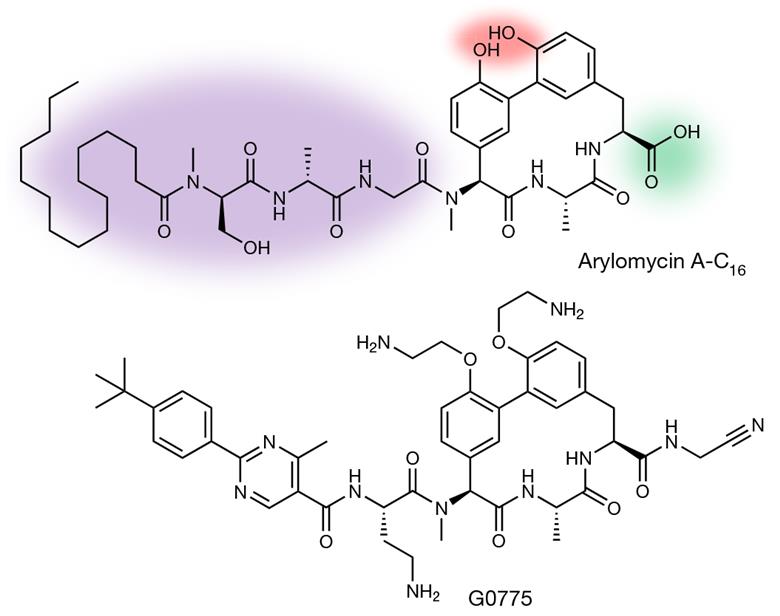
    G0775 retains the cyclic core of the arylomycins, but modifications at the highlighted sites increase its potency and help target Gram-negative bacteria

    A study published on 12 September in Nature has revealed a new compound that can break through the double cell wall and thick outer membrane of antibiotic-resistant bacteria.

    It seems as if US researchers have developed ‘a much-needed new class’ of antibiotic drug. The medicinal chemists at Genentech in San Francisco, California, have carefully optimized arylomycin antibiotics, found being made by soil bacteria in the early 2000s.

    The new promising candidate was developed through the chemical optimization of arylomycins ― a recently discovered class of natural-product antibiotics that bind and inhibit signal peptidase ― to create a molecule named G0775 that is at least 500 times more potent than naturally occurring arylomycins and exhibits potent, broad-spectrum activity against highly antibiotic-resistant gram-negative pathogens.

    Antimicrobial resistance is an ever bigger and more serious world problem, as we are slowly losing our ability to combat bacteria that harm us. Resistance arises through one of three mechanisms: natural resistance in certain types of bacteria, genetic mutation, or by one species acquiring resistance from another. Overuse and misuse of antibiotics in medicine and agriculture have contributed greatly to this problem and have led to widespread antibiotic resistance.

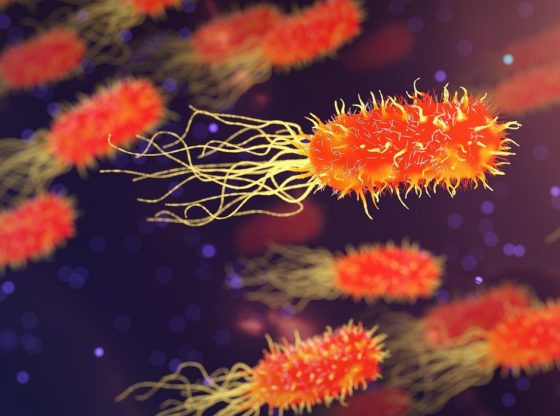
    The team, led by evolutionary biologist Peter Smith of Genentech, a biotech company in San Francisco, California, focused on the so-called ‘ESKAPE’ pathogens that include Staphylococcus aureus, Klebsiella pneumoniae, Acinetobacter baumannii, and Pseudomonas aeruginosa. These deadly bacteria strains pose the biggest threat of developing multidrug-resistant (MDR) infections and are the leading causes of hospital-acquired infections.

    The newly developed drug appears to inhibit a key enzyme in the cell membrane that helps the bacteria secrete proteins. When the enzyme is blocked, proteins build up in the cell membrane until the membrane bursts, ultimately killing the cell.

    “We’re hitting a new target,”
     

    – Study coauthor Peter Smith, an infectious disease researcher at Genentech, a biotech company based in South San Francisco, Calif.

    That means that strategies that bacteria use to evade existing antibiotics won’t work here, giving the molecule an edge.

    The molecule dubbed G0775 is at least 500 times more potent than a naturally found arylomycin against some of the biggest gram-negative bacterial threats to humans, including Escherichia coli, Klebsiella pneumoniae, Pseudomonas aeruginosa, and Acinetobacter baumannii.

    So far, the new compound has only been tested in the lab and in mice and the molecule will need to go through additional testing and tweaking before it can be used in humans. It is also not a permanent solution to the growing problem of antibiotic resistance. Since if molecules of this type are widely used as antibiotics, bacteria will evolve resistance to this compound as well, as they always do. But it is a new tool in our toolbox.

    Reference:
    Peter A. Smith et al. Optimized arylomycins are a new class of Gram-negative antibiotics. Nature 12 september 2018. DOI: 10.1038/s41586-018-0483-6

    Share. Facebook Twitter Pinterest LinkedIn Tumblr Email Copy Link

    Related Posts

    Groundbreaking Breakthrough: A Potential Cure for Cancer Targets Proliferating Cell Nuclear Antigen (PCNA)

    August 3, 2023

    Data Modeling Can Predict How COVID-19 Will Spread in a Big City

    November 13, 2020

    2020 Nobel Prize in Medicine Jointly Awarded to Scientists Who Discovered the Hepatitis C Virus

    October 6, 2020

    Air Pollution May Be a Contributing Factor behind High Death Rates in COVID-19

    June 8, 2020

    Evidence of Stray Dogs as Possible Intermediate Host of COVID-19 Pandemic

    April 28, 2020

    Promising Progress on Urine Tests for Prostate Cancer

    March 23, 2020
    Recent Posts
    • How the End of Bretton Woods Reshaped Our Economies — and Our Politics
    • Can the U.S. Really Handle 250% Debt-to-GDP? Why Jackson Hole’s Daring Paper Is Wrong
    • Japan’s Fiscal Trap: What Happens If Austerity Is No Longer an Option?
    • The Rise of Range Extended Electric Vehicles (REEVs): A New Era of Hybrid Mobility
    • The Great Capital Rotation: A Shift from U.S. Treasuries to Gold and Real Assets
    • The Hidden Risks of Short-Term Debt: A Balancing Act in U.S. Fiscal Policy
    • The Looming U.S. Debt Spiral: Understanding the Risks
    • The Looming Recession: Seven Economic Indicators Flashing Red for 2025
    • Europa Clipper: NASA’s Mission to Unlock the Secrets of Jupiter’s Icy Moon
    • Could Hedge Funds Cause Chaos in the U.S. Treasury Market? And What About Inflation?
    © 2025 Illustrated Curiosity

    Type above and press Enter to search. Press Esc to cancel.

    This website uses cookies to improve your experience. We'll assume you're ok with this, but you can opt-out if you wish.Accept Reject Read More
    Privacy & Cookies Policy

    Privacy Overview

    This website uses cookies to improve your experience while you navigate through the website. Out of these, the cookies that are categorized as necessary are stored on your browser as they are essential for the working of basic functionalities of the website. We also use third-party cookies that help us analyze and understand how you use this website. These cookies will be stored in your browser only with your consent. You also have the option to opt-out of these cookies. But opting out of some of these cookies may affect your browsing experience.
    Necessary
    Always Enabled
    Necessary cookies are absolutely essential for the website to function properly. This category only includes cookies that ensures basic functionalities and security features of the website. These cookies do not store any personal information.
    Non-necessary
    Any cookies that may not be particularly necessary for the website to function and is used specifically to collect user personal data via analytics, ads, other embedded contents are termed as non-necessary cookies. It is mandatory to procure user consent prior to running these cookies on your website.
    SAVE & ACCEPT