Close Menu
Illustrated Curiosity
    Facebook X (Twitter) Instagram YouTube
    Illustrated Curiosity
    • Earth
    • Economics
    • Environment
      • Climate
      • Environmental Tech
      • Pollution
      • Wildlife
    • Health
      • Health Tech
      • Medicine
      • Nutrition
      • Exercise
    • History
      • Prehistory
      • Ancient History
      • Postclassical Era
      • Modern History
    • Humans
      • Human Brain
      • Psychology
    • Life
      • Animals & Plants
      • Genetics
      • Paleontology
      • Evolution
      • Genetic Engineering
    • Physics
    • Space
      • Astrobiology
      • Astronomy
      • Extrasolar Planets
      • Space Tech
      • Spaceflight
    • Technology
      • Artificial Intelligence
      • Energy
      • Engineering
      • Materials
      • Robotics
      • Vehicles
    Illustrated Curiosity
    Home » ‘Golden Rice’ Can Now be Sold in Australia and New Zealand
    Nutrition

    ‘Golden Rice’ Can Now be Sold in Australia and New Zealand

    January 24, 2018No Comments2 Mins Read
    Share
    Facebook Twitter LinkedIn Pinterest Email

    CC0 Creative Commons

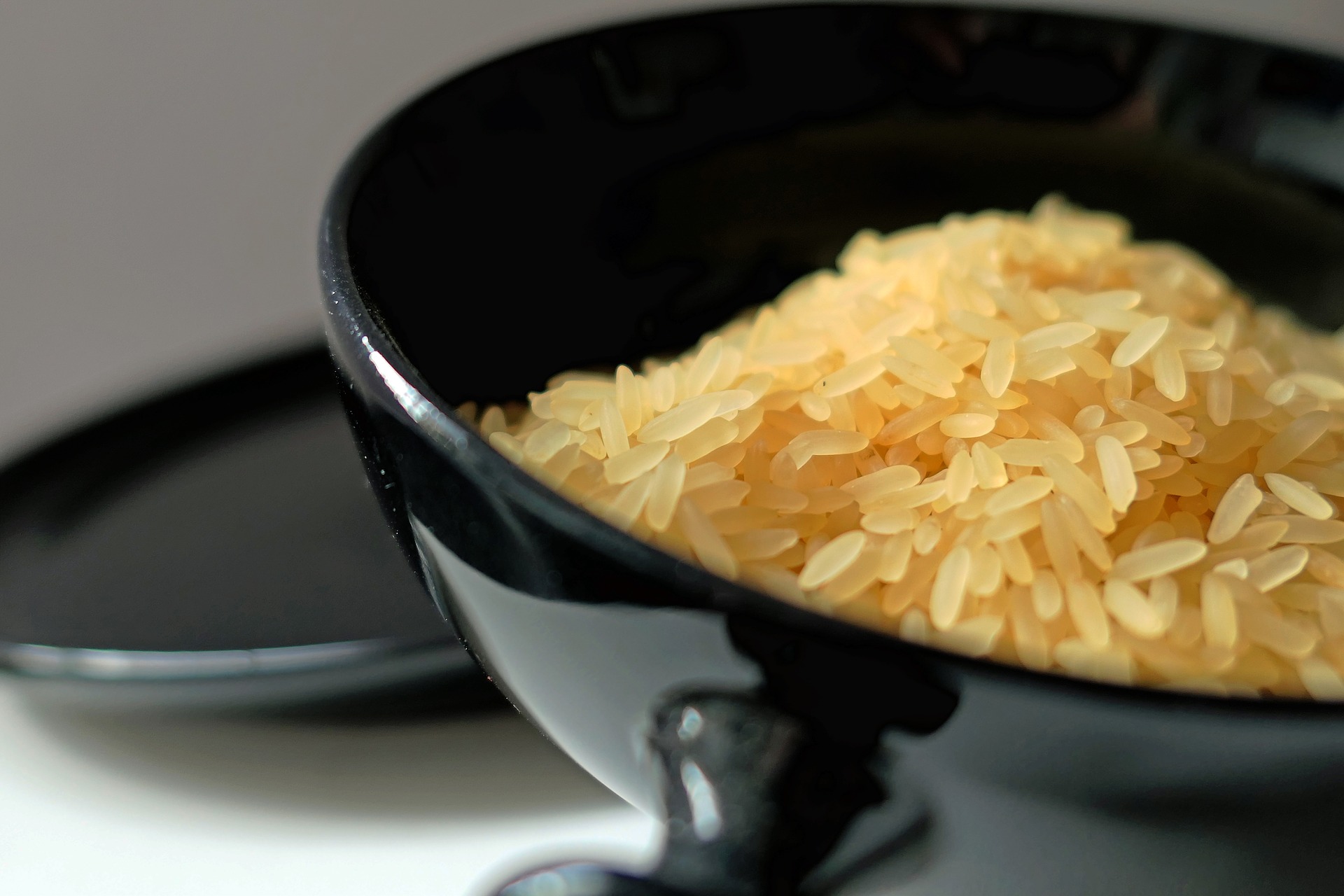
    The so-called Golden rice was approved at the end of last year as food in Australia and New Zealand.

    This rice, which is not white but yellow, has been genetically modified to produce beta-carotene, a substance that is also found in, for example, carrots. Beta-carotene can be converted into vitamin A in the body. Vitamin A deficiency is a major problem in some parts of the world.

    The regulators rule that it will be allowed to be sold in Australia and New Zealand following an application to Food Standards Australia New Zealand (FSANZ)from the humanitarian organization International Rice Research Institute, which cultivated the GR2E rice line to mitigate vitamin A deficiency in developing countries.

    It was the German scientists Ingo Potrykus and Peter Beyer who developed the “Golden Rice” varieties that are biofortified by the introduction of genes that enable the edible endosperm of rice to produce beta-carotene.

    Since rice plants produce beta-carotene in the leaves but not in the grains, Potrykus and Beyer inserted two genes – one from a bacterium, the other from corn — that causes beta-carotene to be synthesized in the edible part of the plant as well.

    The World Health Organization estimates that 250 million children in preschool age suffer from vitamin A deficiency, leading to blindness for 250,000 to 500,000 children a year.

    The International Rice Research Institute has also applied for approval of rice for human consumption in the United States and Canada and for cultivation in the Philippines.
    Rice Vitamin A
    Share. Facebook Twitter Pinterest LinkedIn Tumblr Email Copy Link

    Related Posts

    A Nutritious Drink Tested Against Alzheimer’s

    November 23, 2020

    Peanut Allergy is Traced to the Gut

    April 21, 2020

    Japanese Diet from 1975 Reduces Obesity

    March 16, 2020

    New Study Reveals Global Intake of Major Beverages

    June 17, 2019

    Ultra-Processed Foods Cause Weight Gain, over Eating, According to a New Study

    May 27, 2019

    Researchers Pinpoint Why Stress Causes Weight Gain

    April 29, 2019
    Recent Posts
    • How the End of Bretton Woods Reshaped Our Economies — and Our Politics
    • Can the U.S. Really Handle 250% Debt-to-GDP? Why Jackson Hole’s Daring Paper Is Wrong
    • Japan’s Fiscal Trap: What Happens If Austerity Is No Longer an Option?
    • The Rise of Range Extended Electric Vehicles (REEVs): A New Era of Hybrid Mobility
    • The Great Capital Rotation: A Shift from U.S. Treasuries to Gold and Real Assets
    • The Hidden Risks of Short-Term Debt: A Balancing Act in U.S. Fiscal Policy
    • The Looming U.S. Debt Spiral: Understanding the Risks
    • The Looming Recession: Seven Economic Indicators Flashing Red for 2025
    • Europa Clipper: NASA’s Mission to Unlock the Secrets of Jupiter’s Icy Moon
    • Could Hedge Funds Cause Chaos in the U.S. Treasury Market? And What About Inflation?
    © 2025 Illustrated Curiosity

    Type above and press Enter to search. Press Esc to cancel.

    This website uses cookies to improve your experience. We'll assume you're ok with this, but you can opt-out if you wish.Accept Reject Read More
    Privacy & Cookies Policy

    Privacy Overview

    This website uses cookies to improve your experience while you navigate through the website. Out of these, the cookies that are categorized as necessary are stored on your browser as they are essential for the working of basic functionalities of the website. We also use third-party cookies that help us analyze and understand how you use this website. These cookies will be stored in your browser only with your consent. You also have the option to opt-out of these cookies. But opting out of some of these cookies may affect your browsing experience.
    Necessary
    Always Enabled
    Necessary cookies are absolutely essential for the website to function properly. This category only includes cookies that ensures basic functionalities and security features of the website. These cookies do not store any personal information.
    Non-necessary
    Any cookies that may not be particularly necessary for the website to function and is used specifically to collect user personal data via analytics, ads, other embedded contents are termed as non-necessary cookies. It is mandatory to procure user consent prior to running these cookies on your website.
    SAVE & ACCEPT