Close Menu
Illustrated Curiosity
    Facebook X (Twitter) Instagram YouTube
    Illustrated Curiosity
    • Earth
    • Economics
    • Environment
      • Climate
      • Environmental Tech
      • Pollution
      • Wildlife
    • Health
      • Health Tech
      • Medicine
      • Nutrition
      • Exercise
    • History
      • Prehistory
      • Ancient History
      • Postclassical Era
      • Modern History
    • Humans
      • Human Brain
      • Psychology
    • Life
      • Animals & Plants
      • Genetics
      • Paleontology
      • Evolution
      • Genetic Engineering
    • Physics
    • Space
      • Astrobiology
      • Astronomy
      • Extrasolar Planets
      • Space Tech
      • Spaceflight
    • Technology
      • Artificial Intelligence
      • Energy
      • Engineering
      • Materials
      • Robotics
      • Vehicles
    Illustrated Curiosity
    Home » Researchers Pinpoint Why Stress Causes Weight Gain
    Nutrition

    Researchers Pinpoint Why Stress Causes Weight Gain

    April 29, 20193 Mins Read
    Share
    Facebook Twitter LinkedIn Pinterest Email

    Pixabay License

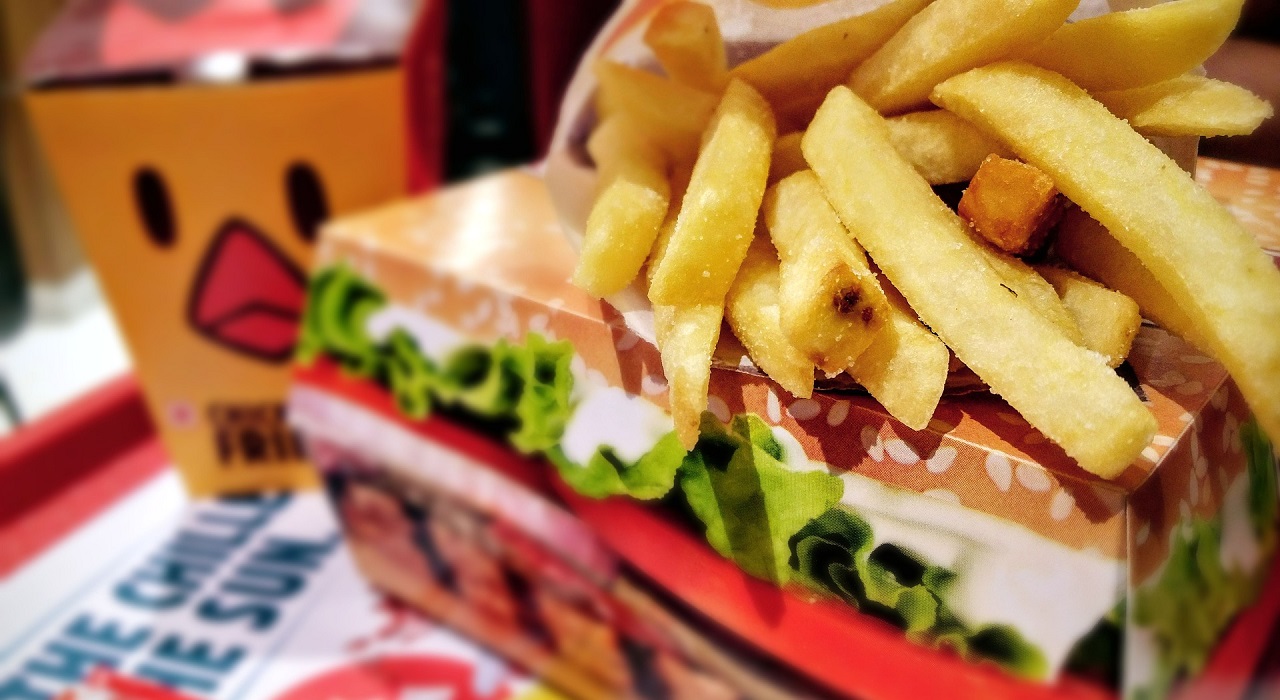
    A team led by Professor Herbert Herzog, Head of the Eating Disorders laboratory at the Garvan Institute of Medical Research in Australia, have found that when we’re stressed, comfort eating can lead to even greater weight gain.

    While some people eat less when they’re stressed, most of us tend to eat more and it’s often the more calorie-dense stuff that we are putting away. To explore this link in deeper detail, the Australian research team fed mice fed different diets and exposed them to stress and then examined the pathway inside of the brain to understand how stress contributes to the problem.

    In the research experiments, mice that were fed high-fat diets piled on more weight when they were stressed compared to stress-free mice on the same diet. The result showed that when the mice were stressed over an extended period of time and high-calorie food is available, they became obese more quickly than when they consumed the same food in a stress-free environment.

    “They’re putting on about 13 to 20 percent more weight in about two weeks,”

    “This study indicates that we have to be much more conscious about what we’re eating when we’re stressed, to avoid a faster development of obesity,”

    – Garvan Institute of Medical Research’s Professor Herbert Herzog said.

    To investigate the effects of “stress eating,” scientists looked at different areas of the brain in mice. While food intake is mainly controlled by a part of the brain called the hypothalamus, another part of the brain called the amygdala – processes emotional responses, including anxiety.

    At the center of the weight gain was a molecule called Neuropeptide Y (NPY), which the brain produces in response to stress to stimulate eating. The brain produces NPY naturally in response to stress, stimulating the need to eat in humans as well as mice.

    “We discovered that when we switched off the production of NPY in the amygdala weight gain was reduced,”

    “Without NPY, the weight gain on a high-fat diet with stress was the same as weight gain in the stress-free environment. This shows a clear link between stress, obesity and NPY.”

    – Garvan Institute of Medical Research’s Professor Dr. Kenny Chi Kin Ip.

    The team analyzed the nerve cells that produce NPY in the amygdala to see why there is a boost of it during stressful periods. They found they had receptors for insulin, a hormone that controls blood sugar levels.

    Under normal conditions, the body produces insulin after a meal, which helps cells absorb glucose from the blood. Insulin also sends a ‘stop eating’ signal to the hypothalamus, the part of the brain which controls eating.

    The researchers have discovered a vicious cycle that eventually leads to obesity: Chronic stress alone raises those insulin levels a little, but when we’re stressed and we eat calorific food, those insulin levels go through the roof. Since our nerve cells become desensitized to insulin Over a long period of time – that leads nerve cells to boost their NYP levels, which promotes us to eat more and stops us from being able to burn energy through heat.

    While insulin imbalance is at the center of a number of diseases, the study indicates that insulin has more wide-spread effects in the brain than previously thought. The new findings were published in the journal Cell Metabolism.

    Reference:

    Chi Kin Ip et al. Amygdala NPY Circuits Promote the Development of Accelerated Obesity under Chronic Stress Conditions DOI:https://doi.org/10.1016/j.cmet.2019.04.001

    Share. Facebook Twitter Pinterest LinkedIn Tumblr Email Copy Link

    Related Posts

    A Nutritious Drink Tested Against Alzheimer’s

    November 23, 2020

    Peanut Allergy is Traced to the Gut

    April 21, 2020

    Japanese Diet from 1975 Reduces Obesity

    March 16, 2020

    New Study Reveals Global Intake of Major Beverages

    June 17, 2019

    Ultra-Processed Foods Cause Weight Gain, over Eating, According to a New Study

    May 27, 2019

    Even Moderate Alcohol Consumption Increases Stroke Risk, New Study Shows

    April 9, 2019
    Recent Posts
    • America’s Quiet Shift Into Fiscal Dominance: Why Inflation May Be Preparing for a Second Act
    • How the End of Bretton Woods Reshaped Our Economies — and Our Politics
    • Can the U.S. Really Handle 250% Debt-to-GDP? Why Jackson Hole’s Daring Paper Is Wrong
    • Japan’s Fiscal Trap: What Happens If Austerity Is No Longer an Option?
    • The Rise of Range Extended Electric Vehicles (REEVs): A New Era of Hybrid Mobility
    • The Great Capital Rotation: A Shift from U.S. Treasuries to Gold and Real Assets
    • The Hidden Risks of Short-Term Debt: A Balancing Act in U.S. Fiscal Policy
    • The Looming U.S. Debt Spiral: Understanding the Risks
    • The Looming Recession: Seven Economic Indicators Flashing Red for 2025
    • Europa Clipper: NASA’s Mission to Unlock the Secrets of Jupiter’s Icy Moon
    © 2025 Illustrated Curiosity

    Type above and press Enter to search. Press Esc to cancel.

    This website uses cookies to improve your experience. We'll assume you're ok with this, but you can opt-out if you wish.Accept Reject Read More
    Privacy & Cookies Policy

    Privacy Overview

    This website uses cookies to improve your experience while you navigate through the website. Out of these, the cookies that are categorized as necessary are stored on your browser as they are essential for the working of basic functionalities of the website. We also use third-party cookies that help us analyze and understand how you use this website. These cookies will be stored in your browser only with your consent. You also have the option to opt-out of these cookies. But opting out of some of these cookies may affect your browsing experience.
    Necessary
    Always Enabled
    Necessary cookies are absolutely essential for the website to function properly. This category only includes cookies that ensures basic functionalities and security features of the website. These cookies do not store any personal information.
    Non-necessary
    Any cookies that may not be particularly necessary for the website to function and is used specifically to collect user personal data via analytics, ads, other embedded contents are termed as non-necessary cookies. It is mandatory to procure user consent prior to running these cookies on your website.
    SAVE & ACCEPT