Close Menu
Illustrated Curiosity
    Facebook X (Twitter) Instagram YouTube
    Illustrated Curiosity
    • Earth
    • Economics
    • Environment
      • Climate
      • Environmental Tech
      • Pollution
      • Wildlife
    • Health
      • Health Tech
      • Medicine
      • Nutrition
      • Exercise
    • History
      • Prehistory
      • Ancient History
      • Postclassical Era
      • Modern History
    • Humans
      • Human Brain
      • Psychology
    • Life
      • Animals & Plants
      • Genetics
      • Paleontology
      • Evolution
      • Genetic Engineering
    • Physics
    • Space
      • Astrobiology
      • Astronomy
      • Extrasolar Planets
      • Space Tech
      • Spaceflight
    • Technology
      • Artificial Intelligence
      • Energy
      • Engineering
      • Materials
      • Robotics
      • Vehicles
    Illustrated Curiosity
    Home » A key ‘obesity gene’ called IRX3 has been discovered
    Nutrition

    A key ‘obesity gene’ called IRX3 has been discovered

    March 15, 20142 Mins Read
    Share
    Facebook Twitter LinkedIn Pinterest Email
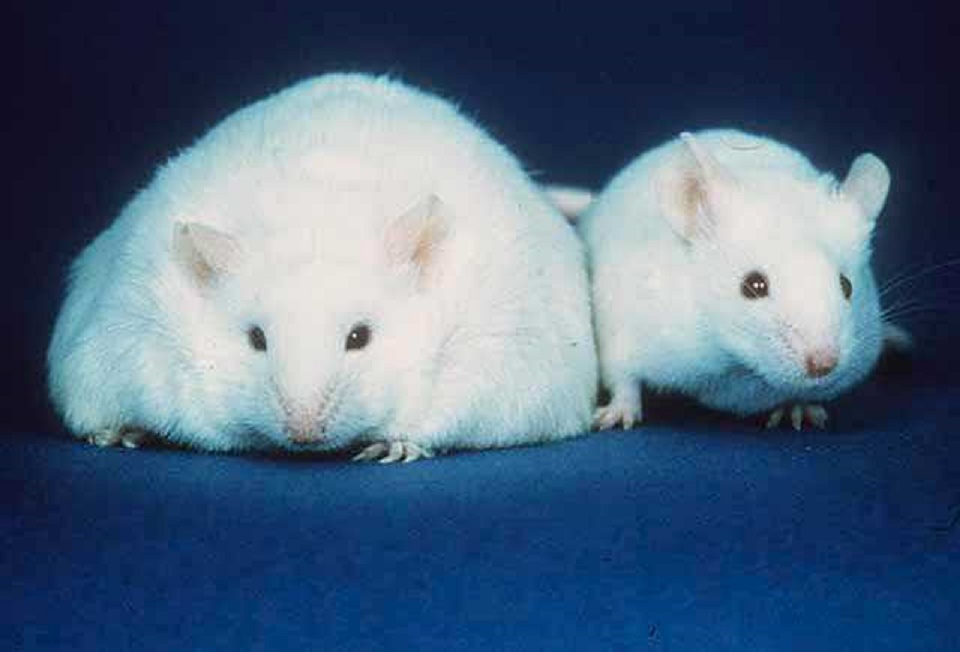
    Credit: Oak Ridge National Laboratory

    Scientists have found a gene they call IRX3 which appears to control how our metabolism works. As it seems to be responsible for if we put weight on, or not.

    IRX3 Makes Mice More Prone to Obesity

    In a recent study on mice, researchers noted that mice lacking the IRX3 gene remained slim almost regardless of how much food they ate, and moreover they appear resistant to developing diabetes.

    The study Obesity-associated variants within FTO form long-range functional connections with IRX3 was conducted at the University of Chicago and has been published in the journal Nature.

    The discovery also highlights the complexity of gene interactions. Another gene called FTO was until recently believed to be the “holy grail” of obesity science and was the focus of much research.

    But the FTO gene did not live up to the expectations. It did, however, provide clues to what would lead the scientists to this recent discovery. Since, it turned out that parts of the FTO gene do in fact control a completely different gene, the IRX3.

    And when the researchers started to fiddle with this gene, remarkable things happened. On average, the mice lacking the IRX3 gene weighed 30% less compared with their species which had the IRX3 gene. The reasoning behind this remarkable finding is that the metabolism increases markedly in mice lacking IRX3.

    Furthermore, the mice did not gain weight on a high-fat diet, they were resistant to metabolic disorders such as diabetes and they had much more of the energy-burning cells known as brown fat. The same results were seen in mice in which the expression of IRX3 was blocked in the hypothalamus in their brains.

    Senior study author Marcelo Nobrega, Ph.D., associate professor of human genetics at the University of Chicago mentioned in a press release; “These mice are thin. They lose weight primarily through the loss of fat. But they are not runts,”.

    Co-author Chin-Chung Hui, Ph.D., professor of molecular genetics at the University of Toronto. “They are also completely resistant to high-fat-diet-induced obesity. They have much better ability to handle glucose, and seem protected against diabetes.”

    The researchers now hope that the findings of IRX3 will be a key breakthrough in developing drugs against obesity in humans.

    _______________
    Obesity-associated variants within FTO form long-range functional connections with IRX3

    ______________________________

    Obesity Overweight University of Chicago University of Toronto
    Share. Facebook Twitter Pinterest LinkedIn Tumblr Email Copy Link

    Related Posts

    A Nutritious Drink Tested Against Alzheimer’s

    November 23, 2020

    Peanut Allergy is Traced to the Gut

    April 21, 2020

    Japanese Diet from 1975 Reduces Obesity

    March 16, 2020

    New Study Reveals Global Intake of Major Beverages

    June 17, 2019

    Ultra-Processed Foods Cause Weight Gain, over Eating, According to a New Study

    May 27, 2019

    Researchers Pinpoint Why Stress Causes Weight Gain

    April 29, 2019
    Recent Posts
    • America’s Quiet Shift Into Fiscal Dominance: Why Inflation May Be Preparing for a Second Act
    • How the End of Bretton Woods Reshaped Our Economies — and Our Politics
    • Can the U.S. Really Handle 250% Debt-to-GDP? Why Jackson Hole’s Daring Paper Is Wrong
    • Japan’s Fiscal Trap: What Happens If Austerity Is No Longer an Option?
    • The Rise of Range Extended Electric Vehicles (REEVs): A New Era of Hybrid Mobility
    • The Great Capital Rotation: A Shift from U.S. Treasuries to Gold and Real Assets
    • The Hidden Risks of Short-Term Debt: A Balancing Act in U.S. Fiscal Policy
    • The Looming U.S. Debt Spiral: Understanding the Risks
    • The Looming Recession: Seven Economic Indicators Flashing Red for 2025
    • Europa Clipper: NASA’s Mission to Unlock the Secrets of Jupiter’s Icy Moon
    © 2025 Illustrated Curiosity

    Type above and press Enter to search. Press Esc to cancel.

    This website uses cookies to improve your experience. We'll assume you're ok with this, but you can opt-out if you wish.Accept Reject Read More
    Privacy & Cookies Policy

    Privacy Overview

    This website uses cookies to improve your experience while you navigate through the website. Out of these, the cookies that are categorized as necessary are stored on your browser as they are essential for the working of basic functionalities of the website. We also use third-party cookies that help us analyze and understand how you use this website. These cookies will be stored in your browser only with your consent. You also have the option to opt-out of these cookies. But opting out of some of these cookies may affect your browsing experience.
    Necessary
    Always Enabled
    Necessary cookies are absolutely essential for the website to function properly. This category only includes cookies that ensures basic functionalities and security features of the website. These cookies do not store any personal information.
    Non-necessary
    Any cookies that may not be particularly necessary for the website to function and is used specifically to collect user personal data via analytics, ads, other embedded contents are termed as non-necessary cookies. It is mandatory to procure user consent prior to running these cookies on your website.
    SAVE & ACCEPT