Close Menu
Illustrated Curiosity | Economics, History, Science, Space, Technology, Health, Physics, Earth
    Facebook X (Twitter) Instagram YouTube
    Illustrated Curiosity | Economics, History, Science, Space, Technology, Health, Physics, Earth
    • Earth
    • Economics
    • Environment
      • Environmental Tech
      • Pollution
      • Wildlife
    • Health
      • Health Tech
      • Medicine
      • Nutrition
      • Exercise
    • History
      • Prehistory
      • Ancient History
      • Postclassical Era
      • Modern History
    • Humans
      • Human Brain
      • Psychology
    • Life
      • Animals & Plants
      • Genetics
      • Paleontology
      • Evolution
      • Genetic Engineering
    • Physics
    • Space
      • Astrobiology
      • Astronomy
      • Extrasolar Planets
      • Space Tech
      • Spaceflight
    • Technology
      • Artificial Intelligence
      • Energy
      • Engineering
      • Materials
      • Robotics
      • Vehicles
    Illustrated Curiosity | Economics, History, Science, Space, Technology, Health, Physics, Earth
    Home » Mussolini’s message to the future discovered under monument
    Modern History

    Mussolini’s message to the future discovered under monument

    September 17, 20162 Mins Read
    Illustration: Illustrated Curiosity
    Share
    Facebook Twitter LinkedIn Pinterest Email


    Scientists have found a letter from Mussolini in Rome, which was to tell future generations about fascism.
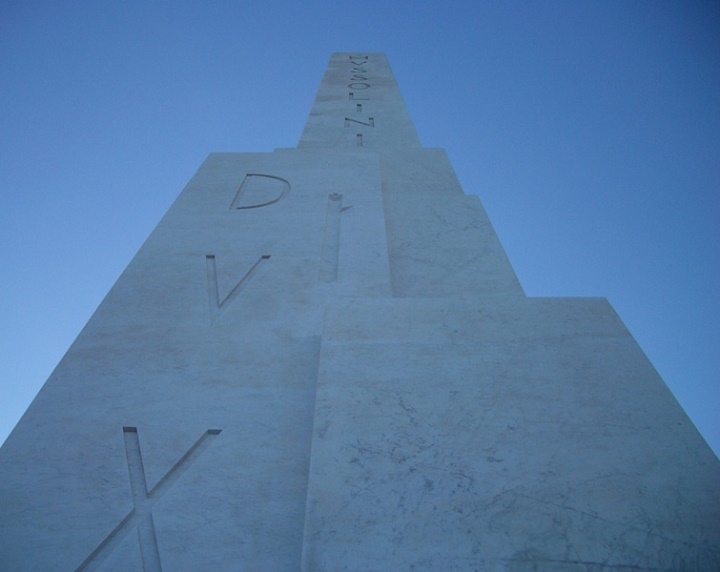
    In 1932, Benito Mussolini raised a 36-meter-tall obelisk of marble at the sports stadium Foro Italico in Rome. The obelisk was to symbolize the power of fascism.

    But what many are not aware of is that Mussolini had hidden a piece of parchment in a metal box under the obelisk: A secret message that would consolidate Mussolini as the savior for future generations.

    The parchment was written by a classical scholar, Aurelio Giuseppe Amatucci, and contains 1,200 words, as it describes – among other things – Mussolini as a leader. The researchers found the parchment following clues in sources from libraries and archives in Rome.
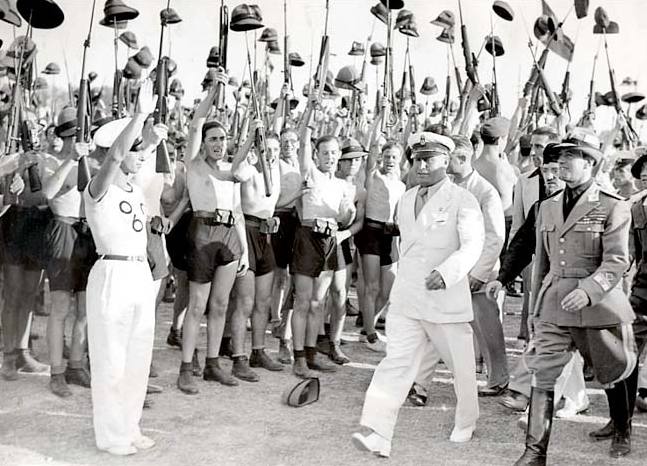
    Picture of Benito Mussolini and Fascist Blackshirt youth in 1935 in Rome. Photo: Via Wikipedia, Public Domain

    Written in three parts:

    • The first is a general history of the achievements of fascism and the rise of Mussolini. It describes Italy as on the brink of disaster following World War One, only to be rescued by Mussolini, “regenerating the country through his superhuman insight and resoluteness”, said Dr. Han Lamers, who works at Humboldt University Berlin and Catholic University of Leuven.”The text presents Mussolini as a kind of new Roman emperor, but also, by using biblical language, as the savior of the Italian people.”
    • The second section concerns the Fascist Youth Organisation (the obelisk was being constructed at its headquarters) and youth programs.
    • The third part deals with the construction of the Foro Italico – then known as the Foro Mussolini – and the erection of the obelisk.

    Mussolini saw himself as a new Roman emperor and was convinced that his message would be read if the obelisk, and thus fascism, fell. He would never be forgotten, and it was certainly no accident that the letter was written in Latin, according to Lamers.

    Latin was the language of the Roman Empire, glorified by the fascists who aimed to recreate it. It was also a language that was considered to be immortal and therefore well-suited as a message for the future.

    The text parchment is still there, as it is indeed unreachable without potentially damaging the massive obelisk, left as a reminder of history.

    Reference:
    The Codex Fori Mussolini

    Benito Mussolini Fascism Italy
    Share. Facebook Twitter Pinterest LinkedIn Tumblr Email Copy Link

    Related Posts

    A Newsreel Cameraman’s View of World War II

    February 14, 2019

    Well-Preserved World War I German Submarine Found Off Belgian Coast

    September 26, 2017

    Biggest Battles in History: The Battle of Stalingrad

    January 3, 2017

    Biggest Battles in History: The Battle of Verdun

    January 2, 2017

    Biggest Battles in History: The Battle of the Somme

    January 1, 2017

    German WWII U-Boat Found Near Indonesia

    August 18, 2015
    Recent Posts
    • Oil Shocks, Policy Mistakes, and the Risk of a Second Inflation Wave (Part II)
    • Oil Shocks, Policy Mistakes, and the Risk of a Second Inflation Wave (Part I)
    • Microsoft Stored a Movie on Glass — And It Could Last Centuries
    • AI, Automatic Stabilizers & Inflation
    • Largest Battles in History: Cannae — Rome’s Darkest Day
    • The Day the Alliance Died
    • Evaluating Heart Disease: How Cumulative Diet Choices Compound Your Risk
    • What Would Happen If China Attacked Taiwan?
    • Geopoliticisation as a Structural Tailwind for Commodity Prices
    • America’s Economic Remodel: Who’s Really Paying the Bill?
    © 2025 Illustrated Curiosity

    Type above and press Enter to search. Press Esc to cancel.