Close Menu
Illustrated Curiosity
    Facebook X (Twitter) Instagram YouTube
    Illustrated Curiosity
    • Earth
    • Economics
    • Environment
      • Climate
      • Environmental Tech
      • Pollution
      • Wildlife
    • Health
      • Health Tech
      • Medicine
      • Nutrition
      • Exercise
    • History
      • Prehistory
      • Ancient History
      • Postclassical Era
      • Modern History
    • Humans
      • Human Brain
      • Psychology
    • Life
      • Animals & Plants
      • Genetics
      • Paleontology
      • Evolution
      • Genetic Engineering
    • Physics
    • Space
      • Astrobiology
      • Astronomy
      • Extrasolar Planets
      • Space Tech
      • Spaceflight
    • Technology
      • Artificial Intelligence
      • Energy
      • Engineering
      • Materials
      • Robotics
      • Vehicles
    Illustrated Curiosity
    Home » Mongol Empire expansion hindered by wet weather
    Postclassical Era

    Mongol Empire expansion hindered by wet weather

    June 7, 20163 Mins Read
    Share
    Facebook Twitter LinkedIn Pinterest Email
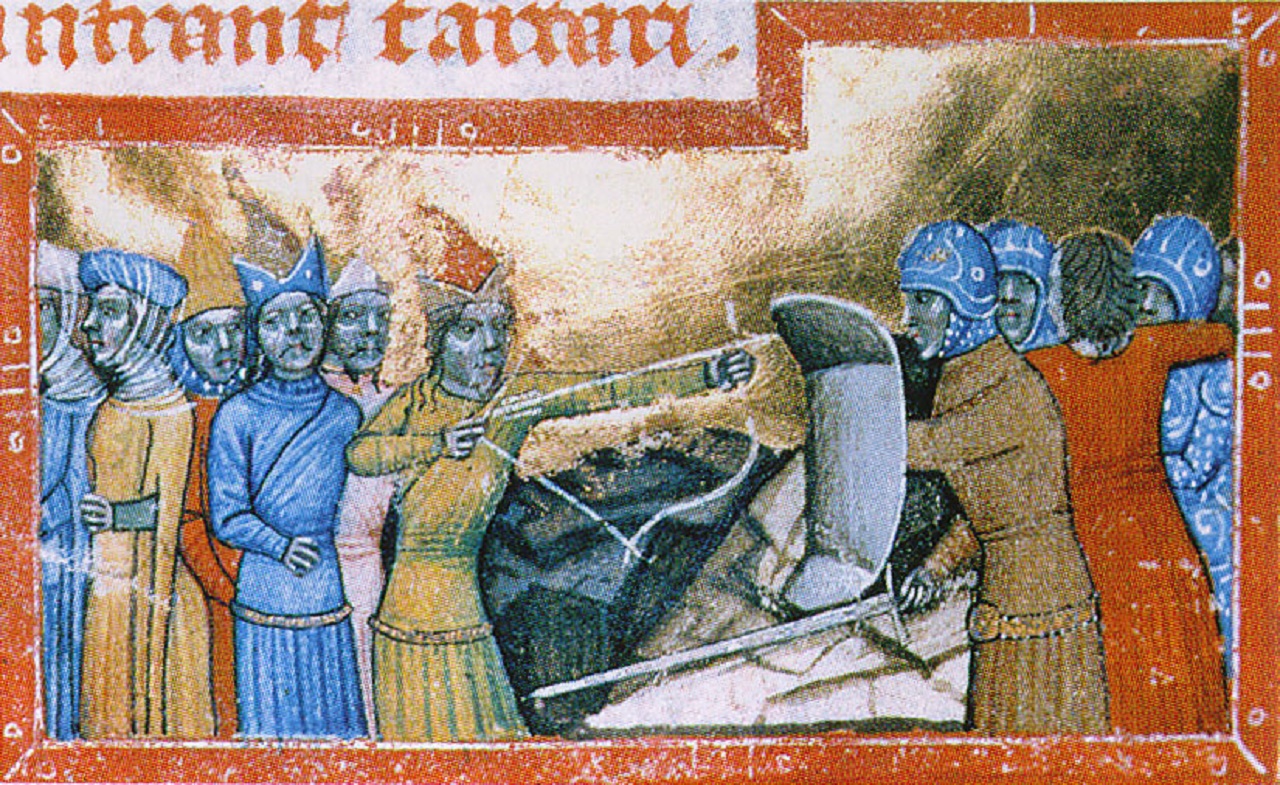
    Painted in 1358. From the Chronicum Pictum in Hungary's National Library. The dismounted Mongols, with captured women, are on the left, the Hungarians, with one saved woman, on the right.
    The Mongols in Hungary 1285 CE.

    Cold weather, rain, and flooding stopped the Mongols and saved Europe from the Mongols invincible mounted army in 1242 CE. This, according to an international research team led by Princeton professor Nicola de Cosmo.

    None had stood against the Mongol hordes and Europe stood next in line to fall like everyone else. The Polish and Hungarian armies were beaten and Eastern Europe was ripe for harvest, Western Europe was about to be attacked.
    Credit: Nature / Ulf Büntgen & Nicola Di Cosmo | doi:10.1038/srep25606
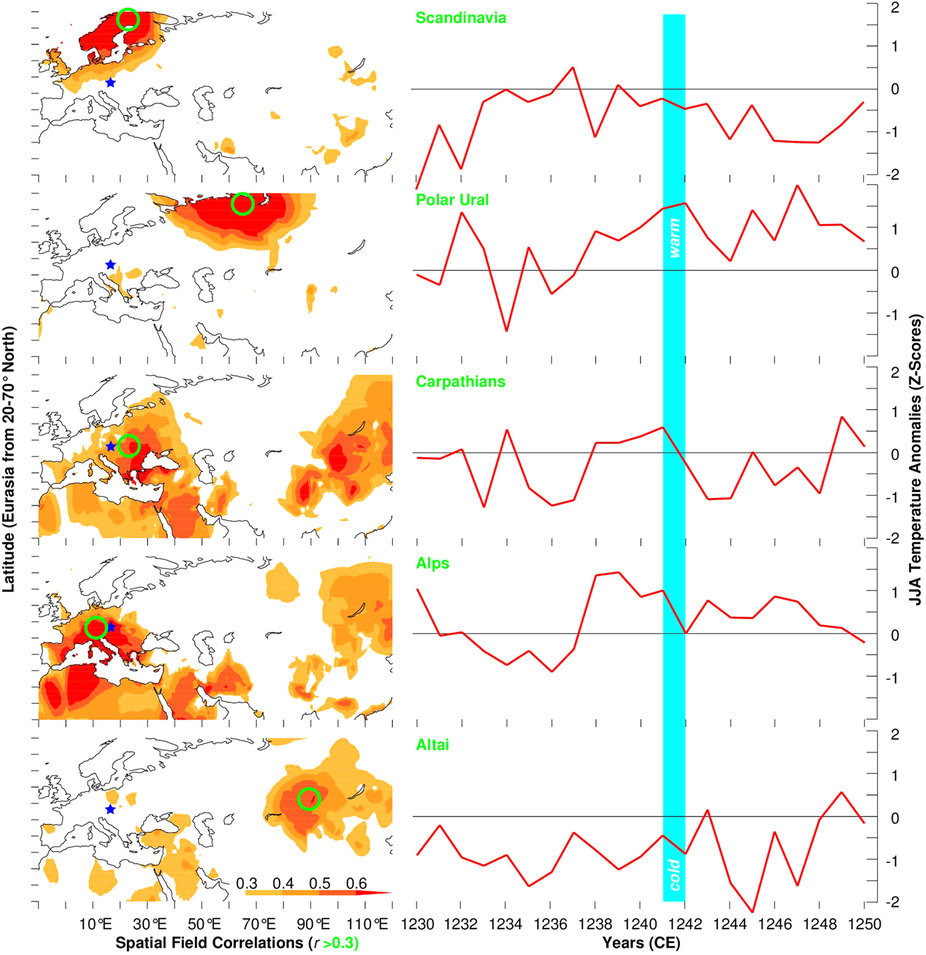
    June-August (JJA) temperature variability reconstructed from five regional tree-ring chronologies in Eurasia (~10–90°E and ~45–65°N). Time-series have been normalized (i.e. mean of zero and standard deviation of one) over the last millennium to improve visual comparison, and the vertical bar indicates temperature changes from 1241–1242 CE.

    But then the Mongolian army suddenly stopped their advance into Europe, turned around and headed back home in the winter of 1242.

    Cosmo and his team present a hypothesis that the weather was the reason to why the usually victorious Mongol leader Batu Khan retreated.

    Quagmire Broke the Mongols

    The scientists made a dendroclimatic study of growth rings in trees. These indicate that the winter of 1242 was particularly cold and wet in Central Europe.

    Open grass plains were fundamental for the logistics of such a large army on horses. Since this weather possibly turned the central European plains into a quagmire – it made the terrain difficult to traverse for the Mongol mounted forces.

    This unusual weather is also mentioned in written historical sources. They testify about a historical flooding of the The Great Hungarian Plain. Which most probably hampered the nearly 130,000 Mongol warriors and their horses, being unable to graze. Ensuring sufficient grazing for the massive horse herd was crucial.

    Therefore, the researchers believe that the Mongols made their way to the greener pastures of Russia instead.

    Ögedei Khan Died
    Credit: Nature / Ulf Büntgen & Nicola Di Cosmo | doi:10.1038/srep25606
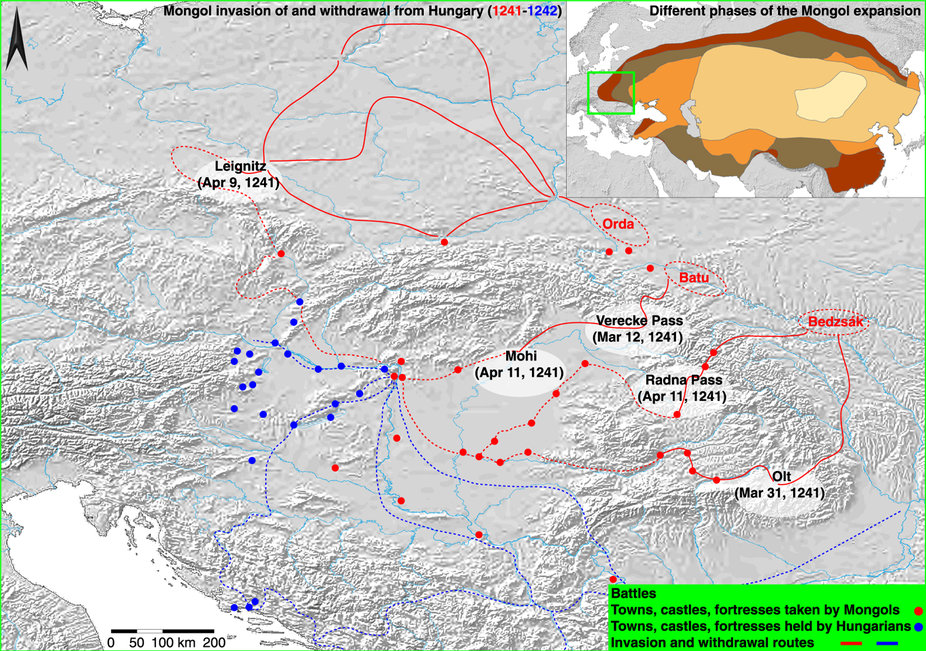
    Spatiotemporal characteristics of the Mongol invasion of and sudden withdrawal from Hungary between 1241 and 1242 CE.

    Other historians have long pointed out that Batu Khan probably interrupted his campaign because of the great Khan Ögedei’s death in December 1241 CE.

    This explanation is not enough, though, according to Nicola de Cosmo, who is referring to the fact that Batu Khan never returned home to the Mongol capital of Karakorum to participate in the election of a new great khan.

    “The weather was certainly not the only reason for the retreat, but to ignore it is like saying that the Russian winter had no effect on Napoleon’s army,” says Professor of Cosmo.

    _____________
    Climatic and environmental aspects of the Mongol withdrawal from Hungary in 1242 CE

    __________________________

    Europe Hungary Mongol Empire
    Share. Facebook Twitter Pinterest LinkedIn Tumblr Email Copy Link

    Related Posts

    Vikings Were in the Americas Exactly 1,000 Years Ago

    October 25, 2021

    The DNA Fingerprint of the Vikings is Found All Over Europe

    October 12, 2020

    The Use of Coal to Produce Electricity in Europe Dropped Dramatically in 2019

    January 20, 2020

    The Game-Changing Swedish Warship That Sank in Its First Battle

    January 15, 2020

    Henbane Made the Vikings Go Berserk

    October 7, 2019

    Hoard of 1,000-Year-Old Coins Found By Metal Detecting Couple In England

    September 9, 2019
    Recent Posts
    • America’s Quiet Shift Into Fiscal Dominance: Why Inflation May Be Preparing for a Second Act
    • How the End of Bretton Woods Reshaped Our Economies — and Our Politics
    • Can the U.S. Really Handle 250% Debt-to-GDP? Why Jackson Hole’s Daring Paper Is Wrong
    • Japan’s Fiscal Trap: What Happens If Austerity Is No Longer an Option?
    • The Rise of Range Extended Electric Vehicles (REEVs): A New Era of Hybrid Mobility
    • The Great Capital Rotation: A Shift from U.S. Treasuries to Gold and Real Assets
    • The Hidden Risks of Short-Term Debt: A Balancing Act in U.S. Fiscal Policy
    • The Looming U.S. Debt Spiral: Understanding the Risks
    • The Looming Recession: Seven Economic Indicators Flashing Red for 2025
    • Europa Clipper: NASA’s Mission to Unlock the Secrets of Jupiter’s Icy Moon
    © 2025 Illustrated Curiosity

    Type above and press Enter to search. Press Esc to cancel.

    This website uses cookies to improve your experience. We'll assume you're ok with this, but you can opt-out if you wish.Accept Reject Read More
    Privacy & Cookies Policy

    Privacy Overview

    This website uses cookies to improve your experience while you navigate through the website. Out of these, the cookies that are categorized as necessary are stored on your browser as they are essential for the working of basic functionalities of the website. We also use third-party cookies that help us analyze and understand how you use this website. These cookies will be stored in your browser only with your consent. You also have the option to opt-out of these cookies. But opting out of some of these cookies may affect your browsing experience.
    Necessary
    Always Enabled
    Necessary cookies are absolutely essential for the website to function properly. This category only includes cookies that ensures basic functionalities and security features of the website. These cookies do not store any personal information.
    Non-necessary
    Any cookies that may not be particularly necessary for the website to function and is used specifically to collect user personal data via analytics, ads, other embedded contents are termed as non-necessary cookies. It is mandatory to procure user consent prior to running these cookies on your website.
    SAVE & ACCEPT