Close Menu
Illustrated Curiosity
    Facebook X (Twitter) Instagram YouTube
    Illustrated Curiosity
    • Earth
    • Economics
    • Environment
      • Climate
      • Environmental Tech
      • Pollution
      • Wildlife
    • Health
      • Health Tech
      • Medicine
      • Nutrition
      • Exercise
    • History
      • Prehistory
      • Ancient History
      • Postclassical Era
      • Modern History
    • Humans
      • Human Brain
      • Psychology
    • Life
      • Animals & Plants
      • Genetics
      • Paleontology
      • Evolution
      • Genetic Engineering
    • Physics
    • Space
      • Astrobiology
      • Astronomy
      • Extrasolar Planets
      • Space Tech
      • Spaceflight
    • Technology
      • Artificial Intelligence
      • Energy
      • Engineering
      • Materials
      • Robotics
      • Vehicles
    Illustrated Curiosity
    Home » Sleep Loss Interferes with Neuron Activity, Study Shows
    Human Brain

    Sleep Loss Interferes with Neuron Activity, Study Shows

    November 13, 20172 Mins Read
    Share
    Facebook Twitter LinkedIn Pinterest Email

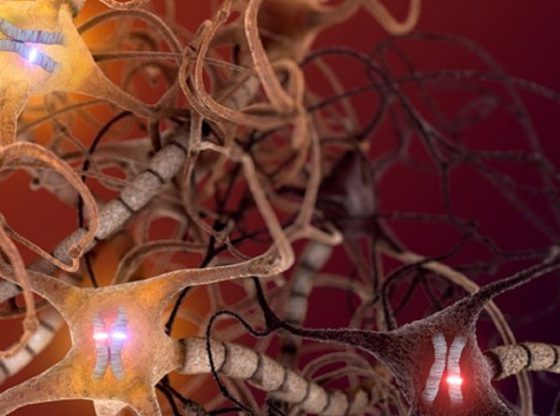
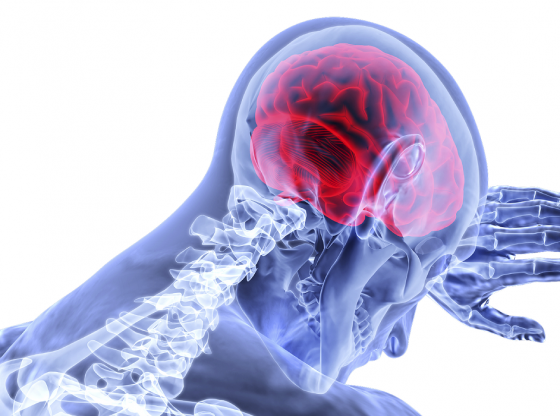
    American researchers studied what happens in the brain when we sleep inadequately. Their results show that individual nerve cells are too tired to communicate.

    CC0 Creative Commons

    Many people may recognize that it’s hard to keep up with everything that happens around us after a bad night sleep. And now, for the first time, American scientists have been able to show more precisely what happens in the brain when we lack sufficient amount of sleep.

    The international team of researchers measured the responsiveness of nerve cells in people who skipped a whole night’s sleep. The results show that activity in individual nerve cells was greatly reduced.

    Studying 12 people who were preparing to undergo surgery at The University of California for epilepsy, with electrodes implanted in their brains in order to pinpoint the origin of their seizures.

    The researchers observed that lack of sleep interfered with the neurons’ ability to encode information and translate visual input into conscious thought. They also discovered that slower brain waves accompanied sluggish cellular activity in the temporal lobe and other parts of the brain.

    Previously, it has been thought that the whole system of nerve cells slows down with inadequate sleep. But now, it has been shown that individual cells lose their ability to communicate.

    Lack of sleep causes the nerve cells to react more slowly, making us slower to respond to information supplied to us through our senses. And such attention deficits could certainly be dangerous, for example for those driving.

    The findings have been published online in the journal Nature Medicine.

    Reference:

    Nir et al., Selective neuronal lapses precede human cognitive lapses following sleep deprivation, published November 6, 2017 in Nature Medicine, doi: 10.1038 / nm.4433

    Sleep
    Share. Facebook Twitter Pinterest LinkedIn Tumblr Email Copy Link

    Related Posts

    Why Some Get Goose Bumps from Music and Others Don’t

    October 28, 2019

    Newfound Nerve Cells Can Help to Sort out Things That We Should Forget

    October 21, 2019

    You Can’t Make up for Lost Sleep on the Weekend — Not if You Want to Stay Healthy

    March 11, 2019

    Sleeping in During the Weekend Might Actually Be Good for You

    January 19, 2018

    Baby Brains Help Infants Figure It out before They Try It Out

    January 18, 2018

    Being Good At Certain Video Games May Be A Sign Of Intelligence

    November 22, 2017
    Recent Posts
    • America’s Quiet Shift Into Fiscal Dominance: Why Inflation May Be Preparing for a Second Act
    • How the End of Bretton Woods Reshaped Our Economies — and Our Politics
    • Can the U.S. Really Handle 250% Debt-to-GDP? Why Jackson Hole’s Daring Paper Is Wrong
    • Japan’s Fiscal Trap: What Happens If Austerity Is No Longer an Option?
    • The Rise of Range Extended Electric Vehicles (REEVs): A New Era of Hybrid Mobility
    • The Great Capital Rotation: A Shift from U.S. Treasuries to Gold and Real Assets
    • The Hidden Risks of Short-Term Debt: A Balancing Act in U.S. Fiscal Policy
    • The Looming U.S. Debt Spiral: Understanding the Risks
    • The Looming Recession: Seven Economic Indicators Flashing Red for 2025
    • Europa Clipper: NASA’s Mission to Unlock the Secrets of Jupiter’s Icy Moon
    © 2025 Illustrated Curiosity

    Type above and press Enter to search. Press Esc to cancel.

    This website uses cookies to improve your experience. We'll assume you're ok with this, but you can opt-out if you wish.Accept Reject Read More
    Privacy & Cookies Policy

    Privacy Overview

    This website uses cookies to improve your experience while you navigate through the website. Out of these, the cookies that are categorized as necessary are stored on your browser as they are essential for the working of basic functionalities of the website. We also use third-party cookies that help us analyze and understand how you use this website. These cookies will be stored in your browser only with your consent. You also have the option to opt-out of these cookies. But opting out of some of these cookies may affect your browsing experience.
    Necessary
    Always Enabled
    Necessary cookies are absolutely essential for the website to function properly. This category only includes cookies that ensures basic functionalities and security features of the website. These cookies do not store any personal information.
    Non-necessary
    Any cookies that may not be particularly necessary for the website to function and is used specifically to collect user personal data via analytics, ads, other embedded contents are termed as non-necessary cookies. It is mandatory to procure user consent prior to running these cookies on your website.
    SAVE & ACCEPT