Close Menu
Illustrated Curiosity
    Facebook X (Twitter) Instagram YouTube
    Illustrated Curiosity
    • Earth
    • Economics
    • Environment
      • Climate
      • Environmental Tech
      • Pollution
      • Wildlife
    • Health
      • Health Tech
      • Medicine
      • Nutrition
      • Exercise
    • History
      • Prehistory
      • Ancient History
      • Postclassical Era
      • Modern History
    • Humans
      • Human Brain
      • Psychology
    • Life
      • Animals & Plants
      • Genetics
      • Paleontology
      • Evolution
      • Genetic Engineering
    • Physics
    • Space
      • Astrobiology
      • Astronomy
      • Extrasolar Planets
      • Space Tech
      • Spaceflight
    • Technology
      • Artificial Intelligence
      • Energy
      • Engineering
      • Materials
      • Robotics
      • Vehicles
    Illustrated Curiosity
    Home » Proximity to Green Spaces Associated with Better Attention in Children
    Human Brain

    Proximity to Green Spaces Associated with Better Attention in Children

    November 1, 2017No Comments2 Mins Read
    Share
    Facebook Twitter LinkedIn Pinterest Email

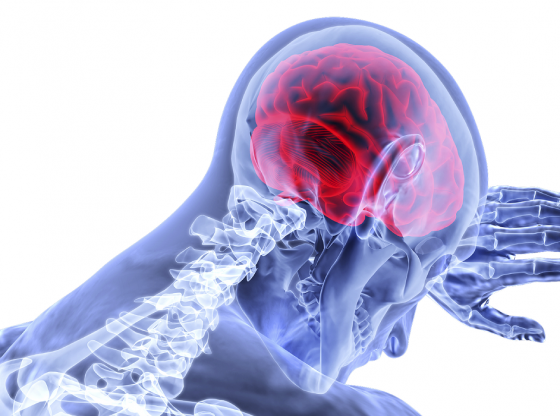
    Natural surroundings, including green spaces, may be beneficial for brain development in children. A new Spanish study shows that proximity to green spaces was associated with better scores on tests of attention

    CC0 Creative Commons Pixabay

    Growing up in close proximity to natural surroundings, including green spaces, may be beneficial for brain development in children, according to Spanish researchers.

    The study published in Environment Health Perspectives was based on data from 1,500 children of the INMA – Environment and Childhood Project cohort in Sabadell and Valencia, collected during 2003-2013.

    Previous research has shown that nature is good for children in many ways. For example, another Spanish study found that green spaces within and around city schools improve the mental development of young children.

    This new study examined how children growing up with nature close to their home develop cognizance and are have it easier to concentrate. The more vegetation around their homes, the better the children performed on different attention tests during their upbringing.

    The research team analyzed residential surrounding greenness – at 100, 300 and 500 meters distance – at birth, 4-5 years and 7 years of age. Then, two types of attention tests were performed at 4-5 and 7 years of age. The research shows that children with higher greenness around their homes had better scores in the attention tests.

    “Green spaces in cities promote social connections and physical activity and reduce exposure to air pollution and noise, and are therefore essential for the development of the future generations’ brains”

    – Jordi Sunyer, study coordinator and head of the Child Health Programme at ISGlobal

    This shows the importance of green spaces in cities for children’s health and development, the researchers write in their study.

    Reference:

    Dadvand et al. “Lifelong Residential Exposure to Green Space and Attention: A Population-Based Prospective Study“. Environment Health Perspectives, September 2017. Doi: 10.1289 / EHP694

    Children
    Share. Facebook Twitter Pinterest LinkedIn Tumblr Email Copy Link

    Related Posts

    Why Some Get Goose Bumps from Music and Others Don’t

    October 28, 2019

    Newfound Nerve Cells Can Help to Sort out Things That We Should Forget

    October 21, 2019

    Sleeping in During the Weekend Might Actually Be Good for You

    January 19, 2018

    Baby Brains Help Infants Figure It out before They Try It Out

    January 18, 2018

    Being Good At Certain Video Games May Be A Sign Of Intelligence

    November 22, 2017

    Sleep Loss Interferes with Neuron Activity, Study Shows

    November 13, 2017
    Recent Posts
    • How the End of Bretton Woods Reshaped Our Economies — and Our Politics
    • Can the U.S. Really Handle 250% Debt-to-GDP? Why Jackson Hole’s Daring Paper Is Wrong
    • Japan’s Fiscal Trap: What Happens If Austerity Is No Longer an Option?
    • The Rise of Range Extended Electric Vehicles (REEVs): A New Era of Hybrid Mobility
    • The Great Capital Rotation: A Shift from U.S. Treasuries to Gold and Real Assets
    • The Hidden Risks of Short-Term Debt: A Balancing Act in U.S. Fiscal Policy
    • The Looming U.S. Debt Spiral: Understanding the Risks
    • The Looming Recession: Seven Economic Indicators Flashing Red for 2025
    • Europa Clipper: NASA’s Mission to Unlock the Secrets of Jupiter’s Icy Moon
    • Could Hedge Funds Cause Chaos in the U.S. Treasury Market? And What About Inflation?
    © 2025 Illustrated Curiosity

    Type above and press Enter to search. Press Esc to cancel.

    This website uses cookies to improve your experience. We'll assume you're ok with this, but you can opt-out if you wish.Accept Reject Read More
    Privacy & Cookies Policy

    Privacy Overview

    This website uses cookies to improve your experience while you navigate through the website. Out of these, the cookies that are categorized as necessary are stored on your browser as they are essential for the working of basic functionalities of the website. We also use third-party cookies that help us analyze and understand how you use this website. These cookies will be stored in your browser only with your consent. You also have the option to opt-out of these cookies. But opting out of some of these cookies may affect your browsing experience.
    Necessary
    Always Enabled
    Necessary cookies are absolutely essential for the website to function properly. This category only includes cookies that ensures basic functionalities and security features of the website. These cookies do not store any personal information.
    Non-necessary
    Any cookies that may not be particularly necessary for the website to function and is used specifically to collect user personal data via analytics, ads, other embedded contents are termed as non-necessary cookies. It is mandatory to procure user consent prior to running these cookies on your website.
    SAVE & ACCEPT