Close Menu
Illustrated Curiosity | Economics, History, Science, Space, Technology, Health, Physics, Earth
    Facebook X (Twitter) Instagram YouTube
    Illustrated Curiosity | Economics, History, Science, Space, Technology, Health, Physics, Earth
    • Earth
    • Economics
    • Environment
      • Environmental Tech
      • Pollution
      • Wildlife
    • Health
      • Health Tech
      • Medicine
      • Nutrition
      • Exercise
    • History
      • Prehistory
      • Ancient History
      • Postclassical Era
      • Modern History
    • Humans
      • Human Brain
      • Psychology
    • Life
      • Animals & Plants
      • Genetics
      • Paleontology
      • Evolution
      • Genetic Engineering
    • Physics
    • Space
      • Astrobiology
      • Astronomy
      • Extrasolar Planets
      • Space Tech
      • Spaceflight
    • Technology
      • Artificial Intelligence
      • Energy
      • Engineering
      • Materials
      • Robotics
      • Vehicles
    Illustrated Curiosity | Economics, History, Science, Space, Technology, Health, Physics, Earth
    Home » An Interstellar Object Visits Our Solar System
    Astronomy

    An Interstellar Object Visits Our Solar System

    November 2, 20173 Mins Read
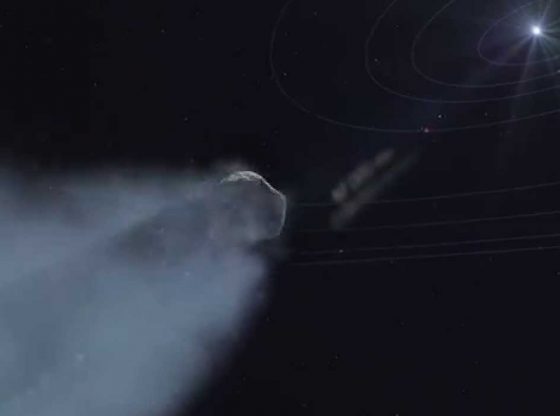
    Artist concept. Image: NASA, Public Domain
    Share
    Facebook Twitter LinkedIn Pinterest Email

    An asteroid is speeding through our solar system. It is the first time that researchers have registered such an object on a visit from beyond the solar system.
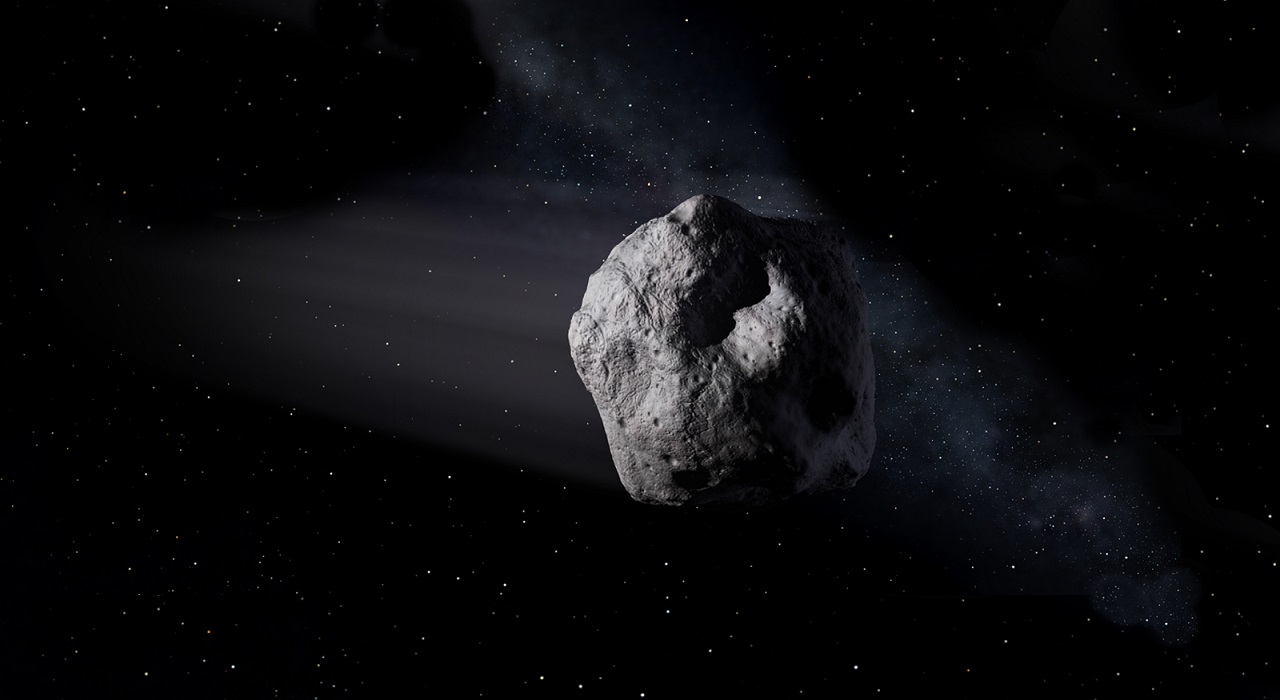
    First detected on October 19th by the telescope Pan-STARRS in Hawaii, a small flash of light reflecting off an unknown asteroid (possibly a comet).

    On closer examination and calculations of the object’s direction of motion show that the 400-meter-wide stone has made the journey from beyond our solar system.

    The A / 2017 U1 object is thus the first observed asteroid on an interstellar trip from another solar system. The scientists do not know if the object is an asteroid (made up of metals and rocky material) or a comet (made up of ice, dust, and rocky material).

    Most asteroids in our solar system orbit our sun within the so-called asteroid belt between Jupiter and Mars. But by measuring the A/2017 U1 so-called eccentricity, researchers could see that this particular asteroid’s origin is a place beyond our solar system.

    “We have long suspected that these objects should exist, because during the process of planet formation a lot of material should be ejected from planetary systems. What’s most surprising is that we’ve never seen interstellar objects pass through before,”

    – Karen Meech, an astronomer at the University of Hawaii Institute for Astronomy, specializes in small bodies and their connection to solar system formation.

    The eccentricity describes the circular path of the celestial body. If the eccentricity is 0, the object has a perfectly circular path, whereas objects with an eccentricity closer to 1 move in an elongated ellipse.
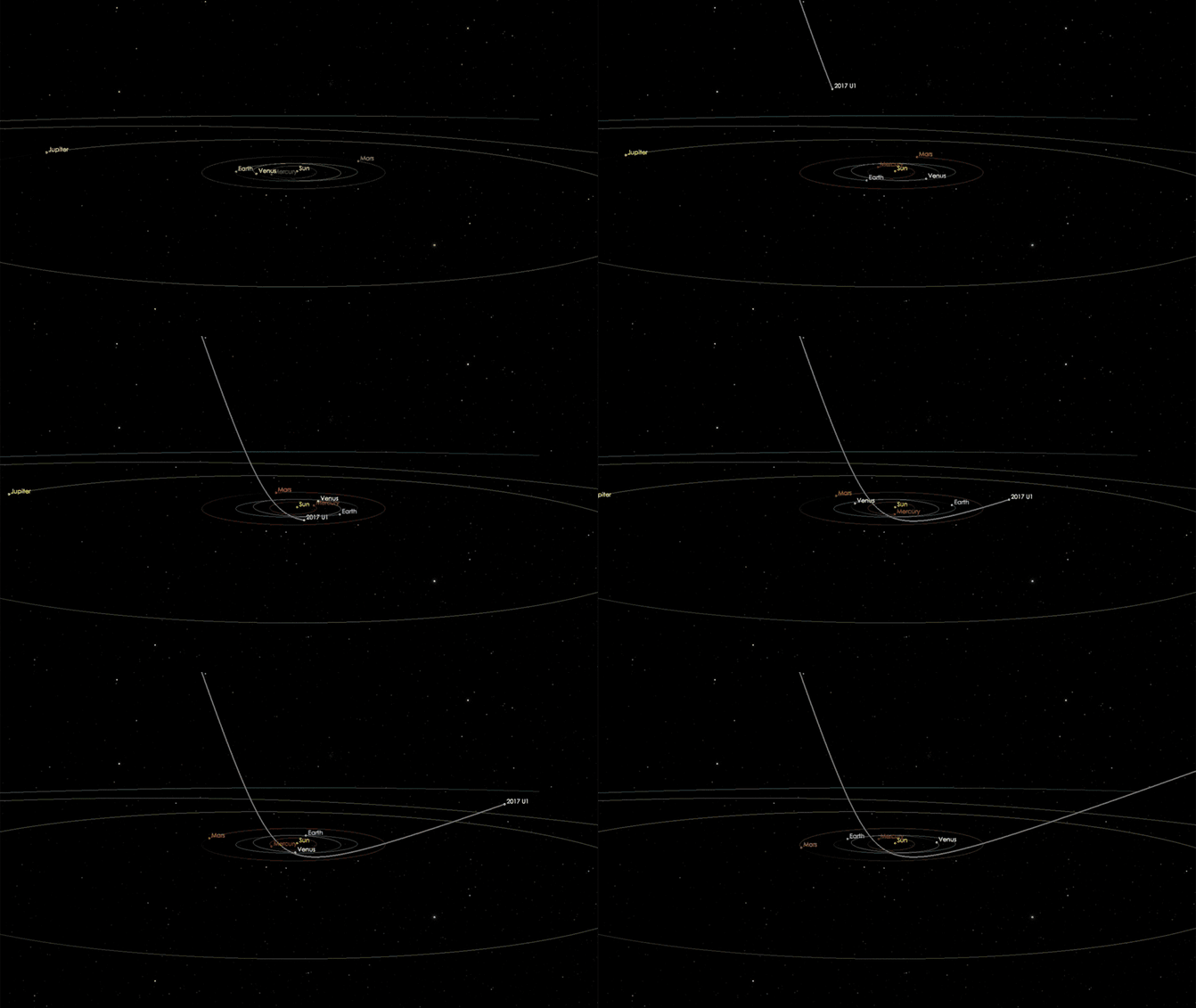
    This animation shows the path of A/2017 U1 as it passed through our inner solar system in September and October 2017. Scientists calculate that it probably originated from outside of our solar system. Image: NASA, Public Domain

    This asteroid has an eccentricity of just under 1.2, and the trajectory is very straight, which is not characteristic of an asteroid in orbit around the sun. The researchers, therefore, assume that the A/2017 U1 originates from interstellar space.

    “We have been waiting for this day for decades,”

    “It’s long been theorized that such objects exist — asteroids or comets moving around between the stars and occasionally passing through our solar system — but this is the first such detection. So far, everything indicates this is likely an interstellar object, but more data would help to confirm it.”

    – Paul Chodas at NASA’s Center for Near-Earth Object Studies.

    According to NASA’s calculations, A/2017 U1 came in the direction of the constellation Lyra. The object flew at an exceptionally high speed of 25.5 km/s through the solar system and passed the Earth at a distance of 24 million kilometers.

    The immense gravity of the sun influenced the asteroid to slingshot past in a curved trajectory, with it now heading for the constellation Pegasus, out of the solar system.

    Reference:

    NASA: Small Asteroid or Comet ‘Visits’ from Beyond the Solar System
    Asteroid Comet Interstellar Space
    Share. Facebook Twitter Pinterest LinkedIn Tumblr Email Copy Link

    Related Posts

    The James Webb Space Telescope DeliversThe Deepest Image of the Universe (yet)

    July 13, 2022

    There Is Now Rigorous Evidence for Water on the Moon

    November 2, 2020

    The Dwarf Planet Ceres Might Be Home to an Underground Ocean of Water

    August 12, 2020

    Mysterious Repeating Fast Radio Burst Traced to Nearby Galaxy

    January 13, 2020

    Mercury Transit 2019 4K UHD

    November 12, 2019

    A Second Interstellar Visitor Detected in Our Solar System

    September 20, 2019
    Recent Posts
    • Largest Battles in History: Cannae — Rome’s Darkest Day
    • The Day the Alliance Died
    • Evaluating Heart Disease: How Cumulative Diet Choices Compound Your Risk
    • What Would Happen If China Attacked Taiwan?
    • Geopoliticisation as a Structural Tailwind for Commodity Prices
    • America’s Economic Remodel: Who’s Really Paying the Bill?
    • Why Inflation May Be Preparing for a Second Act
    • How the End of Bretton Woods Reshaped Our Economies — and Our Politics
    • Can the U.S. Really Handle 250% Debt-to-GDP? Why Jackson Hole’s Daring Paper Is Wrong
    • Japan’s Fiscal Trap: What Happens If Austerity Is No Longer an Option?
    © 2025 Illustrated Curiosity

    Type above and press Enter to search. Press Esc to cancel.