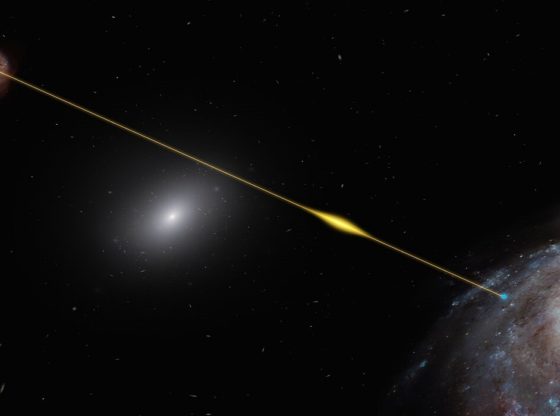

Astronomers are monitoring an interstellar comet hurtling through the solar system. It’s the second time in less than two years that astronomers detected an object from beyond our solar system swing through our cosmic neighborhood.
Astronomers discovered the first interstellar object on record, ‘1I/2017 U1′, dubbed ‘Oumuamua, on October 19 in 2017. We were able to gather hundreds of observations of the object as it whizzed through the solar system. It was strangely cigar-shaped and seemed to accelerate as it traveled away from the Sun.
Oumuamua kicked off a worldwide sprint to inspect the object before it got away. It was mysterious enough that some astronomers even began to consider whether it was dispatched by an advanced alien civilization.
The object’C/2019 Q4’ has been dubbed ‘Borisov’ and was first detected on August 30 by Gennady Borisov, an amateur astronomer at the MARGO observatory in Nauchnij, Crimea.
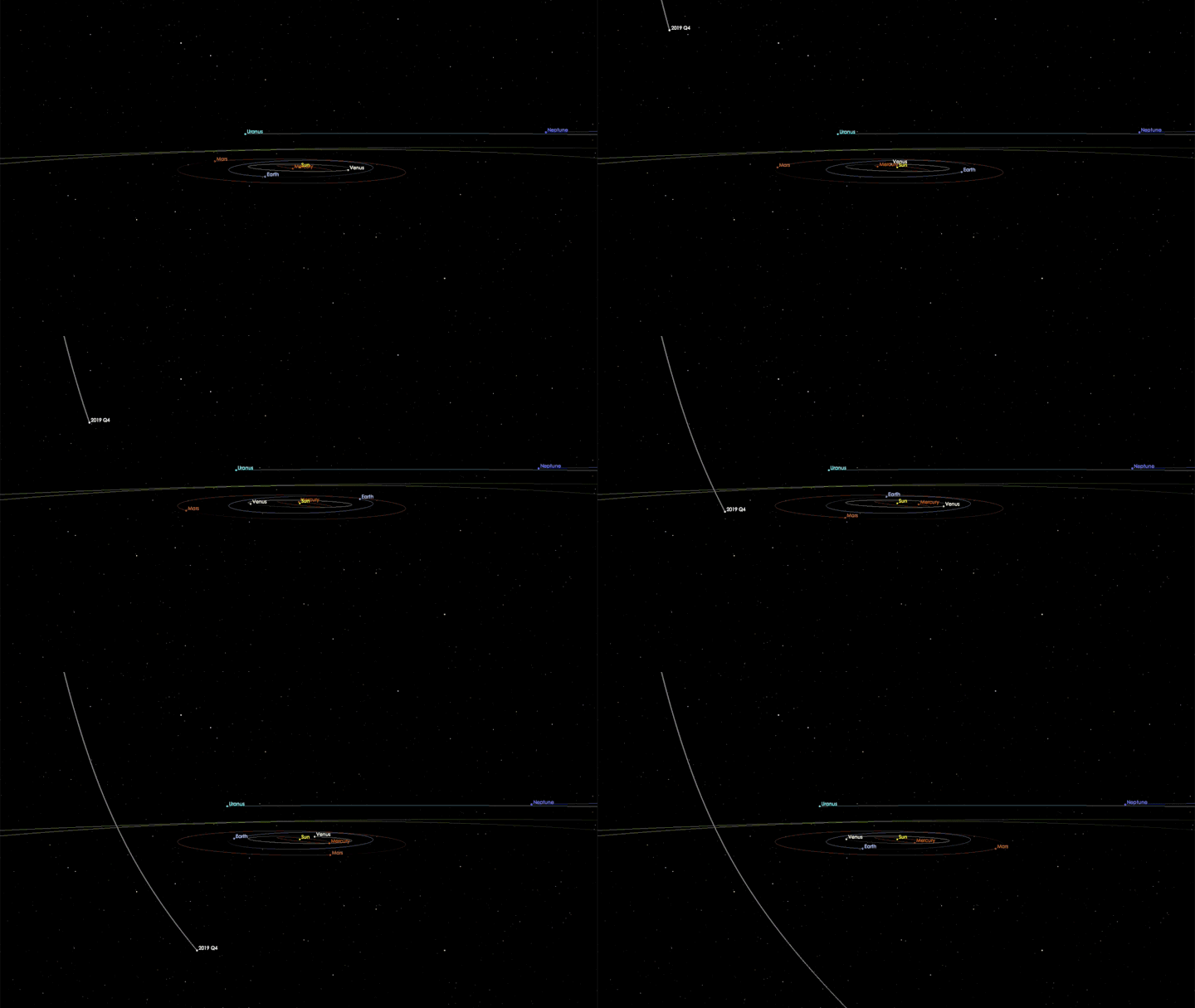
Since Gennady’s initial observation, many more have zoomed in on the object with scientists calculating the shape of its orbit. These calculations seem to reveal that the trajectory has a hyperbolic shape – rather than the elliptical shape that characterizes the orbits of things circling the Sun. The trajectory suggests that the object will eventually exit the solar system, never to return.
This object was reported as a comet candidate by G. Borisov (L51) on Aug. 30 UTC. After posting on the NEOCP/PCCP, confirmation of the cometary nature was provided by numerous observers.
Based on the available observations, the orbit solution for this object has converged to the hyperbolic elements shown below, which would indicate an interstellar origin. A number of other orbit computers have reached similar conclusions.
– According to the Minor Planet Center at Harvard University who has issued a formal announcement of the discovery.
Astronomers also think that the object is a little larger than ‘Oumuamua, though the hazy coma makes it hard to tell Comet C/2019 Q4 (Borisov)’s shape, just now.
Here's a remarkable animation of #gb00234, which may be our second known interstellar visitor, taken by astronomer Gennady Borisov – who discovered the object.
2l/Borisov, perhaps?
(source: https://t.co/vkYXrK6KBC) pic.twitter.com/WObsGj3HJH
— Jonathan O’Callaghan (@Astro_Jonny) September 11, 2019
Since the comet is still inbound, it will provide astronomers and amateurs plenty of time to observe it further. ‘Oumuamua was seen on it’s way out of the solar system and within a few weeks was already to faint to be seen by even the Hubble Space Telescope. The new comet ‘Borisov will reach its closest approach to the Sun around December 7 and likely remain visible for an entire year.
The new discovery will undoubtedly spark a gold rush of research on interstellar objects. Already astronomers are submitting papers about the new comet to journals and online preprint sites.