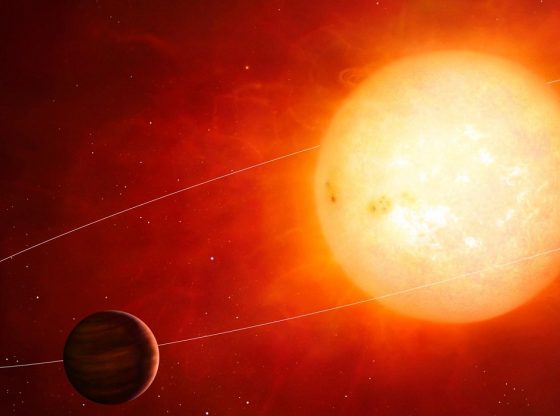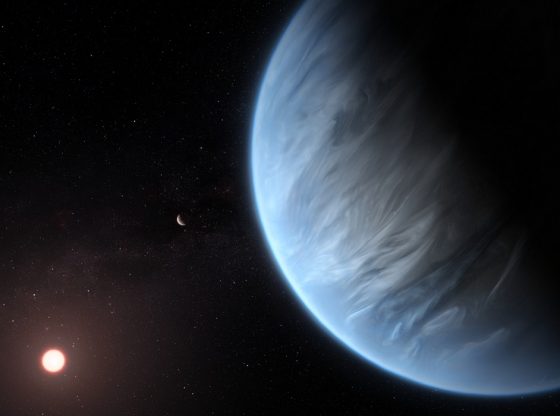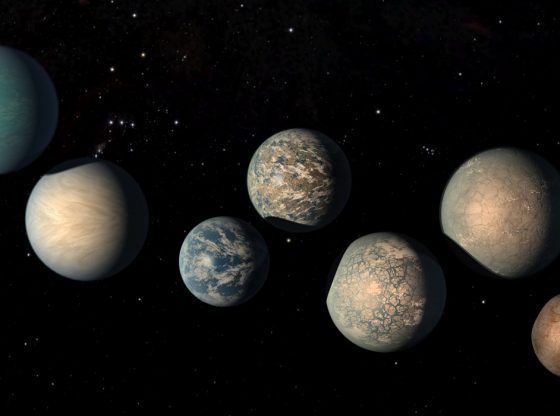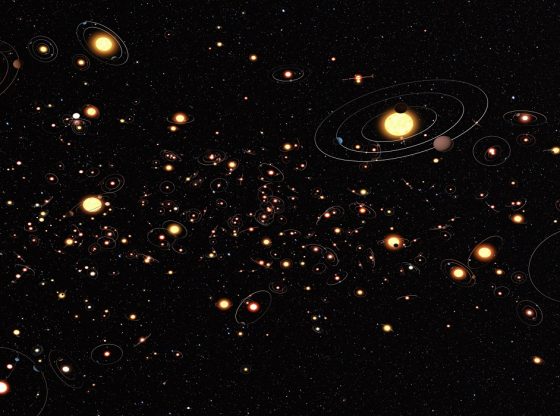

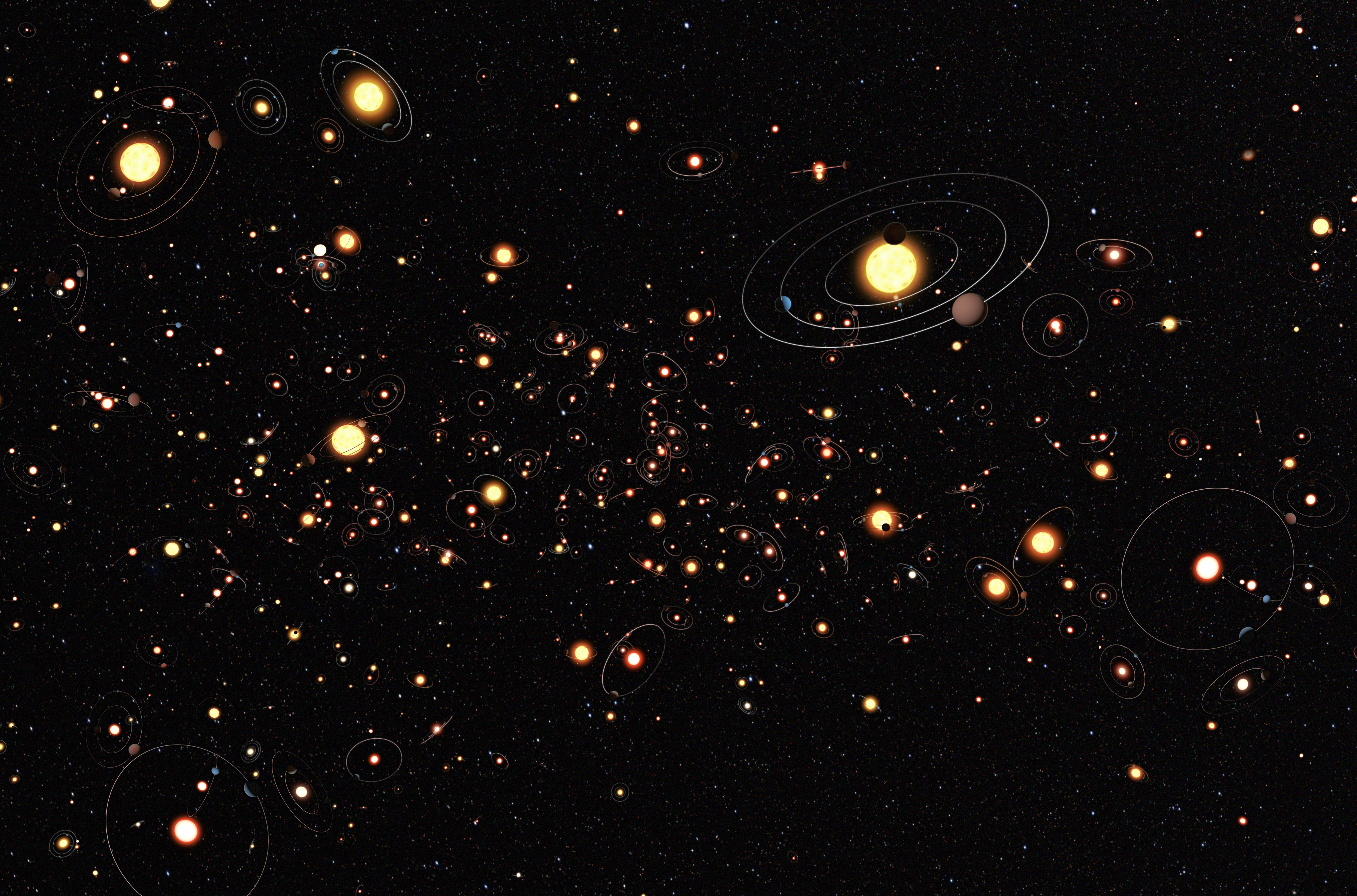
Last week an international team of astronomers announced that they had found eleven new exoplanets (extrasolar planets). These planets make the accumulated amount of planets found to exceed 1,000 and is, therefore, a milestone.
A Milestone
The number of exoplanets number 1,010. This, according to the Extrasolar Planets Encyclopaedia, exoplanet.eu. NASA however, only counts exoplanets described in published articles and according to them, there are still only 919 found and approved exoplanets.
But nevertheless, the number of found planets is an incredible feat of knowledge since not so long ago we had no proof at all that planets beyond our own solar system actually existed. We could only speculate and theorize with some accuracy.
The First Planet Was Weird
The first proof of an exoplanet came in 1995 when the first planet outside our solar system was discovered and named 51 Pegasi b. This was the first planet found to orbit a star.
That discovery is often thought of as the first planet discovered. But this is really incorrect since the first discovered planet was very weird. Aleksander Wolszczan found a planet orbiting the pulsar PSR 1257 in 1992. Pegasi b was discovered by looking at the wobbling motion of the pulsar since large planet affects their host stars movement around their own axis during orbit.
Kepler
In 2009 the space telescope Kepler was deployed, a telescope specifically designed to detect planets around distant stars by measuring minute differences in light when a planet orbiting a distant star moves between the star and the observer telescope. It has been analogized to being like recognizing an insect crawling across the headlight of a car ten kilometers away.
This method used by the Kepler Space Telescope is called the Transit Method, or Transit Photometry, and it was also the method used when this recent finding was made by the WASP telescope project. The UK, Swiss and Belgian co-operation that uses two small high-precision telescopes in Chile, the Swiss Leonhard Euler Telescope, and the Belgium TRAPPIST.
The Kepler telescope being a space telescope have several advantages compared to Earth-based telescopes. Since Earth-based telescopes must perforce and peer through our churning atmosphere.
The Kepler stopped working earlier this year however when several of its reaction wheels failed, making it unable to remain stable. But before these malfunctions, the telescope had made an enormous contribution to our collective knowledge of planets in outer space. And in addition to the now known circa thousand of exoplanets discovered, another 3,500 planet candidates are waiting in line to be “approved”. Based on data that the Kepler telescope collected over its lifespan.
The Future of Exoplanet Discoveries
The retirement of the Kepler telescope is not the end of exoplanet discoveries, however. With plenty of future spacecraft in development to continue the search for exoplanets.
The ESA Gaia mission – Designed to create an accurate 3D map of about 1 billion stars in the Milky Way (about 1 percent of the total number of stars in our galaxy). This work could potentially detect tens of thousands of new planetary systems. The Gaia will be launched now in December of 2013.
The ESA CHEOPS mission (Characterising ExOPlanets Satellite) – Slated for launch in 2017, it will use the same method as the Kepler telescope to find exoplanets.
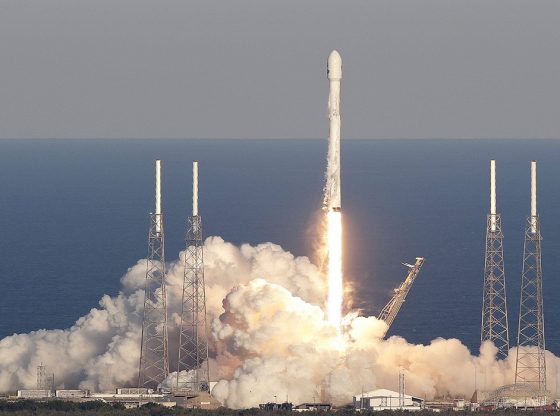
The NASA TESS mission – A planned space telescope for NASA’s Explorer program, also designed to search for extrasolar planets using the same method as the now retired Kepler. It will focus on Earth-size planets that may be capable of supporting life. The TESS telescope is scheduled to be launched in 2017.
The NASA James Webb Telescope – Previously known as Next Generation Space Telescope (NGST), it is s a large, infrared-optimized space telescope. Webb’s instruments will be designed to work primarily in the infrared range of the electromagnetic spectrum, with some capability in the visible range. A scientific successor to the Hubble Space Telescope and the Spitzer Space Telescope. It will have a very large mirror and will study the birth and evolution of galaxies, and the formation of stars and planets. Together with the TESS telescope, it will be able to examine the most promising of these new found worlds, scan their atmospheres for water and gases correlated with that of life as we know it, such as oxygen, nitrous oxide, and methane. The James Webb Telescope will be launched in October 2018.
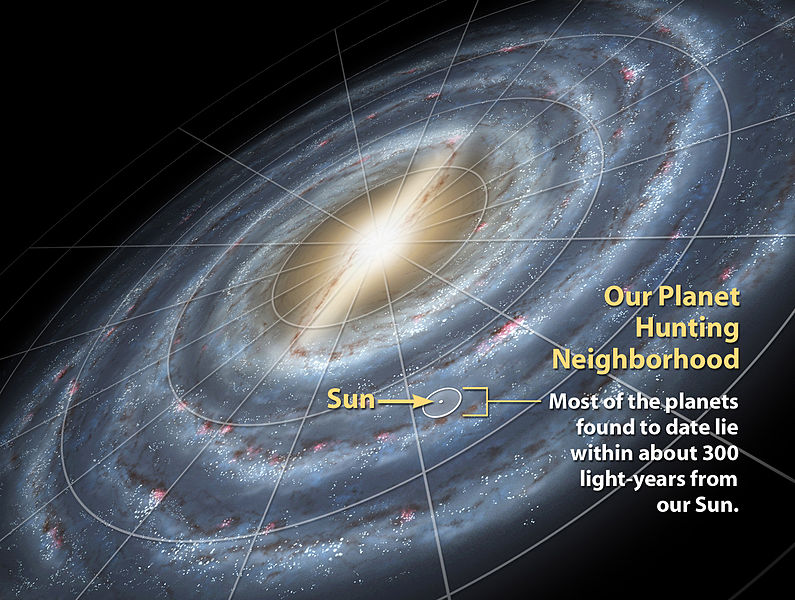
It is estimated that there are hundreds of billions of extrasolar planets only in our galaxy. In October 2013, of a total of 990 confirmed exoplanets, 0.3% have been determined to be Mercury-sized; 0.7%, Mars-sized; 1.1%, Earth-sized; 11.14%, Super-Earth-sized, 14.8% Neptune-sized and 71.6% Jupiter-sized.
But with bias created by the present limited technology and with more sensitive instruments to be launched in the future – you can expect these proportions to be changed.
_______________
The Wasp Project
The GAIA
The CHEOPS
The TESS
The James Webb Space Telescope
______________________________