
Close Menu
Illustrated Curiosity
    Facebook X (Twitter) Instagram YouTube
    Illustrated Curiosity
    • Earth
    • Economics
    • Environment
      • Climate
      • Environmental Tech
      • Pollution
      • Wildlife
    • Health
      • Health Tech
      • Medicine
      • Nutrition
      • Exercise
    • History
      • Prehistory
      • Ancient History
      • Postclassical Era
      • Modern History
    • Humans
      • Human Brain
      • Psychology
    • Life
      • Animals & Plants
      • Genetics
      • Paleontology
      • Evolution
      • Genetic Engineering
    • Physics
    • Space
      • Astrobiology
      • Astronomy
      • Extrasolar Planets
      • Space Tech
      • Spaceflight
    • Technology
      • Artificial Intelligence
      • Energy
      • Engineering
      • Materials
      • Robotics
      • Vehicles
    Illustrated Curiosity
    Home » Video | Planets of Red Dwarf Stars May Face Oxygen Loss in Habitable Zones
    Astrobiology

    Video | Planets of Red Dwarf Stars May Face Oxygen Loss in Habitable Zones

    February 10, 2017No Comments1 Min Read
    Share
    Facebook Twitter LinkedIn Pinterest Email
    Credit: NASA Goddard/Conceptual Image Lab, Michael Lentz, animator/Genna Duberstein, producer

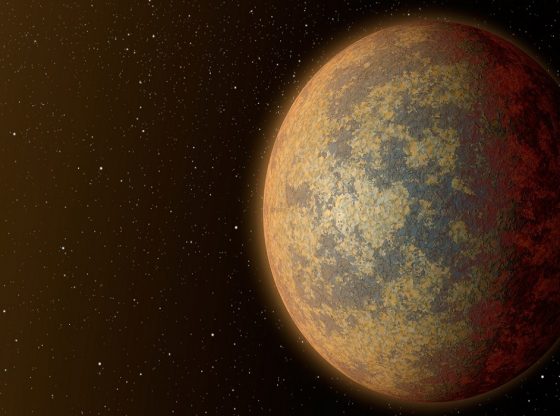
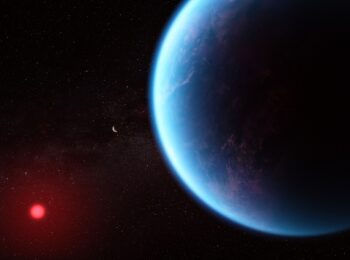
    According to new research from NASA, planets within the habitable zone in red dwarf star systems might lose too much oxygen to support liquid water, and therefore, life. This includes some of our nearest neighbors and the exoplanet Proxima b.

    Previously, scientists have determined a star’s habitable zone based on much heat the star emits. Thus, stars more massive than our sun produce more heat and light, so the habitable zone must be farther out. Smaller, cooler stars yield close-in habitable zones.

    A team of scientists has developed a new model that estimates the oxygen ion escape rate on planets around red dwarfs, which plays an important role in determining an exoplanet’s habitability. NASA published the below video showing us how extreme ultraviolet light from a young red dwarf star cause ions to escape from an exoplanet’s atmosphere.
     

    Exoplanets Extraterrestrial Life Habitable Zone
    Share. Facebook Twitter Pinterest LinkedIn Tumblr Email Copy Link

    Related Posts

    Europa Clipper: NASA’s Mission to Unlock the Secrets of Jupiter’s Icy Moon

    October 20, 2024

    The Phosphine Discovered in Venus’ Clouds May Be a Big Deal

    September 21, 2020

    There Is Definitely Methane on Mars, Scientists Say. But Is It a Sign of Life?

    April 4, 2019

    NASA Is Working With Billionaire Yuri Milner To Search For Life On Enceladus

    November 12, 2018

    Salty Water Under the Surface of Mars Could Have Enough Oxygen for Life

    November 2, 2018

    Video | Professor Abraham: The Search for Primitive and Intelligent Life on Other Planets

    October 16, 2018
    Recent Posts
    • How the End of Bretton Woods Reshaped Our Economies — and Our Politics
    • Can the U.S. Really Handle 250% Debt-to-GDP? Why Jackson Hole’s Daring Paper Is Wrong
    • Japan’s Fiscal Trap: What Happens If Austerity Is No Longer an Option?
    • The Rise of Range Extended Electric Vehicles (REEVs): A New Era of Hybrid Mobility
    • The Great Capital Rotation: A Shift from U.S. Treasuries to Gold and Real Assets
    • The Hidden Risks of Short-Term Debt: A Balancing Act in U.S. Fiscal Policy
    • The Looming U.S. Debt Spiral: Understanding the Risks
    • The Looming Recession: Seven Economic Indicators Flashing Red for 2025
    • Europa Clipper: NASA’s Mission to Unlock the Secrets of Jupiter’s Icy Moon
    • Could Hedge Funds Cause Chaos in the U.S. Treasury Market? And What About Inflation?
    © 2025 Illustrated Curiosity

    Type above and press Enter to search. Press Esc to cancel.

    This website uses cookies to improve your experience. We'll assume you're ok with this, but you can opt-out if you wish.Accept Reject Read More
    Privacy & Cookies Policy

    Privacy Overview

    This website uses cookies to improve your experience while you navigate through the website. Out of these, the cookies that are categorized as necessary are stored on your browser as they are essential for the working of basic functionalities of the website. We also use third-party cookies that help us analyze and understand how you use this website. These cookies will be stored in your browser only with your consent. You also have the option to opt-out of these cookies. But opting out of some of these cookies may affect your browsing experience.
    Necessary
    Always Enabled
    Necessary cookies are absolutely essential for the website to function properly. This category only includes cookies that ensures basic functionalities and security features of the website. These cookies do not store any personal information.
    Non-necessary
    Any cookies that may not be particularly necessary for the website to function and is used specifically to collect user personal data via analytics, ads, other embedded contents are termed as non-necessary cookies. It is mandatory to procure user consent prior to running these cookies on your website.
    SAVE & ACCEPT