Close Menu
Illustrated Curiosity
    Facebook X (Twitter) Instagram YouTube
    Illustrated Curiosity
    • Earth
    • Economics
    • Environment
      • Climate
      • Environmental Tech
      • Pollution
      • Wildlife
    • Health
      • Health Tech
      • Medicine
      • Nutrition
      • Exercise
    • History
      • Prehistory
      • Ancient History
      • Postclassical Era
      • Modern History
    • Humans
      • Human Brain
      • Psychology
    • Life
      • Animals & Plants
      • Genetics
      • Paleontology
      • Evolution
      • Genetic Engineering
    • Physics
    • Space
      • Astrobiology
      • Astronomy
      • Extrasolar Planets
      • Space Tech
      • Spaceflight
    • Technology
      • Artificial Intelligence
      • Energy
      • Engineering
      • Materials
      • Robotics
      • Vehicles
    Illustrated Curiosity
    Home » Convergent Evolution Explains Why Some Plants Became Carnivorous
    Evolution

    Convergent Evolution Explains Why Some Plants Became Carnivorous

    February 11, 2017No Comments4 Mins Read
    Share
    Facebook Twitter LinkedIn Pinterest Email

    They catch their prey with sticky secretions, with traps or pitfalls filled with liquids that dissolve prey’s body and even makes use of a triggering mechanism that quickly closes when unsuspecting insects accidently touch them – the carnivorous plant have evolved several methods of eating animals. But the problem with digesting their prey has been far more difficult for nature to solve, according to a new study.
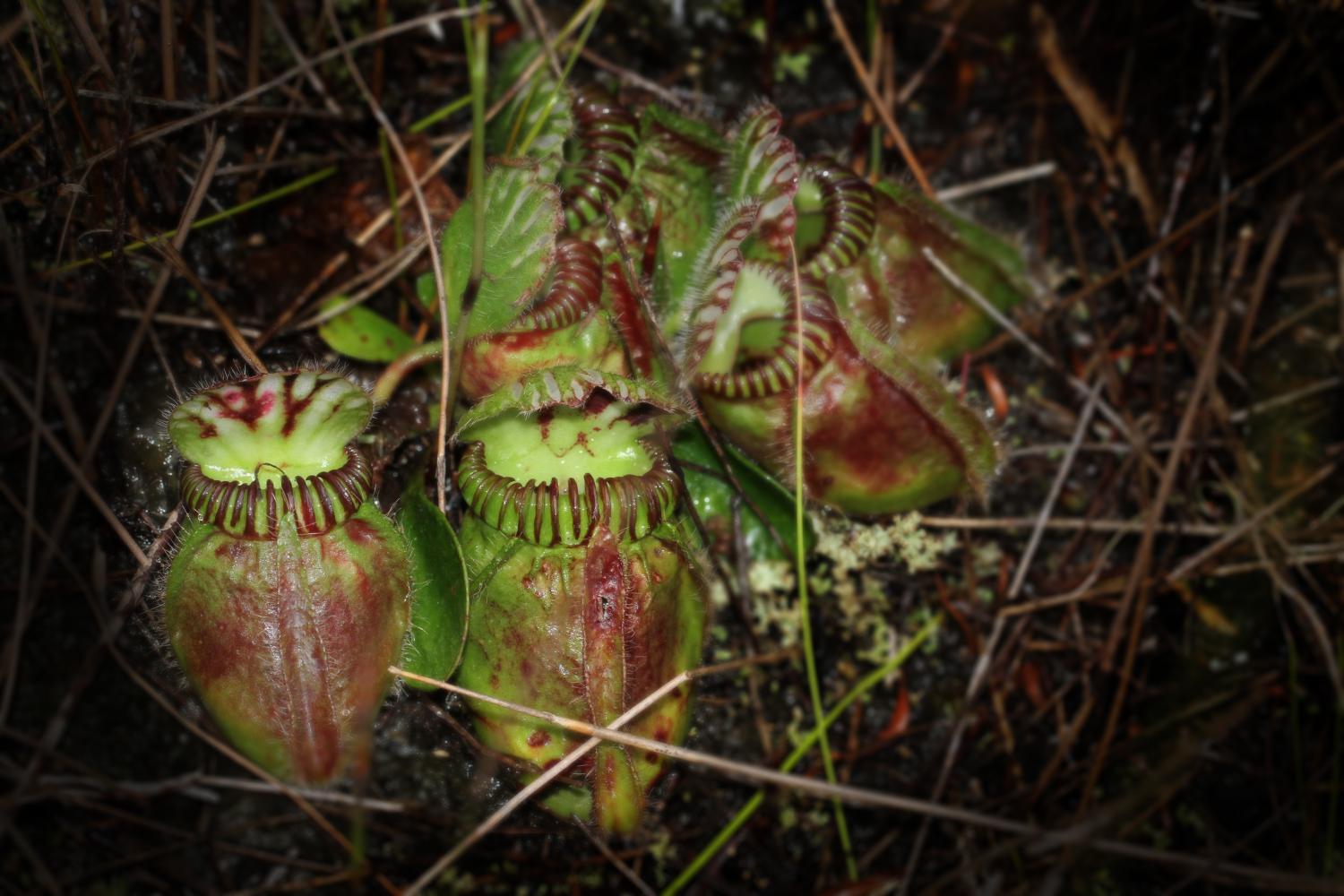
    The reserachers have mapped the genome of the Cephalotus follicularis, the Australian pitcher plant. Photographed here in its native range in Western Australia, this carnivorous plant evolved to digest insects through a strikingly similar evolutionary pathway as other plants that developed the same capability independently, a new study finds. Credit: Mitsuyasu Hasebe

    Carnivorous plants are unusual, and a bit bizarre. They have evolved to trap and kill food, instead of drawing their nutrients from sunlight, the air, and soil.

    Scientists have now mapped the genome of the Albany pitcher plant (Cephalotus follicularis), a compact, low-growing plant with little hairy pit-fall traps filled with a liquid. Insects that fall into the liquid dissolves, providing the plant with nitrogen-containing substances.

    Such pitfall traps have been developed at least six times during the course of evolution, all independent of each other. The best known are perhaps the so-called Kann Vines from Southeast Asia, Madagascar and Australia, and the Venus Fy Trap from North and South America. Other carnivorous plants have developed quite different approaches. The well-known venus fly trap uses a type trap – when an insect touches the sensory hairs of the catching leaves, they fold together over the insect.
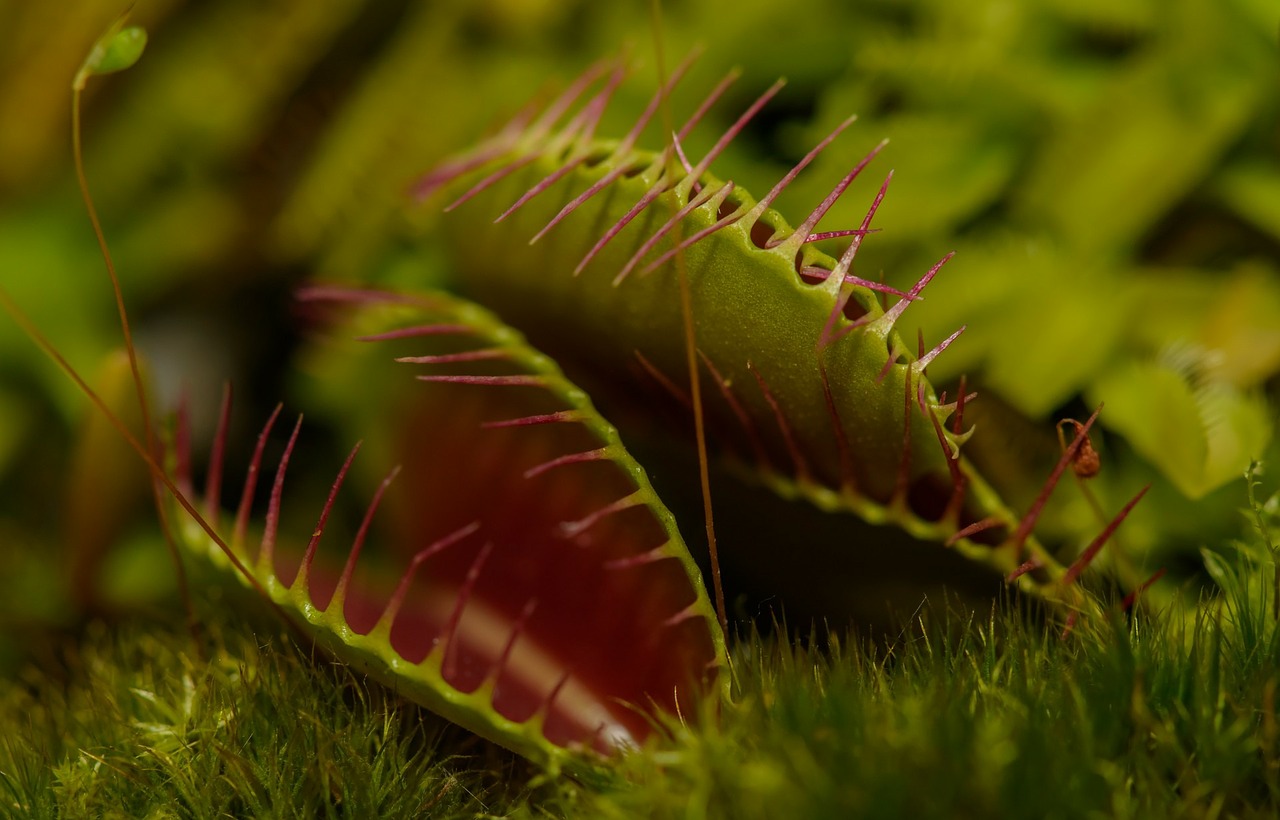
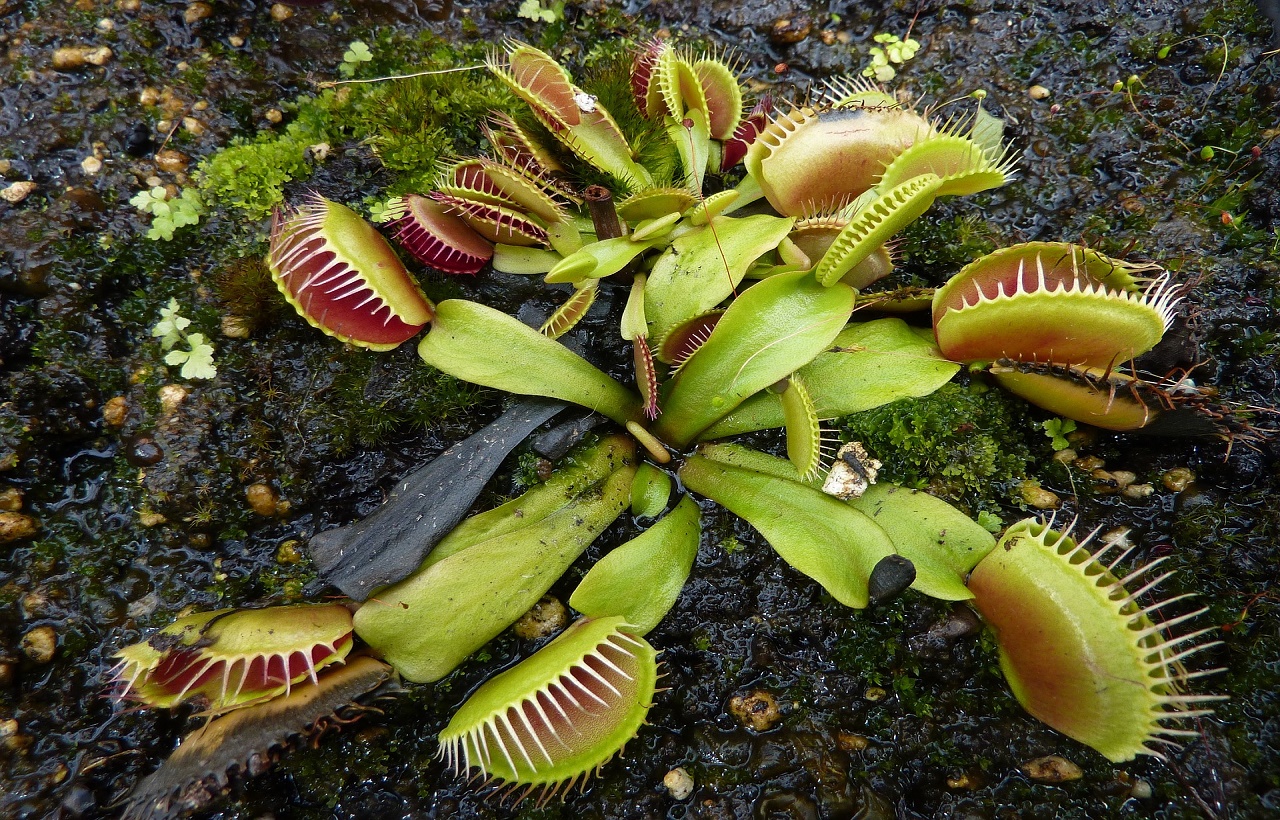
    Native to subtropical wetlands on the East Coast of the United States in North Carolina and South Carolina
    The Venus flytrap (also referred to as Venus’s flytrap or Venus’ flytrap).

    The researchers compared the genomes of Cephalotus and three other carnivore species and found that all species, even though they evolved independently during the course of evolution, and even though it’s been many millions of years with evolutionary branches separated from one another, have evolved the same exact biological machinery to facilitate a carnivorous lifestyle.

    The most difficult problem for a plant that develops into a carnivorous lifestyle is not to develop the trapping mechanism. It is to dissolve their prey and make use of the nutrients contained within.

    A new study shows that the plants make use of a small number of genes that normally encode proteins that protect against diseases and stress-related disorders. In this new role, however, the proteins convert into enzymes that break down and dissolve the trapped animals.

    The various species of carnivores plant have the exact same genes which suggest that there are only a limited number of ways to go if you want to be a carnivorous plant. All plants were faced with the same problem and have developed the same genetic toolbox to solve it. This is a process known as ‘convergent evolution’ by which analogous structures with similar form or function have evolved that were not present in the last common ancestor species.

    “These plants have a genetic toolkit, and they’re trying to come up with an answer to the problem of how to become carnivorous,” said study co-author Victor A. Albert, a biologist at the University at Buffalo, in a news release. “And in the end, they all come up with the same solution.”

    Nearly 600 species evolved into being carnivores which is actually not a significant number. Probably limited by the type of specific environment where a carnivorous survival strategy is a good – or even vital – strategy to evolve.

    Such environments are, in most cases, nutrient-poor areas, where important elements such as nitrogen are in short supply. These include places where the soil is thin and soil acidity is high such as bogs, marshes, and rocky slopes.

    Many carnivorous plants have evolved in rain forests, where competition between species is very high and the soil is poor in nutrients, such as Sumatra and Borneo. Special adjustments have been necessary for survival – such as the ability to capture and digest insects and other small animals.

    The study Genome of the pitcher plant Cephalotus reveals genetic changes associated with carnivory has been published in Nature, Ecology, and Evolution.

    Reference:

    Kenji Fukushima, Xiaodong Fang, Mitsuyasu Hasebe Genome of the pitcher plant Cephalotus reveals genetic changes associated with carnivory doi:10.1038/s41559-016-0059


    Carnivorous Plants Convergent Evolution Evolution
    Share. Facebook Twitter Pinterest LinkedIn Tumblr Email Copy Link

    Related Posts

    Use of Evolution to Design Molecules Nets Nobel Prize in Chemistry for 3 Scientists

    October 4, 2018

    This Is How the Bottlenose Dolphin Avoids Divers’ Disease

    August 14, 2018

    These Skates Are Made for Walking

    February 23, 2018

    Scientists test evolutionary hypophysis for insomnia

    July 14, 2017

    Earliest fossil evidence of Homo sapiens found in Morocco

    June 10, 2017

    European fossils may belong to earliest known human ancestor

    June 5, 2017
    Recent Posts
    • How the End of Bretton Woods Reshaped Our Economies — and Our Politics
    • Can the U.S. Really Handle 250% Debt-to-GDP? Why Jackson Hole’s Daring Paper Is Wrong
    • Japan’s Fiscal Trap: What Happens If Austerity Is No Longer an Option?
    • The Rise of Range Extended Electric Vehicles (REEVs): A New Era of Hybrid Mobility
    • The Great Capital Rotation: A Shift from U.S. Treasuries to Gold and Real Assets
    • The Hidden Risks of Short-Term Debt: A Balancing Act in U.S. Fiscal Policy
    • The Looming U.S. Debt Spiral: Understanding the Risks
    • The Looming Recession: Seven Economic Indicators Flashing Red for 2025
    • Europa Clipper: NASA’s Mission to Unlock the Secrets of Jupiter’s Icy Moon
    • Could Hedge Funds Cause Chaos in the U.S. Treasury Market? And What About Inflation?
    © 2025 Illustrated Curiosity

    Type above and press Enter to search. Press Esc to cancel.

    This website uses cookies to improve your experience. We'll assume you're ok with this, but you can opt-out if you wish.Accept Reject Read More
    Privacy & Cookies Policy

    Privacy Overview

    This website uses cookies to improve your experience while you navigate through the website. Out of these, the cookies that are categorized as necessary are stored on your browser as they are essential for the working of basic functionalities of the website. We also use third-party cookies that help us analyze and understand how you use this website. These cookies will be stored in your browser only with your consent. You also have the option to opt-out of these cookies. But opting out of some of these cookies may affect your browsing experience.
    Necessary
    Always Enabled
    Necessary cookies are absolutely essential for the website to function properly. This category only includes cookies that ensures basic functionalities and security features of the website. These cookies do not store any personal information.
    Non-necessary
    Any cookies that may not be particularly necessary for the website to function and is used specifically to collect user personal data via analytics, ads, other embedded contents are termed as non-necessary cookies. It is mandatory to procure user consent prior to running these cookies on your website.
    SAVE & ACCEPT