
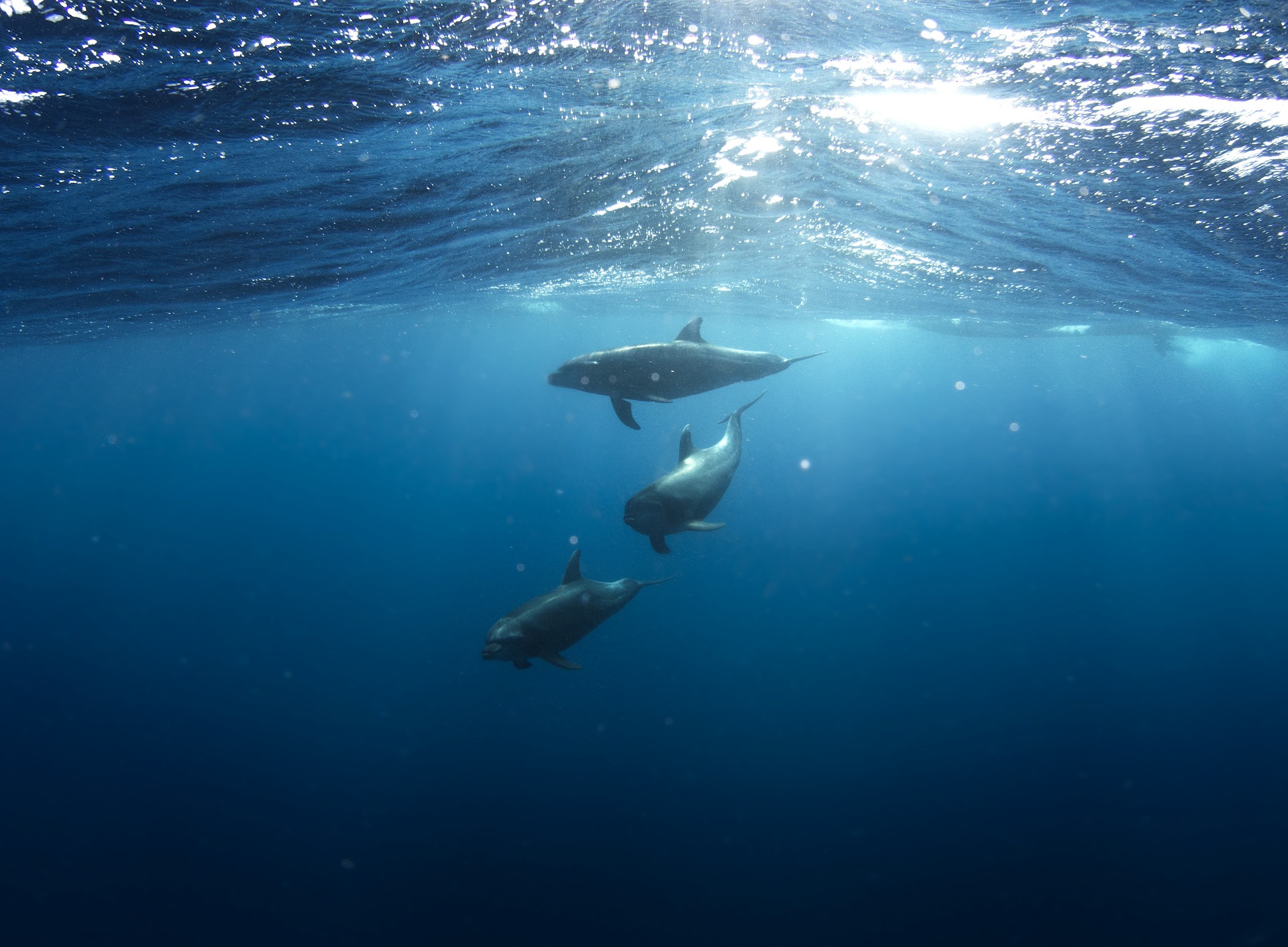
The bottleneck dolphin usually lives in coastal areas with shallow water. But in Bermuda, there is a group of bottleneck dolphins that have the ability to dive all the way down to 1 000 meters (3 300 feet) deep to catch food. Now a research team has studied what makes the dolphins do it without experiencing decompression sickness, aka divers’ disease.
“How can a single species have such extremely different lifestyles?” This question motivated Dr. Andreas Fahlman of the Fundación Oceanográfic in Valencia, Spain, who led two studies with his international team. The researchers’ hypophysis was that the dolphins have a unique lung design, and aimed to find out how.
“We wanted to measure what kind of differences are responsible for these huge variations. This allows us to determine how far the physiology can change within a single species and understand the threat that stressors may have on these deep diving dolphins.”
The research resulted in two studies, by which the first study found that surprisingly, there was no difference in the lung mechanics or function between deep- and shallow-diving dolphin populations. These findings lead the researchers to the second study, which tried to uncover which mechanisms the deep-diving dolphins use to manage gas in their bodies.
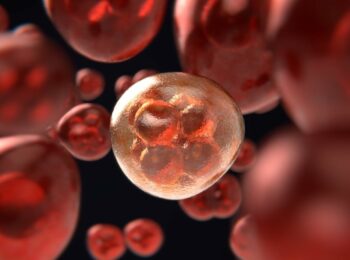
Fahlman and his team then found that the deep diving dolphins had 25 percent more red blood cells compared to their shallow swimming counterparts. Red blood cells contain a protein called hemoglobin, which helps cells carry oxygen throughout the body—the more red blood cells you have, the more oxygen you can carry.
Dolphins may also store oxygen in their muscles the same way whales do via myoglobin, an oxygen-carrying protein found in muscle cells. Not only did the Bermuda dolphins have more red blood cells, but Fahlman suggests they can also manipulate blood flow to protect themselves during deep dives. By locking in blood within different parts of the lung, with or without air, the dolphins can control what rate they pass over oxygen and nitrogen into the blood.
“Keeping the blood flow elevated between deep foraging dives helps reduce time spent at the surface and enhances recovery time. On the other hand, during deep dives, the dolphins would need to direct blood flow through collapsed regions of the lung, allowing some exchange of oxygen and carbon, while preventing the exchange of nitrogen. Thus, the dolphins may have a way to manage the level of nitrogen they absorb and thereby preventing the bends.”
Andreas Fahlman believes the mechanism stops working when dolphins and other marine mammals are exposed to stress. This could be the reason why the deep-diving whales have stranded after the US Navy has used sonar that emits a high-frequency sound and is used to search for submarines. Concluding that man-made stresses such as increasing ocean noise, sonar exposure or capture in fishing nets may cause disturbance to normal diving conditions.
“If we are able to better understand how our impact may affect these species, we may eventually be able to improve conservation efforts for these dolphins, and all marine mammals,”
Reference:
Andreas Fahlman1 et al. Resting Metabolic Rate and Lung Function in Wild Offshore Common Bottlenose Dolphins, Tursiops truncatus, Near Bermuda Front. Physiol., 17 July 2018 | https://doi.org/10.3389/fphys.2018.00886
Andreas Fahlman1 et al. Modeling Tissue and Blood Gas Kinetics in Coastal and Offshore Common Bottlenose Dolphins, Tursiops truncatus Front. Physiol., 17 July 2018 | https://doi.org/10.3389/fphys.2018.00838