Close Menu
Illustrated Curiosity
    Facebook X (Twitter) Instagram YouTube
    Illustrated Curiosity
    • Earth
    • Economics
    • Environment
      • Climate
      • Environmental Tech
      • Pollution
      • Wildlife
    • Health
      • Health Tech
      • Medicine
      • Nutrition
      • Exercise
    • History
      • Prehistory
      • Ancient History
      • Postclassical Era
      • Modern History
    • Humans
      • Human Brain
      • Psychology
    • Life
      • Animals & Plants
      • Genetics
      • Paleontology
      • Evolution
      • Genetic Engineering
    • Physics
    • Space
      • Astrobiology
      • Astronomy
      • Extrasolar Planets
      • Space Tech
      • Spaceflight
    • Technology
      • Artificial Intelligence
      • Energy
      • Engineering
      • Materials
      • Robotics
      • Vehicles
    Illustrated Curiosity
    Home » Chimpanzee Feet Provides Insight into Human Foot Evolution
    Evolution

    Chimpanzee Feet Provides Insight into Human Foot Evolution

    February 19, 20172 Mins Read
    Share
    Facebook Twitter LinkedIn Pinterest Email

    The human midfoot appears to be much more mobile than the chimpanzees. The explanation may be that we have evolved to be able to move better on two legs.
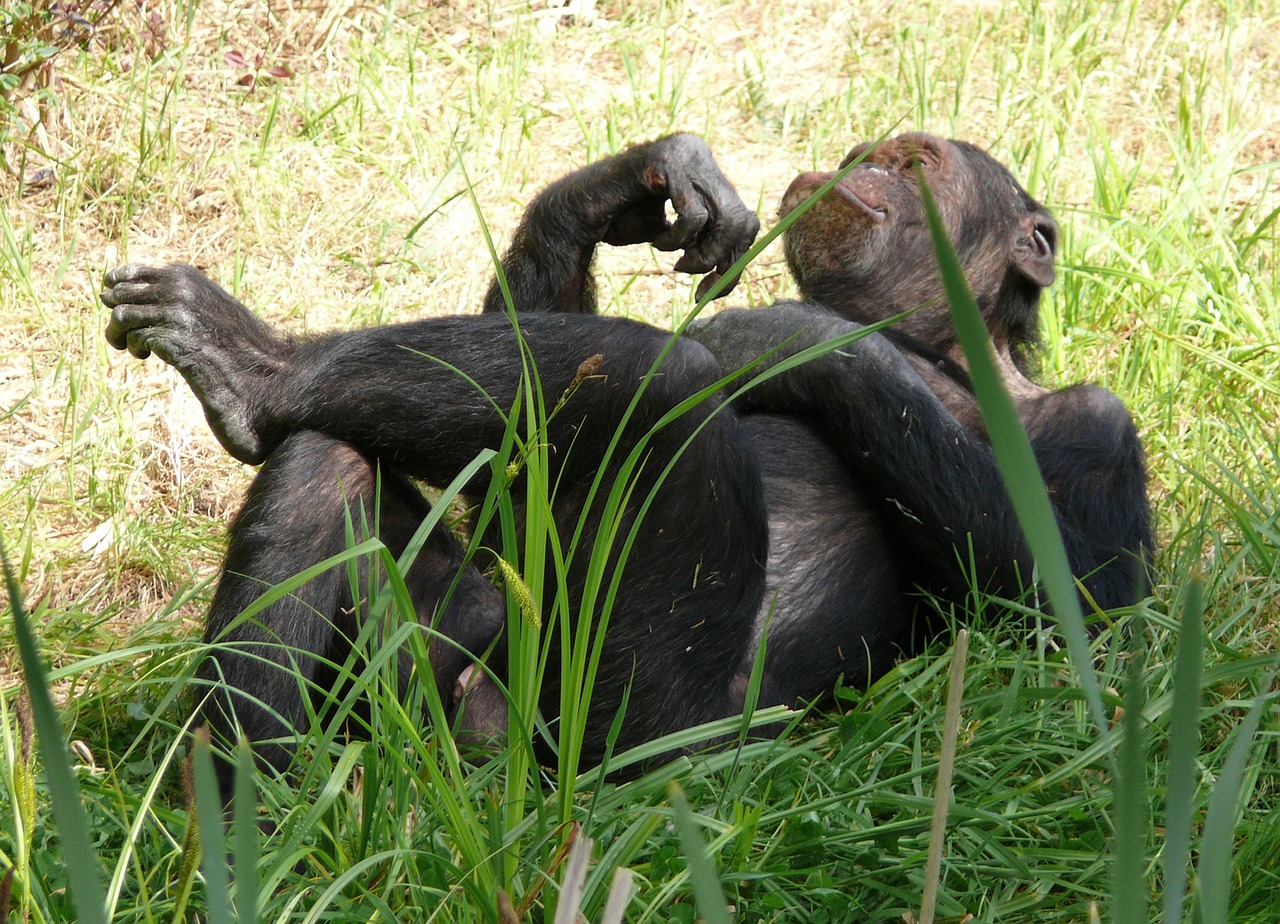
    CC0 Public Domain

    Scientists have long believed that the joints of the chimpanzee feet are much more mobile than human. An understanding now challenged by new research.

    A team of US researchers looked more closely, comparing the chimpanzees and human feets when walking. They noticed that the chimpanzee has a stiffer foot, while human feets are much more variable.
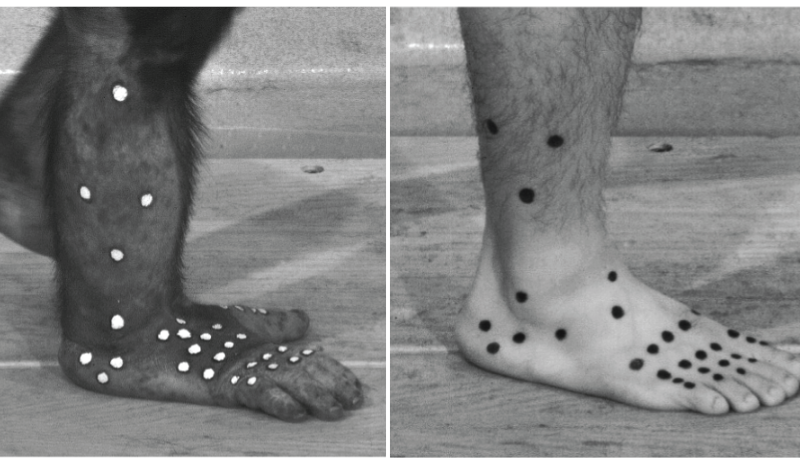
    Markers on the feet of both humans and chimpanzees allows reserachers to figure out how different bones and joints within the foot move in 3-D. Credit: Stony Brook Primate Locomotor Laboratory

    The midfoot of humans bend sharply at the end of each step walking or running. This movement is bigger than the entire operating range of the chimpanzee midfoot.

    This leads researchers to the conclusion that high feet mobility is important to be able to walk on two legs. They, therefore, stress that science should re-examine how human feet evolved.

    “This finding upended our assumptions about how the feet of both humans and chimpanzees work. Based on simple visual observation, we’ve long known that human feet are stiffer than those of chimpanzees and other apes when the heel is first lifted off the ground in a walking step. What surprised us was that the human midfoot region flexes dramatically at the end of a step as the foot’s arch springs back into place following its compression during weight-bearing. This flexion motion is greater than the entire range of motion in the chimpanzee midfoot joints during a walking step, leading us to conclude that high midfoot joint mobility is actually advantageous for human walking. We never would have discovered this without being able to study chimpanzees with advanced motion capture technology,” said Holowka, with Harvard’s department of Human Evolutionary Biology.

    Reference:

    N. B. Holowka et al. “Chimpanzee and Human midfoot motion During bipedal walking and the evolution of the longitudinal arch of the foot” Journal of Human Evolution. DOI: 10.1016 / j.jhevol.2016.12.002

    Chimpanzees
    Share. Facebook Twitter Pinterest LinkedIn Tumblr Email Copy Link

    Related Posts

    Use of Evolution to Design Molecules Nets Nobel Prize in Chemistry for 3 Scientists

    October 4, 2018

    This Is How the Bottlenose Dolphin Avoids Divers’ Disease

    August 14, 2018

    These Skates Are Made for Walking

    February 23, 2018

    Scientists test evolutionary hypophysis for insomnia

    July 14, 2017

    Earliest fossil evidence of Homo sapiens found in Morocco

    June 10, 2017

    European fossils may belong to earliest known human ancestor

    June 5, 2017
    Recent Posts
    • America’s Quiet Shift Into Fiscal Dominance: Why Inflation May Be Preparing for a Second Act
    • How the End of Bretton Woods Reshaped Our Economies — and Our Politics
    • Can the U.S. Really Handle 250% Debt-to-GDP? Why Jackson Hole’s Daring Paper Is Wrong
    • Japan’s Fiscal Trap: What Happens If Austerity Is No Longer an Option?
    • The Rise of Range Extended Electric Vehicles (REEVs): A New Era of Hybrid Mobility
    • The Great Capital Rotation: A Shift from U.S. Treasuries to Gold and Real Assets
    • The Hidden Risks of Short-Term Debt: A Balancing Act in U.S. Fiscal Policy
    • The Looming U.S. Debt Spiral: Understanding the Risks
    • The Looming Recession: Seven Economic Indicators Flashing Red for 2025
    • Europa Clipper: NASA’s Mission to Unlock the Secrets of Jupiter’s Icy Moon
    © 2025 Illustrated Curiosity

    Type above and press Enter to search. Press Esc to cancel.

    This website uses cookies to improve your experience. We'll assume you're ok with this, but you can opt-out if you wish.Accept Reject Read More
    Privacy & Cookies Policy

    Privacy Overview

    This website uses cookies to improve your experience while you navigate through the website. Out of these, the cookies that are categorized as necessary are stored on your browser as they are essential for the working of basic functionalities of the website. We also use third-party cookies that help us analyze and understand how you use this website. These cookies will be stored in your browser only with your consent. You also have the option to opt-out of these cookies. But opting out of some of these cookies may affect your browsing experience.
    Necessary
    Always Enabled
    Necessary cookies are absolutely essential for the website to function properly. This category only includes cookies that ensures basic functionalities and security features of the website. These cookies do not store any personal information.
    Non-necessary
    Any cookies that may not be particularly necessary for the website to function and is used specifically to collect user personal data via analytics, ads, other embedded contents are termed as non-necessary cookies. It is mandatory to procure user consent prior to running these cookies on your website.
    SAVE & ACCEPT