Close Menu
Illustrated Curiosity
    Facebook X (Twitter) Instagram YouTube
    Illustrated Curiosity
    • Earth
    • Economics
    • Environment
      • Climate
      • Environmental Tech
      • Pollution
      • Wildlife
    • Health
      • Health Tech
      • Medicine
      • Nutrition
      • Exercise
    • History
      • Prehistory
      • Ancient History
      • Postclassical Era
      • Modern History
    • Humans
      • Human Brain
      • Psychology
    • Life
      • Animals & Plants
      • Genetics
      • Paleontology
      • Evolution
      • Genetic Engineering
    • Physics
    • Space
      • Astrobiology
      • Astronomy
      • Extrasolar Planets
      • Space Tech
      • Spaceflight
    • Technology
      • Artificial Intelligence
      • Energy
      • Engineering
      • Materials
      • Robotics
      • Vehicles
    Illustrated Curiosity
    Home » China: Yuto to the Moon
    Spaceflight

    China: Yuto to the Moon

    December 8, 2013No Comments3 Mins Read
    Share
    Facebook Twitter LinkedIn Pinterest Email
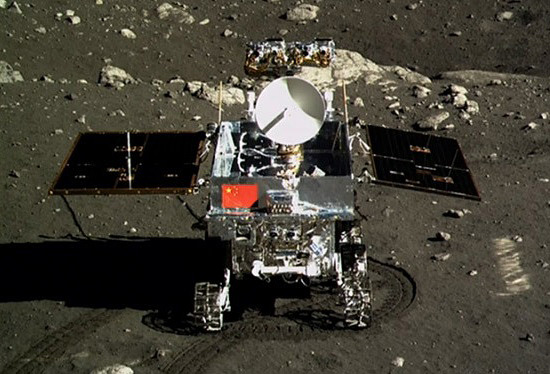
    Yutu, China’s first moon rover, imaged by the Chang’e 3 lander. Credit: Chinese National Space Administration/China Central Television

    China launched its “Yutu” (Jade Rabbit) last week. Yutu is a small rover that will become the sixth man-made vehicle on the moon when it lands in a few weeks.

    Rovers on the Moon: Tradition Renewed

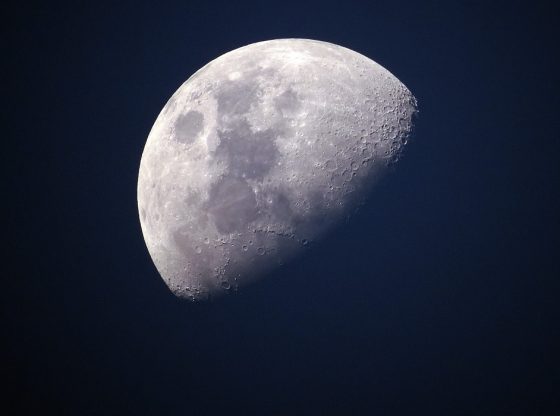
    It is also the first rover to land in a long time indeed, with no landers returning to the moon since the 1970’s. In Chinese folklore, Yuto is a rabbit that lives on the moon. Once upon a time based on the markings seen on the moon, that looks like a rabbit.

    It will take the Chang’e-3 lunar probe an estimated travel time of about two weeks to reach the moon and if everything goes as it should it will be the first moon landing to occur since 1976 when the Soviet Union landed a stationary lander.

    China will also become the third country in history to have landed on the moon, after The U.S and Russia (The Soviet Union).

    A History of Moon Rovers

    Yutu follows in the wake of several other rovers, the Soviet’s Lunochod 1 was the first rover to land in 1970, it was then followed by the U.S first LRV (Lunar Roving Vehicle) which landed together with Apollo 15 in 1971.

    Then the year after Apollo 16 and 17 had their respective LRV’s and in 1973 the Soviet Union landed a second Lunochod rover. All rovers from the 70’s are still standing on the moon and collecting moon dust.

    For NASA, the burst of moon exploration really occurred in the 1970s following the first moon landing by Neil Armstrong and Buzz Aldrin in 1969. But since then the moon’s appeal waned in favor of robotic and telescopic exploration of planets and asteroids within and beyond our solar system.

    Chinese Moon Endeavor and Future Ambitions

    The Chinese lander “Chang’e 3” will land at Sinus Iridum (Rainbow Bay). This is an area several thousands of kilometers from the previous U.S. and Soviet landing sites. Yutu should then be able to roll out and explore an area of about three square kilometers (1.15 square miles).

    According to the Shanghai institute who designed the vehicle, it can handle slopes up to 30 degrees. It has a top speed of a modest 0.2 kilometer per hour (0.12427mph). It weighs 120 kilos (265 pounds) and is 1.5 meters tall (3,3 feet), it can transmit live video, dig, and perform soil analysis.

    China established its first foothold in space in 1970 when a small satellite beamed back an ode to Mao Zedong. China then began to develop bigger plans for the 1980s and forward, as the Chinese economy continued to grow. and in 2003 they sent their first astronaut into space and has since then carried out four more manned missions to space.

    China then plans to launch another lunar probe and rover in 2017. These would be a part of an ambitious plan to first land the probe on the moon, then release a rover that collects moon dust, the rover would then return to the probe, and the probe would then return to the Earth.

    China also plans to build a space station (The CSS), to be completed around 2020 and its first manned missions to Mars in the 2030s and 2040s.

    ______________
    http://www.xinhuanet.com/english/special/change3/
    ____________________________
    China The Moon
    Share. Facebook Twitter Pinterest LinkedIn Tumblr Email Copy Link

    Related Posts

    Europa Clipper: NASA’s Mission to Unlock the Secrets of Jupiter’s Icy Moon

    October 20, 2024

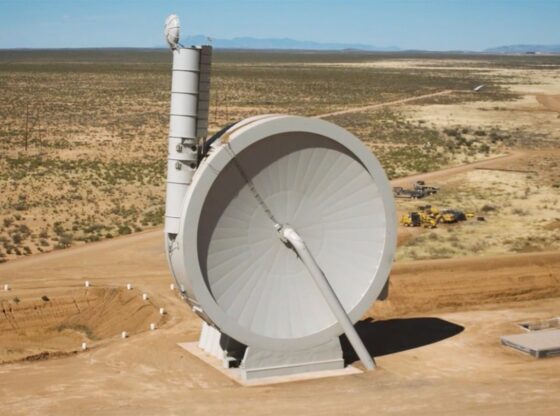
    Spinlaunch Hurls Satellites into Orbit With a Giant Centrifuge

    December 6, 2021

    There Is Now Rigorous Evidence for Water on the Moon

    November 2, 2020

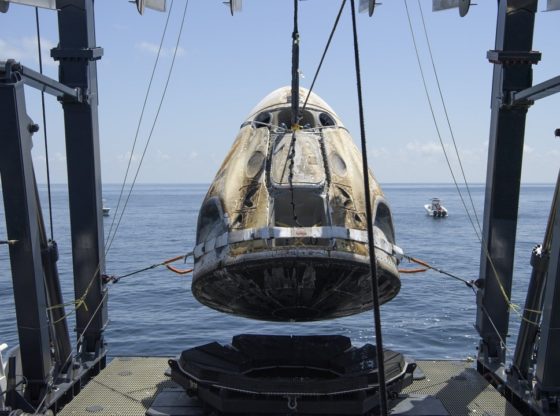
    SpaceX Capsule and NASA Crew Make Historic Splashdown

    August 3, 2020

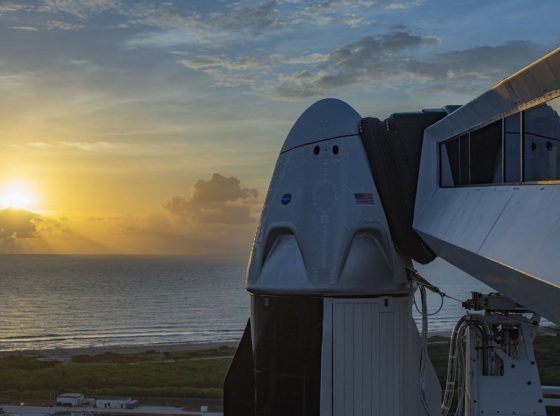
    NASA and SpaceX are Making History Launching Astronauts to Space! | NASA Live

    May 27, 2020

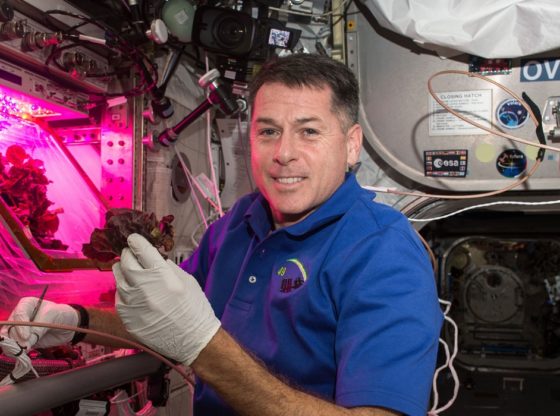
    Red Space Salad Given Green Light

    May 26, 2020
    Recent Posts
    • How the End of Bretton Woods Reshaped Our Economies — and Our Politics
    • Can the U.S. Really Handle 250% Debt-to-GDP? Why Jackson Hole’s Daring Paper Is Wrong
    • Japan’s Fiscal Trap: What Happens If Austerity Is No Longer an Option?
    • The Rise of Range Extended Electric Vehicles (REEVs): A New Era of Hybrid Mobility
    • The Great Capital Rotation: A Shift from U.S. Treasuries to Gold and Real Assets
    • The Hidden Risks of Short-Term Debt: A Balancing Act in U.S. Fiscal Policy
    • The Looming U.S. Debt Spiral: Understanding the Risks
    • The Looming Recession: Seven Economic Indicators Flashing Red for 2025
    • Europa Clipper: NASA’s Mission to Unlock the Secrets of Jupiter’s Icy Moon
    • Could Hedge Funds Cause Chaos in the U.S. Treasury Market? And What About Inflation?
    © 2025 Illustrated Curiosity

    Type above and press Enter to search. Press Esc to cancel.

    This website uses cookies to improve your experience. We'll assume you're ok with this, but you can opt-out if you wish.Accept Reject Read More
    Privacy & Cookies Policy

    Privacy Overview

    This website uses cookies to improve your experience while you navigate through the website. Out of these, the cookies that are categorized as necessary are stored on your browser as they are essential for the working of basic functionalities of the website. We also use third-party cookies that help us analyze and understand how you use this website. These cookies will be stored in your browser only with your consent. You also have the option to opt-out of these cookies. But opting out of some of these cookies may affect your browsing experience.
    Necessary
    Always Enabled
    Necessary cookies are absolutely essential for the website to function properly. This category only includes cookies that ensures basic functionalities and security features of the website. These cookies do not store any personal information.
    Non-necessary
    Any cookies that may not be particularly necessary for the website to function and is used specifically to collect user personal data via analytics, ads, other embedded contents are termed as non-necessary cookies. It is mandatory to procure user consent prior to running these cookies on your website.
    SAVE & ACCEPT