
A milestone on the way to a controlled fusion, with private nuclear-fusion company British Tokamak Energy, has achieved 15 million degrees in a new reactor for the first time — hotter than the core of the sun.
Fusion energy is the future, this is what we have been told for several decades. Tokamak Energy is one of the players in the slow race to develop commercial fusion energy power.
They have now achieved a major milestone as they have managed to produce plasma at temperatures above 15 million degrees Celsius – that is, hotter than the core of the sun.
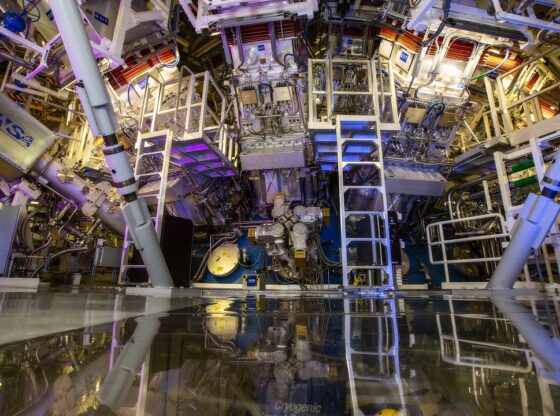
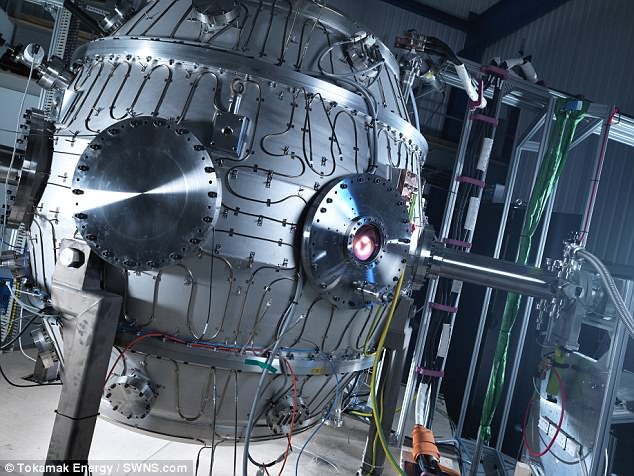
The reactor is named ST40 and is the third machine in a five-step plan to achieve the goal of pure fusion energy. A goal they are hoping to reach by 2025.
The next goal is to reach an even higher temperature that allows for controlled fusion, the key aspect if fusion is ever to become a commercially viable alternative to fission
“Reaching 15 million degrees is yet another indicator of the progress at Tokamak Energy and a further validation of our approach. Our aim is to make fusion energy a commercial reality by 2030. We view the journey as a series of engineering challenges, raising additional investment on reaching each new milestone.”
“We are taking significant steps towards achieving fusion energy and doing so with the agility of a private venture, driven by the goal of achieving something that will have huge benefits worldwide.”
– Jonathan Carling, Tokamak Energy CEO
Tokamak Energy is a spin-off from the Culham Center for Fusion Energy in British Oxfordshire. Key to success is that the company uses a so-called tokamak reactor, in combination with specifically designed superconducting magnets. The successful attempt means that you can start preparing for even higher temperatures.
The ST40 reactor and future reactors planned by Tokamak Energy use a compact spherical tokamak design, with an almost round vacuum chamber instead of the wider donut shape being used in the ITER reactor. The 2.1 meter electromagnets that surround the Tokamak Energy reactor were cooled by liquid helium to operate at minus 253.15 degrees Celsius.
The British company has come a long way, but there are several players aiming at becoming the first supplier of commercial fusion energy. For example, in France, the building of the International Thermonuclear Experimental Reactor is progressing, albeit slowly. It will be ready in 2025 and it aims to be able to deliver energy in the 2030’s. In addition, there are several research institutions that have come a long way in the U.S. and China.
Tokamak Energy’s five steps to fusion energy:
Step 1: Build a small prototype to demonstrate the concept – achieved in 2013
Step 2: Build a tokamak with superconducting magnets – achieved in 2015
Step 3: Reach 100 million degrees fusion temperatures in a compact tokamak, followed by further development to produce high-density plasma and achieve fitness for merger energy
Step 4: Achieve Industrial Energy Level with Fusion Power Demonstrators 2025
Step 5: Produce commercially viable fusion power with the first Fusion Power Module 2030.