Close Menu
Illustrated Curiosity
    Facebook X (Twitter) Instagram YouTube
    Illustrated Curiosity
    • Earth
    • Economics
    • Environment
      • Climate
      • Environmental Tech
      • Pollution
      • Wildlife
    • Health
      • Health Tech
      • Medicine
      • Nutrition
      • Exercise
    • History
      • Prehistory
      • Ancient History
      • Postclassical Era
      • Modern History
    • Humans
      • Human Brain
      • Psychology
    • Life
      • Animals & Plants
      • Genetics
      • Paleontology
      • Evolution
      • Genetic Engineering
    • Physics
    • Space
      • Astrobiology
      • Astronomy
      • Extrasolar Planets
      • Space Tech
      • Spaceflight
    • Technology
      • Artificial Intelligence
      • Energy
      • Engineering
      • Materials
      • Robotics
      • Vehicles
    Illustrated Curiosity
    Home » Causation Found to Explain Red Meat and Cardiovascular Disease Correlation
    Medicine

    Causation Found to Explain Red Meat and Cardiovascular Disease Correlation

    April 18, 2013No Comments3 Mins Read
    Share
    Facebook Twitter LinkedIn Pinterest Email
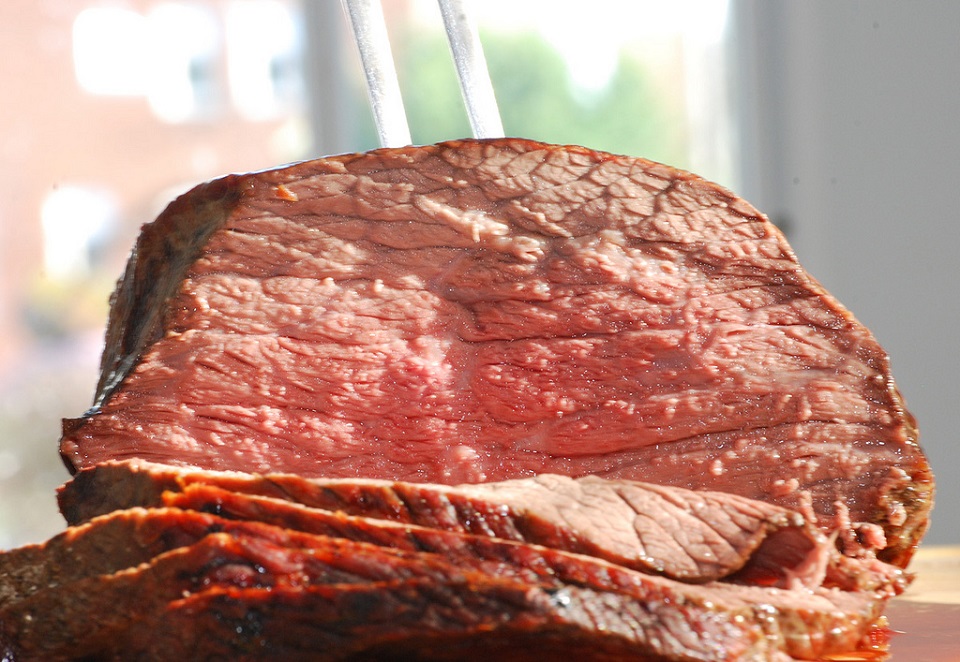
    Roast beef. Image credit: Steve Johnson / Flickr

    The connection has been red meat consumption and a slight increase in cardiovascular disease risk has been known for many years. But little has been known why this is.

    The now proposed explanation is a result of research done at the Cleveland Clinic Lerner Research Institute in Ohio and was published last week in Nature Medicine.

    The hypothesized explanations for this apparent connection has varied, from that of saturated fat in the meat to its cholesterol content. However, lean meat contains very little of these but also appear to be associated with a slight increase in cancer risk.

    In this new study Intestinal microbiota metabolism of l-carnitine, a nutrient in red meat promotes atherosclerosis, mice were fed a diet high in carnitine. This nutrient is found in large amounts in red meat and also some dietary supplements.

    The researchers then identified that a bacteria found in the intestines of mice (and humans) consumes carnitine and the resulting waste product is probably the substance that is to blame for this apparent negative risk correlation.

    Carnitine is a protein biosynthesized from the amino acids lysine and methionine. And as the bacteria consumes carnitine, it releases a gas which is then converted within the liver into a chemical called TMAO.

    There is a strong correlation between TMAO and atherosclerosis as noted by previous research. TMAO affects the way cholesterol metabolize, with a net effect of an accumulation of cholesterol.

    Those who do not eat red meat have however a very different bacterial flora in the gut, and therefore minimize the above risk with very low TMAO production.

    But if changing your diet into a vegetarian or even vegan may sound unattractive to you – perhaps the solution is some kind of future yogurt loaded with probiotics could alter the balance of bacteria in the stomach and thus reduce TMAO production?


    Abstract
    Intestinal microbiota metabolism of choline and phosphatidylcholine produces trimethylamine (TMA), which is further metabolized to a proatherogenic species, trimethylamine-N-oxide (TMAO). We demonstrate here that metabolism by intestinal microbiota of dietary l-carnitine, a trimethylamine abundant in red meat, also produces TMAO and accelerates atherosclerosis in mice. Omnivorous human subjects produced more TMAO than did vegans or vegetarians following ingestion of l-carnitine through a microbiota-dependent mechanism. The presence of specific bacterial taxa in human feces was associated with both plasma TMAO concentration and dietary status. Plasma l-carnitine levels in subjects undergoing cardiac evaluation (n = 2,595) predicted increased risks for both prevalent cardiovascular disease (CVD) and incident major adverse cardiac events (myocardial infarction, stroke or death), but only among subjects with concurrently high TMAO levels. Chronic dietary l-carnitine supplementation in mice altered cecal microbial composition, markedly enhanced synthesis of TMA and TMAO, and increased atherosclerosis, but this did not occur if intestinal microbiota was concurrently suppressed. In mice with an intact intestinal microbiota, dietary supplementation with TMAO or either carnitine or choline reduced in vivo reverse cholesterol transport. Intestinal microbiota may thus contribute to the well-established link between high levels of red meat consumption and CVD risk.

    ____________________________
    Intestinal microbiota metabolism of l-carnitine, a nutrient in red meat, promotes atherosclerosis
    ______________
    Cancer Cardiovascular Disease Gut Flora Myocardial infarction Red Meat
    Share. Facebook Twitter Pinterest LinkedIn Tumblr Email Copy Link

    Related Posts

    Groundbreaking Breakthrough: A Potential Cure for Cancer Targets Proliferating Cell Nuclear Antigen (PCNA)

    August 3, 2023

    Data Modeling Can Predict How COVID-19 Will Spread in a Big City

    November 13, 2020

    2020 Nobel Prize in Medicine Jointly Awarded to Scientists Who Discovered the Hepatitis C Virus

    October 6, 2020

    Air Pollution May Be a Contributing Factor behind High Death Rates in COVID-19

    June 8, 2020

    Evidence of Stray Dogs as Possible Intermediate Host of COVID-19 Pandemic

    April 28, 2020

    Promising Progress on Urine Tests for Prostate Cancer

    March 23, 2020
    Recent Posts
    • How the End of Bretton Woods Reshaped Our Economies — and Our Politics
    • Can the U.S. Really Handle 250% Debt-to-GDP? Why Jackson Hole’s Daring Paper Is Wrong
    • Japan’s Fiscal Trap: What Happens If Austerity Is No Longer an Option?
    • The Rise of Range Extended Electric Vehicles (REEVs): A New Era of Hybrid Mobility
    • The Great Capital Rotation: A Shift from U.S. Treasuries to Gold and Real Assets
    • The Hidden Risks of Short-Term Debt: A Balancing Act in U.S. Fiscal Policy
    • The Looming U.S. Debt Spiral: Understanding the Risks
    • The Looming Recession: Seven Economic Indicators Flashing Red for 2025
    • Europa Clipper: NASA’s Mission to Unlock the Secrets of Jupiter’s Icy Moon
    • Could Hedge Funds Cause Chaos in the U.S. Treasury Market? And What About Inflation?
    © 2025 Illustrated Curiosity

    Type above and press Enter to search. Press Esc to cancel.

    This website uses cookies to improve your experience. We'll assume you're ok with this, but you can opt-out if you wish.Accept Reject Read More
    Privacy & Cookies Policy

    Privacy Overview

    This website uses cookies to improve your experience while you navigate through the website. Out of these, the cookies that are categorized as necessary are stored on your browser as they are essential for the working of basic functionalities of the website. We also use third-party cookies that help us analyze and understand how you use this website. These cookies will be stored in your browser only with your consent. You also have the option to opt-out of these cookies. But opting out of some of these cookies may affect your browsing experience.
    Necessary
    Always Enabled
    Necessary cookies are absolutely essential for the website to function properly. This category only includes cookies that ensures basic functionalities and security features of the website. These cookies do not store any personal information.
    Non-necessary
    Any cookies that may not be particularly necessary for the website to function and is used specifically to collect user personal data via analytics, ads, other embedded contents are termed as non-necessary cookies. It is mandatory to procure user consent prior to running these cookies on your website.
    SAVE & ACCEPT