Close Menu
Illustrated Curiosity
    Facebook X (Twitter) Instagram YouTube
    Illustrated Curiosity
    • Earth
    • Economics
    • Environment
      • Climate
      • Environmental Tech
      • Pollution
      • Wildlife
    • Health
      • Health Tech
      • Medicine
      • Nutrition
      • Exercise
    • History
      • Prehistory
      • Ancient History
      • Postclassical Era
      • Modern History
    • Humans
      • Human Brain
      • Psychology
    • Life
      • Animals & Plants
      • Genetics
      • Paleontology
      • Evolution
      • Genetic Engineering
    • Physics
    • Space
      • Astrobiology
      • Astronomy
      • Extrasolar Planets
      • Space Tech
      • Spaceflight
    • Technology
      • Artificial Intelligence
      • Energy
      • Engineering
      • Materials
      • Robotics
      • Vehicles
    Illustrated Curiosity
    Home » Why We Sleep Badly on Our First Night in a New Place
    Medicine

    Why We Sleep Badly on Our First Night in a New Place

    May 6, 20163 Mins Read
    Share
    Facebook Twitter LinkedIn Pinterest Email

    Credit: T-mouse / Flickr

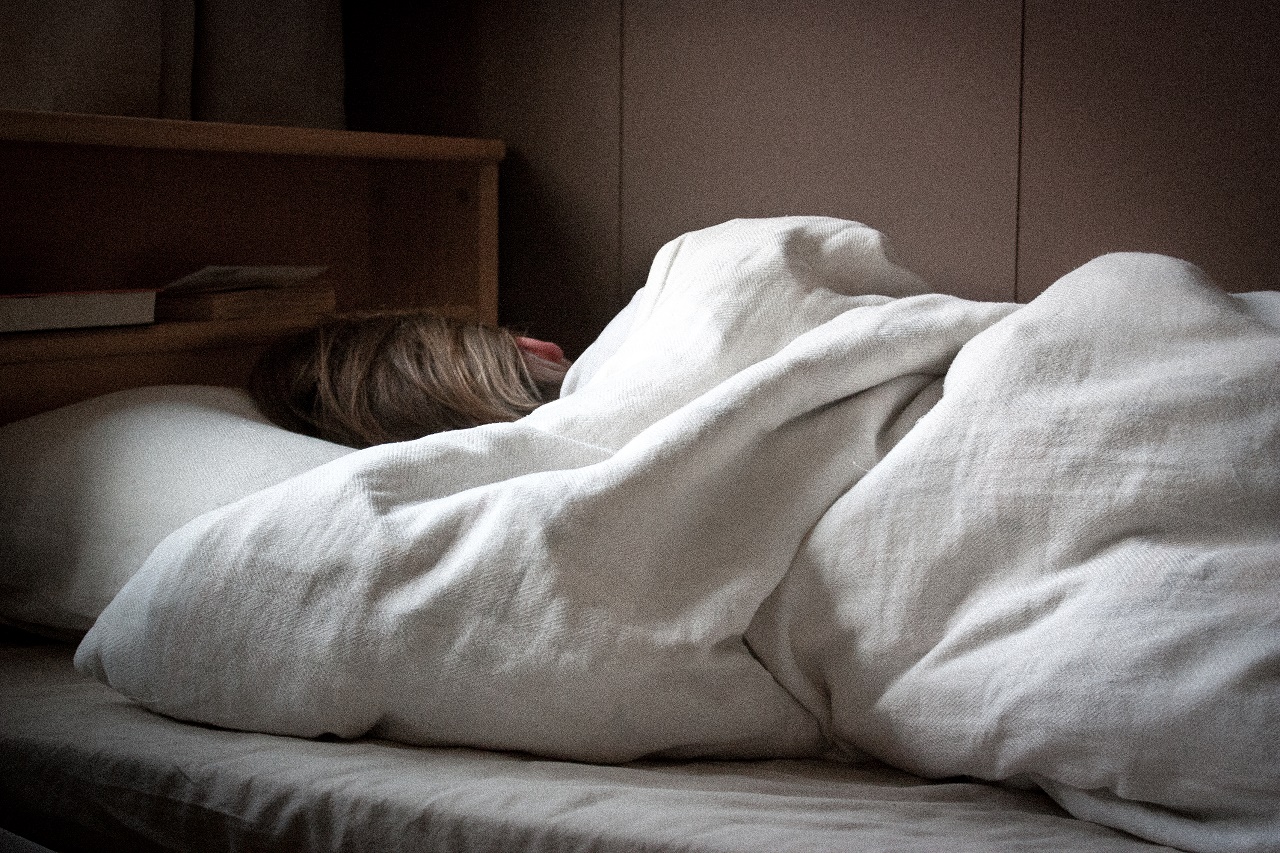
    When you are to sleep at a new location for the first time, you can almost guarantee that you will probably not sleep well. This is because your brain is more active, new research shows.

    This “first night effect” means that your sleep quality deteriorates. It may even feel as if you have not slept at all, even though you slept as long as you usually do.

    Now a team of researchers at Brown University have investigated why we sleep badly the first night at a new place.

    The Brain Keeps Guard

    A total of 35 people participated in the study, by investigating how their brain activity changed during different stages of sleep, the researchers found that there was a clear difference between the right and left part of the brain.

    Although the participants were sleeping, the left part of the brain continued to be active, making it a superficial sleep and not sufficient enough.

    It thus appears as if the left part of the brain keeps guard when sleeping in a new environment.

    This effect was not seen in the brain during the second night. The brain activity was then normal with no difference in brain activity. Which the scientists believe may be due to that the brain had adjusted.

    Probably Common in the Animal Kingdom

    This study is actually a breakthrough since it is the first time that the right and left side of the brain has been shown to not reach the same level of sleep during deep sleep. The brain appears to be able to prioritize certain areas for sleep, while other parts have a more shallow sleep.

    We humans are actually not alone with this ability. Several animals have a similar asymmetrical brain activity during sleep. The dolphin, for example, they periodically need to swim to the surface and to get air. This behavior is essential for the dolphin to be able to sleep but move at the same time with half of their brain asleep and the other half active – thereby effectively avoiding drowning.

    Protects Against Dangers

    This has probably been a key brain mechanism to humans during evolution, as it was important not to sleep too deeply at new environments where dangers might lurk.

    This ability is less welcome today however as it is a negative characteristic making us lose valuable sleep.

    _______________

    Night Watch in One Brain Hemisphere during Sleep Associated with the First-Night Effect in Humans
    ______________________________
    Sleep
    Share. Facebook Twitter Pinterest LinkedIn Tumblr Email Copy Link

    Related Posts

    Groundbreaking Breakthrough: A Potential Cure for Cancer Targets Proliferating Cell Nuclear Antigen (PCNA)

    August 3, 2023

    Data Modeling Can Predict How COVID-19 Will Spread in a Big City

    November 13, 2020

    2020 Nobel Prize in Medicine Jointly Awarded to Scientists Who Discovered the Hepatitis C Virus

    October 6, 2020

    Air Pollution May Be a Contributing Factor behind High Death Rates in COVID-19

    June 8, 2020

    Evidence of Stray Dogs as Possible Intermediate Host of COVID-19 Pandemic

    April 28, 2020

    Promising Progress on Urine Tests for Prostate Cancer

    March 23, 2020
    Recent Posts
    • America’s Quiet Shift Into Fiscal Dominance: Why Inflation May Be Preparing for a Second Act
    • How the End of Bretton Woods Reshaped Our Economies — and Our Politics
    • Can the U.S. Really Handle 250% Debt-to-GDP? Why Jackson Hole’s Daring Paper Is Wrong
    • Japan’s Fiscal Trap: What Happens If Austerity Is No Longer an Option?
    • The Rise of Range Extended Electric Vehicles (REEVs): A New Era of Hybrid Mobility
    • The Great Capital Rotation: A Shift from U.S. Treasuries to Gold and Real Assets
    • The Hidden Risks of Short-Term Debt: A Balancing Act in U.S. Fiscal Policy
    • The Looming U.S. Debt Spiral: Understanding the Risks
    • The Looming Recession: Seven Economic Indicators Flashing Red for 2025
    • Europa Clipper: NASA’s Mission to Unlock the Secrets of Jupiter’s Icy Moon
    © 2025 Illustrated Curiosity

    Type above and press Enter to search. Press Esc to cancel.

    This website uses cookies to improve your experience. We'll assume you're ok with this, but you can opt-out if you wish.Accept Reject Read More
    Privacy & Cookies Policy

    Privacy Overview

    This website uses cookies to improve your experience while you navigate through the website. Out of these, the cookies that are categorized as necessary are stored on your browser as they are essential for the working of basic functionalities of the website. We also use third-party cookies that help us analyze and understand how you use this website. These cookies will be stored in your browser only with your consent. You also have the option to opt-out of these cookies. But opting out of some of these cookies may affect your browsing experience.
    Necessary
    Always Enabled
    Necessary cookies are absolutely essential for the website to function properly. This category only includes cookies that ensures basic functionalities and security features of the website. These cookies do not store any personal information.
    Non-necessary
    Any cookies that may not be particularly necessary for the website to function and is used specifically to collect user personal data via analytics, ads, other embedded contents are termed as non-necessary cookies. It is mandatory to procure user consent prior to running these cookies on your website.
    SAVE & ACCEPT