
Close Menu
Illustrated Curiosity
    Facebook X (Twitter) Instagram YouTube
    Illustrated Curiosity
    • Earth
    • Economics
    • Environment
      • Climate
      • Environmental Tech
      • Pollution
      • Wildlife
    • Health
      • Health Tech
      • Medicine
      • Nutrition
      • Exercise
    • History
      • Prehistory
      • Ancient History
      • Postclassical Era
      • Modern History
    • Humans
      • Human Brain
      • Psychology
    • Life
      • Animals & Plants
      • Genetics
      • Paleontology
      • Evolution
      • Genetic Engineering
    • Physics
    • Space
      • Astrobiology
      • Astronomy
      • Extrasolar Planets
      • Space Tech
      • Spaceflight
    • Technology
      • Artificial Intelligence
      • Energy
      • Engineering
      • Materials
      • Robotics
      • Vehicles
    Illustrated Curiosity
    Home » Lots of Sugars: The Unique Composition of Human Breast Milk
    Nutrition

    Lots of Sugars: The Unique Composition of Human Breast Milk

    May 7, 2016No Comments3 Mins Read
    Share
    Facebook Twitter LinkedIn Pinterest Email

    Credit: UNICEF Ukraine

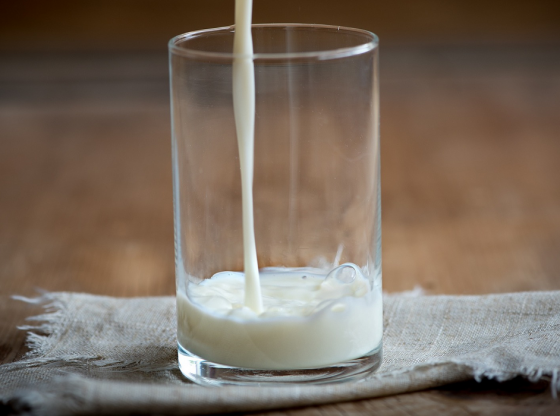
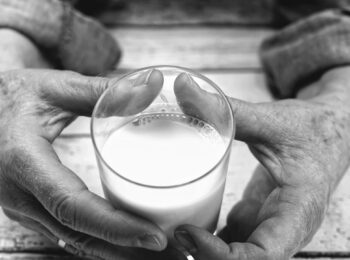
    Whether carbohydrates is good or bad is indeed a hot topic nowadays. One thing is certain though and that is that human breast milk is packed with sugars.

    Human breast milk contains more sugar than, for example, cow’s milk. The sugar is thought to affect our children’s early development.

    Sugar is Key

    We humans may have the most complex breast milk of all mammals. Human breast milk contains more than 200 different types of sugars, while the average for other animals like cows and mice is 30 to 50. Exactly what all these different sugar molecules are needed for is yet to be established. But a new study provides clues to why we need more sugar than the rest of the animal kingdom. The researchers believe that the carbohydrates build up the immune system and help develop the body’s bacterial flora.

    Since milk is rich in antibodies and molecules that slow down the growth of bacteria that can otherwise harm us, this is indeed particularly important shortly after birth. The theory is that human breast milk thus helps to build the foundation for the child’s immune system.

    Carbohydrates Binds Bacteria

    We know that bacteria that can cause diseases have a tendency to bind to carbohydrates. The researchers in this new study were able to see that harmful bacteria in the gut was bound to the milk carbohydrates instead of being absorbed into the body.

    When babies are born they have no bacteria in the stomach at all, but within a few days, they have millions and after a few weeks, they are up in the billions. The sugar from the breast milk is usually the first food that these bacteria have to eat, and it is a meal that is meant to favor specific bacterial cultures.

    But compared to when a calf is born, it has an almost fully developed immune system and is almost ready to go. A human takes much longer to develop and a child’s immune system is not fully developed until about five years of age.

    Milk Through the Nose
    Most children get milk through the nose and it may be a protection mechanism for children. Behind the throat and up to the nose there are many bacteria and some of these can cause ear infections. Getting the carbohydrate-rich milk up through the nasal passage is therefore thought to prevent some these diseases as the bacteria attach themselves to the sugars in the milk instead. This hypothesis is supported by the fact that children who breastfeed are less prone to be afflicted by these diseases.

    Health Effects of Breastfeeding

    Despite the many functions of breast milk, children can grow up healthy with limited or even without human breast milk, which raises controversial questions about what is normal when it comes to breastfeeding. Breast milk does clearly reduce infant mortality and significantly decreases a newborn’s risk for gut and airway infections, but there’s little support for longer-term benefits.

    “We have to be careful about giving any recommendations,” says Theiry Hennet, who co-wrote the study with Lubor Borsig, both physiologists at the University of Zurich. “On the one hand, breast milk is the product of millions of years of evolution and certainly possesses the optimal nutrients for a newborn, but the question is how long does the newborn really need this supply? We feel families should make that decision, and not scientists.”

    ____________

    Breastfed at Tiffany’s
    ________________________

    Babies Breastfeeding Milk
    Share. Facebook Twitter Pinterest LinkedIn Tumblr Email Copy Link

    Related Posts

    A Nutritious Drink Tested Against Alzheimer’s

    November 23, 2020

    Peanut Allergy is Traced to the Gut

    April 21, 2020

    Japanese Diet from 1975 Reduces Obesity

    March 16, 2020

    New Study Reveals Global Intake of Major Beverages

    June 17, 2019

    Ultra-Processed Foods Cause Weight Gain, over Eating, According to a New Study

    May 27, 2019

    Researchers Pinpoint Why Stress Causes Weight Gain

    April 29, 2019
    Recent Posts
    • How the End of Bretton Woods Reshaped Our Economies — and Our Politics
    • Can the U.S. Really Handle 250% Debt-to-GDP? Why Jackson Hole’s Daring Paper Is Wrong
    • Japan’s Fiscal Trap: What Happens If Austerity Is No Longer an Option?
    • The Rise of Range Extended Electric Vehicles (REEVs): A New Era of Hybrid Mobility
    • The Great Capital Rotation: A Shift from U.S. Treasuries to Gold and Real Assets
    • The Hidden Risks of Short-Term Debt: A Balancing Act in U.S. Fiscal Policy
    • The Looming U.S. Debt Spiral: Understanding the Risks
    • The Looming Recession: Seven Economic Indicators Flashing Red for 2025
    • Europa Clipper: NASA’s Mission to Unlock the Secrets of Jupiter’s Icy Moon
    • Could Hedge Funds Cause Chaos in the U.S. Treasury Market? And What About Inflation?
    © 2025 Illustrated Curiosity

    Type above and press Enter to search. Press Esc to cancel.

    This website uses cookies to improve your experience. We'll assume you're ok with this, but you can opt-out if you wish.Accept Reject Read More
    Privacy & Cookies Policy

    Privacy Overview

    This website uses cookies to improve your experience while you navigate through the website. Out of these, the cookies that are categorized as necessary are stored on your browser as they are essential for the working of basic functionalities of the website. We also use third-party cookies that help us analyze and understand how you use this website. These cookies will be stored in your browser only with your consent. You also have the option to opt-out of these cookies. But opting out of some of these cookies may affect your browsing experience.
    Necessary
    Always Enabled
    Necessary cookies are absolutely essential for the website to function properly. This category only includes cookies that ensures basic functionalities and security features of the website. These cookies do not store any personal information.
    Non-necessary
    Any cookies that may not be particularly necessary for the website to function and is used specifically to collect user personal data via analytics, ads, other embedded contents are termed as non-necessary cookies. It is mandatory to procure user consent prior to running these cookies on your website.
    SAVE & ACCEPT