Close Menu
Illustrated Curiosity
    Facebook X (Twitter) Instagram YouTube
    Illustrated Curiosity
    • Earth
    • Economics
    • Environment
      • Climate
      • Environmental Tech
      • Pollution
      • Wildlife
    • Health
      • Health Tech
      • Medicine
      • Nutrition
      • Exercise
    • History
      • Prehistory
      • Ancient History
      • Postclassical Era
      • Modern History
    • Humans
      • Human Brain
      • Psychology
    • Life
      • Animals & Plants
      • Genetics
      • Paleontology
      • Evolution
      • Genetic Engineering
    • Physics
    • Space
      • Astrobiology
      • Astronomy
      • Extrasolar Planets
      • Space Tech
      • Spaceflight
    • Technology
      • Artificial Intelligence
      • Energy
      • Engineering
      • Materials
      • Robotics
      • Vehicles
    Illustrated Curiosity
    Home » Myocardial Infarction in Relation to Mercury Found in Fatty Acids From Fish
    Nutrition

    Myocardial Infarction in Relation to Mercury Found in Fatty Acids From Fish

    August 16, 2012No Comments3 Mins Read
    Share
    Facebook Twitter LinkedIn Pinterest Email
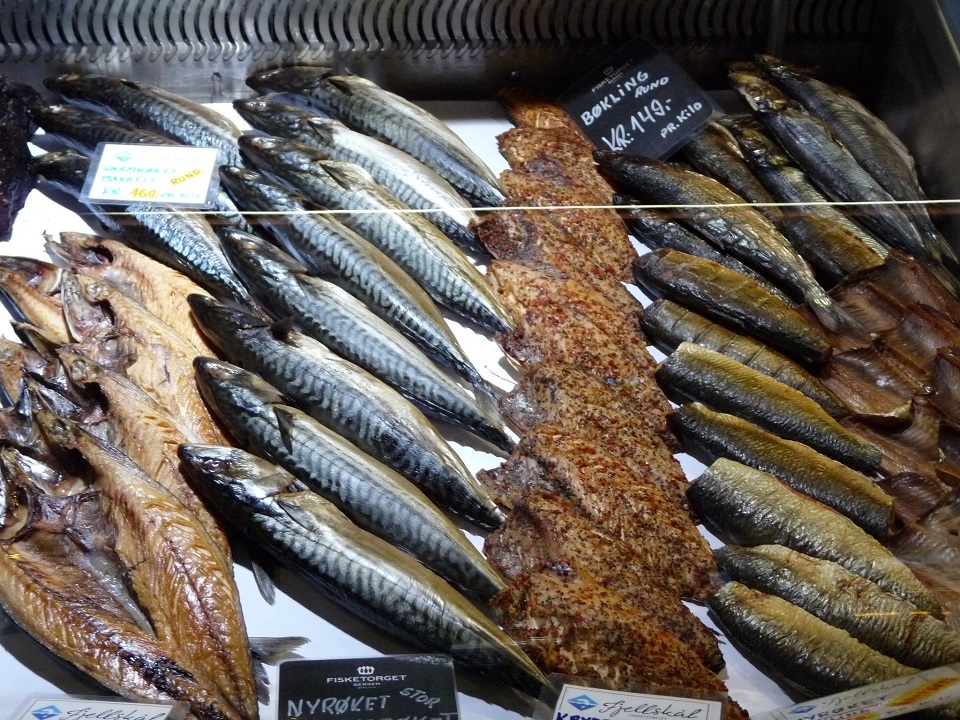
    Image credit: Michael Clarke Stuff / Flickr

    Fish and shellfish have a natural tendency to concentrate mercury in their bodies, often in the form of methylmercury, a highly toxic organic compound of mercury. Especially top predatory fish species, that are high in the food chain, have a tendency to show high amounts of mercury accumulation.

    The below study published in the American Journal of Clinical Nutrition indicates an increase in the risk of heart attack with higher intake of dietary sources that contain mercury.

    The Environmental Protection Agency in the U.S is charged with regulating and managing mercury contamination. And in the EU there are limits for maximum levels of mercury allowed in certain food items. Then there are several countries that have banned the use of mercury, among those Sweden and Norway.

    Mercury is found in fatty fish since it accumulates in particularly fat. But since fat fish also has been shown to have positive effects on heart health, it is indeed a competition between methylmercury risks and omega 3 polyunsaturated fatty acid benefits.

    The researchers in this study also show that the exposure to methylmercury was associated with increased risk of myocardial infarction, but also that higher EPA and DHA Omega 3 concentrations were associated with decreased risk.

    The researchers, therefore, conclude that myocardial infarction risk may be reduced by the consumption of fish high in PUFAs and low in methylmercury.

    Background:

    Exposure to methylmercury from fish has been associated with increased risk of myocardial infarction (MI) in some studies. At the same time, marine n−3 (omega-3) PUFAs are an inherent constituent of fish and are regarded as beneficial. To our knowledge, no risk-benefit model on the basis of data on methylmercury, PUFA, and MI risk has yet been presented.

    Objective:

    The objective of this study was to describe how exposure to both marine n−3 PUFAs and methylmercury relates to MI risk by using data from Finland and Sweden.

    Design:

    We used matched case-control sets from Sweden and Finland that were nested in population-based, prospective cohort studies. We included 361 men with MI from Sweden and 211 men with MI from Finland. MI risk was estimated in a logistic regression model with the amount of mercury in hair (hair-Hg) and concentrations of n−3 PUFAs (EPA and DHA) in serum (S-PUFA) as independent variables.

    Results:

    The median hair-Hg was 0.57 μg/g in Swedish and 1.32 μg/g in Finnish control subjects, whereas the percentage of S-PUFA was 4.21% and 3.83%, respectively. In combined analysis, hair-Hg was associated with higher (P = 0.005) and S-PUFA with lower (P = 0.011) MI risk. Our model indicated that even a small change in fish consumption (ie, by increasing S-PUFA by 1%) would prevent 7% of MIs, despite a small increase in mercury exposure. However, at a high hair-Hg, the modeled beneficial effect of PUFA on MI risk was counteracted by methylmercury.

    Conclusions:

    Exposure to methylmercury was associated with increased risk of MI, and higher S-PUFA concentrations were associated with decreased risk of MI. Thus, MI risk may be reduced by the consumption of fish high in PUFAs and low in methylmercury.

    ________________________________
    Myocardial infarction in relation to mercury and fatty acids from fish: a risk-benefit analysis based on pooled Finnish and Swedish data in men
    ________________

    Fish Mercury (Element) Myocardial infarction
    Share. Facebook Twitter Pinterest LinkedIn Tumblr Email Copy Link

    Related Posts

    A Nutritious Drink Tested Against Alzheimer’s

    November 23, 2020

    Peanut Allergy is Traced to the Gut

    April 21, 2020

    Japanese Diet from 1975 Reduces Obesity

    March 16, 2020

    Mercury Transit 2019 4K UHD

    November 12, 2019

    New Study Reveals Global Intake of Major Beverages

    June 17, 2019

    Ultra-Processed Foods Cause Weight Gain, over Eating, According to a New Study

    May 27, 2019
    Recent Posts
    • How the End of Bretton Woods Reshaped Our Economies — and Our Politics
    • Can the U.S. Really Handle 250% Debt-to-GDP? Why Jackson Hole’s Daring Paper Is Wrong
    • Japan’s Fiscal Trap: What Happens If Austerity Is No Longer an Option?
    • The Rise of Range Extended Electric Vehicles (REEVs): A New Era of Hybrid Mobility
    • The Great Capital Rotation: A Shift from U.S. Treasuries to Gold and Real Assets
    • The Hidden Risks of Short-Term Debt: A Balancing Act in U.S. Fiscal Policy
    • The Looming U.S. Debt Spiral: Understanding the Risks
    • The Looming Recession: Seven Economic Indicators Flashing Red for 2025
    • Europa Clipper: NASA’s Mission to Unlock the Secrets of Jupiter’s Icy Moon
    • Could Hedge Funds Cause Chaos in the U.S. Treasury Market? And What About Inflation?
    © 2025 Illustrated Curiosity

    Type above and press Enter to search. Press Esc to cancel.

    This website uses cookies to improve your experience. We'll assume you're ok with this, but you can opt-out if you wish.Accept Reject Read More
    Privacy & Cookies Policy

    Privacy Overview

    This website uses cookies to improve your experience while you navigate through the website. Out of these, the cookies that are categorized as necessary are stored on your browser as they are essential for the working of basic functionalities of the website. We also use third-party cookies that help us analyze and understand how you use this website. These cookies will be stored in your browser only with your consent. You also have the option to opt-out of these cookies. But opting out of some of these cookies may affect your browsing experience.
    Necessary
    Always Enabled
    Necessary cookies are absolutely essential for the website to function properly. This category only includes cookies that ensures basic functionalities and security features of the website. These cookies do not store any personal information.
    Non-necessary
    Any cookies that may not be particularly necessary for the website to function and is used specifically to collect user personal data via analytics, ads, other embedded contents are termed as non-necessary cookies. It is mandatory to procure user consent prior to running these cookies on your website.
    SAVE & ACCEPT