Close Menu
Illustrated Curiosity | Economics, History, Science, Space, Technology, Health, Physics, Earth
    Facebook X (Twitter) Instagram YouTube
    Illustrated Curiosity | Economics, History, Science, Space, Technology, Health, Physics, Earth
    • Earth
    • Economics
    • Environment
      • Environmental Tech
      • Pollution
      • Wildlife
    • Health
      • Health Tech
      • Medicine
      • Nutrition
      • Exercise
    • History
      • Prehistory
      • Ancient History
      • Postclassical Era
      • Modern History
    • Humans
      • Human Brain
      • Psychology
    • Life
      • Animals & Plants
      • Genetics
      • Paleontology
      • Evolution
      • Genetic Engineering
    • Physics
    • Space
      • Astrobiology
      • Astronomy
      • Extrasolar Planets
      • Space Tech
      • Spaceflight
    • Technology
      • Artificial Intelligence
      • Energy
      • Engineering
      • Materials
      • Robotics
      • Vehicles
    Illustrated Curiosity | Economics, History, Science, Space, Technology, Health, Physics, Earth
    Home » Scientists Develop Drug That Mimics the Effects of Exercise
    Exercise

    Scientists Develop Drug That Mimics the Effects of Exercise

    September 24, 20173 Mins Read
    Illustration: Illustrated Curiosity
    Share
    Facebook Twitter LinkedIn Pinterest Email

    American researchers have developed a promising new drug that mimics some of the biological effects of physical exercise—an early step toward what is often described as an “exercise-in-a-pill.”

    As scientists gain a deeper understanding of what happens in the body during and after exercise, they are increasingly able to replicate parts of these processes using targeted compounds. The goal is not to replace physical activity, but to reproduce key metabolic benefits for people who are unable to exercise due to illness or physical limitations.

    Mimicking the body’s response to exercise

    A research team led by Ron Evans at the Salk Institute has focused on a compound that activates a protein known as PPAR (peroxisome proliferator-activated receptor). This protein acts as a regulator of gene expression, effectively switching on pathways in the body that are normally triggered by endurance training.

    In experiments with mice, the results were striking. Animals given the compound were able to run about 270 minutes before exhaustion, compared to roughly 160 minutes for untreated mice—an improvement of around 70 percent, achieved without any prior training.

    How the drug works

    The compound works by reprogramming how muscles use energy. It enhances the body’s sensitivity to insulin and shifts metabolism away from burning carbohydrates (glucose) toward burning fat more efficiently—one of the key adaptations seen in endurance training.

    The researchers identified changes in the activity of 975 genes in response to the drug. Many of these genes are involved in fat metabolism, while genes linked to carbohydrate breakdown were suppressed. In effect, the body begins to behave as though it has undergone sustained aerobic training.

    Not a full substitute for exercise

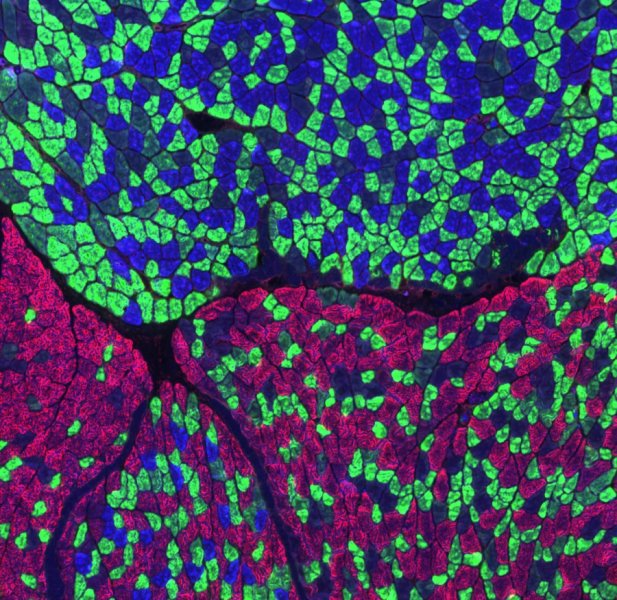
    Despite these benefits, the drug does not fully replicate all aspects of physical exercise. While treated mice became leaner, more energetic, and even showed signs of improved brain health, their muscles did not develop some hallmark features of trained athletes. For example, there was no significant increase in mitochondria, blood vessel density, or the typical shift in muscle fiber types associated with long-term endurance training.

    This suggests that while the compound can trigger important metabolic changes, it cannot entirely replace the complex physiological adaptations that come from regular physical activity.

    Potential applications—and concerns

    The study, published in Cell Metabolism, offers valuable insights into the biology of endurance and metabolism. It could eventually lead to treatments for people with conditions such as heart disease, pulmonary disorders, or Type 2 diabetes, who may struggle to exercise.

    At the same time, the performance-enhancing effects raise concerns about potential misuse, particularly in sports, where such compounds could function as a form of doping.

    Overall, while an “exercise pill” is not yet a true replacement for physical activity, the research represents an important step toward understanding—and potentially harnessing—the body’s response to exercise for medical benefit.

    Reference:
    Weiwei Fan, Wanda Waizenegger et al., PPARδ Promotes Running Endurance by Preserving Glucose, Cell Metabolism, May 2, 2017. http://dx.doi.org/10.1016/j.cmet.2017.04.006
    Share. Facebook Twitter Pinterest LinkedIn Tumblr Email Copy Link

    Related Posts

    Sedentary Mice Received Blood Plasma from Exercising mice and Boosted Memory

    January 12, 2022

    Why Sumo Wrestlers Don’t Typically Suffer from Symptoms of Obesity

    September 14, 2020

    Newfound Reason to Why Exercise Benefit the Brain

    July 20, 2020

    How Music Can Enhance the Effect of Exercise

    March 11, 2020

    Regular Exercise Is Good for Your Heart, No Matter How Old You Are

    October 14, 2019

    Study Shows Spending Two Hours a Week in Nature Can Improve Health

    September 2, 2019
    Recent Posts
    • The Strait of Hormuz Dilemma: Power, Energy, and an Irreversible Turning Point
    • Eggs, Cholesterol, and Heart Disease: What the Science Actually Says in 2026
    • Oil Shocks, Policy Mistakes, and the Risk of a Second Inflation Wave (Part II)
    • Oil Shocks, Policy Mistakes, and the Risk of a Second Inflation Wave (Part I)
    • Microsoft Stored a Movie on Glass — And It Could Last Centuries
    • AI, Automatic Stabilizers & Inflation
    • Largest Battles in History: Cannae — Rome’s Darkest Day
    • The Day the Alliance Died
    • Evaluating Heart Disease: How Cumulative Diet Choices Compound Your Risk
    • What Would Happen If China Attacked Taiwan?
    © 2025 Illustrated Curiosity

    Type above and press Enter to search. Press Esc to cancel.