Close Menu
Illustrated Curiosity
    Facebook X (Twitter) Instagram YouTube
    Illustrated Curiosity
    • Earth
    • Economics
    • Environment
      • Climate
      • Environmental Tech
      • Pollution
      • Wildlife
    • Health
      • Health Tech
      • Medicine
      • Nutrition
      • Exercise
    • History
      • Prehistory
      • Ancient History
      • Postclassical Era
      • Modern History
    • Humans
      • Human Brain
      • Psychology
    • Life
      • Animals & Plants
      • Genetics
      • Paleontology
      • Evolution
      • Genetic Engineering
    • Physics
    • Space
      • Astrobiology
      • Astronomy
      • Extrasolar Planets
      • Space Tech
      • Spaceflight
    • Technology
      • Artificial Intelligence
      • Energy
      • Engineering
      • Materials
      • Robotics
      • Vehicles
    Illustrated Curiosity
    Home » Researchers identified PH-sensitive binding mechanism key to bacteria survival
    Animals & Plants

    Researchers identified PH-sensitive binding mechanism key to bacteria survival

    April 8, 2017No Comments2 Mins Read
    Share
    Facebook Twitter LinkedIn Pinterest Email

    Swedish researchers at Umeå University have identified early markers of stomach cancer by studying how ulcer bacteria can survive in the acidic environment of the stomach
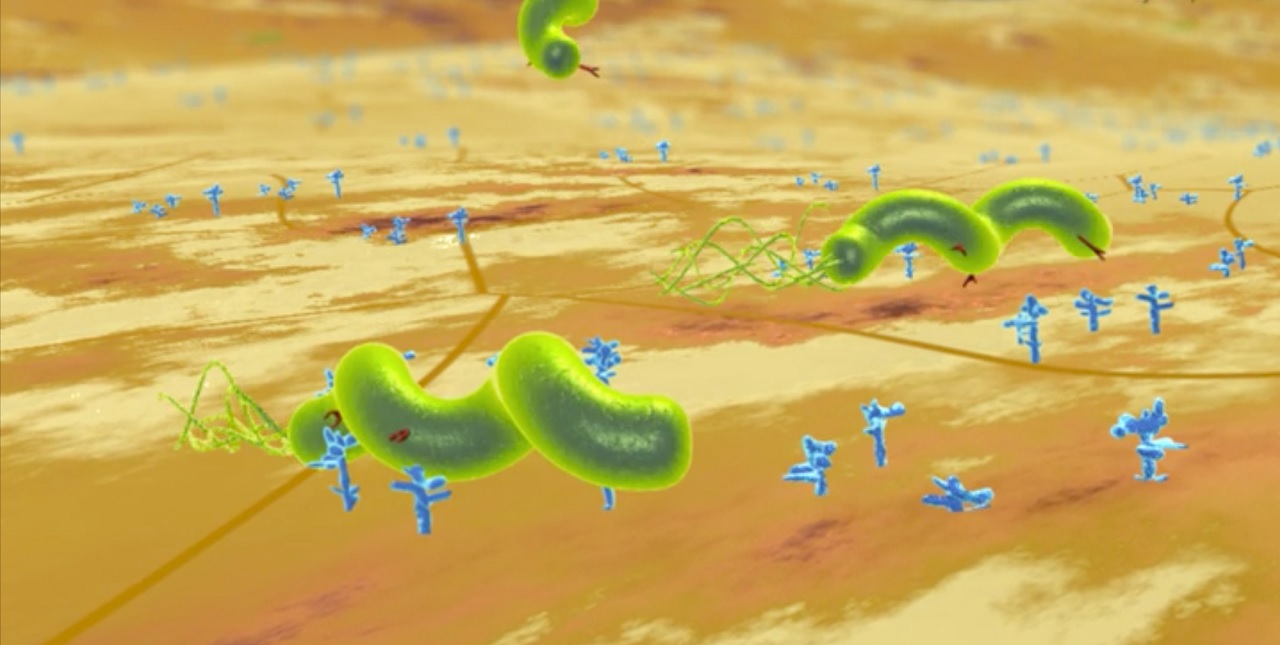
    Gastritis is inflammation of the lining of the stomach. Common causes include infection with Helicobacter pylori and this bacteria is also linked to the development of duodenal ulcers and stomach cancer.

    The scientists at Umeå University have managed to reveal how the stomach ulcer bacteria ‘Helicobacter pylor’ avoids the corrosive stomach acid in the stomach.

    The stomach wall is pH neutral and safe for the bacteria. Therefore, the bacteria have evolved a protein that looks like a gripper that enables it to stick to safe cells on the stomach wall, lining.

    But even so, the bacteria can only survive for a few ours in the harsh environment of the stomach. Since small cell pieces continually fall off the cell wall and are exposed to the acidic environment.

    The ulcer bacterium – still attached to these cell pieces – then release their grip when the environment becomes too hostile and then swim to and attaches to new fresh cells exposed on the stomach wall.
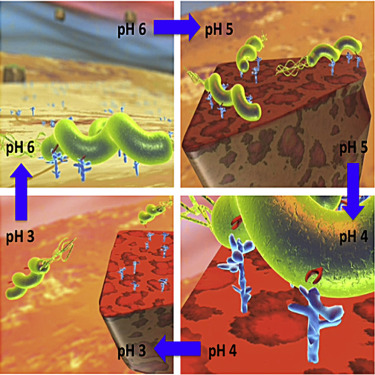
    In the acidic stomach environment, Helicobacter pylori benefits from the protection of the pH-neutral gastric mucus layer. The bacterium’s adhesion protein has a pH-sensitive mechanism allowing the bacterium to timely escape when shedding cells and mucus enter the acidic gastric juice, and allowing the bacterium to return to stomach lining and recycle the infection. Credit: Örjan Furberg, Nopolo.se | Umeå University

    They are thus able to infect the stomach wall again, which becomes chronic gastritis, the lining becomes inflamed with possible symptoms that include nausea, vomiting and bloating. Complications may include bleeding, stomach ulcers, and stomach tumors.

    The researchers have been able to show how this continued cycle work in favor of the bacteria survival and this knowledge could result in new ways to affect their survival and possibly help prevent stomach cancer.

    Reference:

    Jeanna A. Bugaytsova et al “Cell Host & Microbe, article: Helicobacter pylori Adapts to chronic infection and gastric disease through pH-responsive BabA mediated adherence” March 9, 2017, Cell Host & Microbe. DOI: 10.1016 / j.chom.2017.02.013


    Bacteria Gastritis Stomach Cancer
    Share. Facebook Twitter Pinterest LinkedIn Tumblr Email Copy Link

    Related Posts

    Kindness To Dogs During Training Matters

    December 28, 2020

    Solar Storms May Throw off Whale Navigation and Cause Strandings

    May 5, 2020

    Why Bats Are Breeding Grounds for Deadly Viruses Like Ebola and SARS

    March 5, 2020

    Cats can express emotions with subtle facial expressions

    February 12, 2020

    Not Just Dogs, Study Reveals Cats Too Can Form Intense Bonds with Humans

    September 25, 2019

    Some Deep-Sea Fish Can See Color in Near Total Darkness

    May 13, 2019
    Recent Posts
    • How the End of Bretton Woods Reshaped Our Economies — and Our Politics
    • Can the U.S. Really Handle 250% Debt-to-GDP? Why Jackson Hole’s Daring Paper Is Wrong
    • Japan’s Fiscal Trap: What Happens If Austerity Is No Longer an Option?
    • The Rise of Range Extended Electric Vehicles (REEVs): A New Era of Hybrid Mobility
    • The Great Capital Rotation: A Shift from U.S. Treasuries to Gold and Real Assets
    • The Hidden Risks of Short-Term Debt: A Balancing Act in U.S. Fiscal Policy
    • The Looming U.S. Debt Spiral: Understanding the Risks
    • The Looming Recession: Seven Economic Indicators Flashing Red for 2025
    • Europa Clipper: NASA’s Mission to Unlock the Secrets of Jupiter’s Icy Moon
    • Could Hedge Funds Cause Chaos in the U.S. Treasury Market? And What About Inflation?
    © 2025 Illustrated Curiosity

    Type above and press Enter to search. Press Esc to cancel.

    This website uses cookies to improve your experience. We'll assume you're ok with this, but you can opt-out if you wish.Accept Reject Read More
    Privacy & Cookies Policy

    Privacy Overview

    This website uses cookies to improve your experience while you navigate through the website. Out of these, the cookies that are categorized as necessary are stored on your browser as they are essential for the working of basic functionalities of the website. We also use third-party cookies that help us analyze and understand how you use this website. These cookies will be stored in your browser only with your consent. You also have the option to opt-out of these cookies. But opting out of some of these cookies may affect your browsing experience.
    Necessary
    Always Enabled
    Necessary cookies are absolutely essential for the website to function properly. This category only includes cookies that ensures basic functionalities and security features of the website. These cookies do not store any personal information.
    Non-necessary
    Any cookies that may not be particularly necessary for the website to function and is used specifically to collect user personal data via analytics, ads, other embedded contents are termed as non-necessary cookies. It is mandatory to procure user consent prior to running these cookies on your website.
    SAVE & ACCEPT