Close Menu
Illustrated Curiosity
    Facebook X (Twitter) Instagram YouTube
    Illustrated Curiosity
    • Earth
    • Economics
    • Environment
      • Climate
      • Environmental Tech
      • Pollution
      • Wildlife
    • Health
      • Health Tech
      • Medicine
      • Nutrition
      • Exercise
    • History
      • Prehistory
      • Ancient History
      • Postclassical Era
      • Modern History
    • Humans
      • Human Brain
      • Psychology
    • Life
      • Animals & Plants
      • Genetics
      • Paleontology
      • Evolution
      • Genetic Engineering
    • Physics
    • Space
      • Astrobiology
      • Astronomy
      • Extrasolar Planets
      • Space Tech
      • Spaceflight
    • Technology
      • Artificial Intelligence
      • Energy
      • Engineering
      • Materials
      • Robotics
      • Vehicles
    Illustrated Curiosity
    Home » Bacteria in Space Grows in Strange Ways
    Astrobiology

    Bacteria in Space Grows in Strange Ways

    July 10, 2013No Comments2 Mins Read
    Share
    Facebook Twitter LinkedIn Pinterest Email
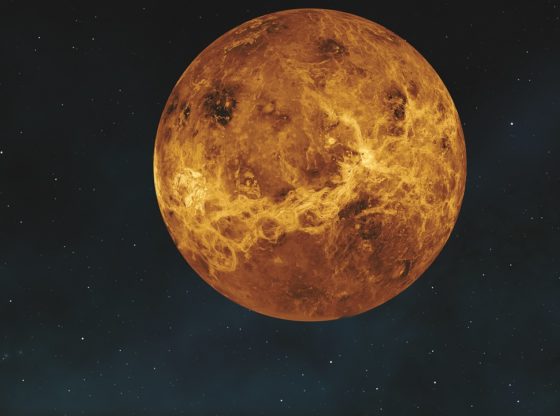
    The bacteria Pseudomonas aeruginosa has been grown onboard the space shuttle Atlantis and appears to form structures very different from how these bacteria grow and arrange on Earth. Credit: NASA

    A new study published in PLOS ONE provides new insight into how bacteria behave in space and will possibly have implications for research on bacteria on Earth.

    The bacteria Pseudomonas aeruginosa was allowed to grow on the space shuttle Atlantis during missions in 2010 and then again in 2011. And apparently, they grow in a very different way in the weightlessness of space compared to bacteria on Earth. Compared to normal gravity, these bacteria had more live cells, were thicker and they had more biomass.

    This is indeed very important data since bacteria does not only appear to us but also within us. After all, humans actually have ten times the bacterial cells than human cells. Mostly working for us and with us in a symbiotic relationship.

    The lead author of the study, professor Cynthia Collins, writes in a statement, “Our study offers the first evidence that spaceflight affects community-level behaviors of bacteria, and highlights the importance of understanding how both harmful and beneficial human-microbe interactions may be altered during spaceflight.”

    “Before we start sending astronauts to Mars or embarking on other long-term spaceflight missions, we need to be as certain as possible that we have eliminated or significantly reduced the risk that biofilms pose to the human crew and their equipment.”, Collins added.

    For future research Collins and her team will attempt to get a better picture of how spaceflight affects the physiology of the Pseudomonas aeruginosa, investigating the bacteria’s gene expression related to metabolism and virulence. They will attempt to build mathematical models to help understand how different factors of the spaceflight environment may impact biofilm growth.

    _________________
    Bacteria Sent Into Space Behave in Mysterious Ways
    Spaceflight Promotes Biofilm Formation by Pseudomonas aeruginosa
    __________________________________
    Bacteria Weightlessness
    Share. Facebook Twitter Pinterest LinkedIn Tumblr Email Copy Link

    Related Posts

    Europa Clipper: NASA’s Mission to Unlock the Secrets of Jupiter’s Icy Moon

    October 20, 2024

    The Phosphine Discovered in Venus’ Clouds May Be a Big Deal

    September 21, 2020

    There Is Definitely Methane on Mars, Scientists Say. But Is It a Sign of Life?

    April 4, 2019

    NASA Is Working With Billionaire Yuri Milner To Search For Life On Enceladus

    November 12, 2018

    Salty Water Under the Surface of Mars Could Have Enough Oxygen for Life

    November 2, 2018

    Video | Professor Abraham: The Search for Primitive and Intelligent Life on Other Planets

    October 16, 2018
    Recent Posts
    • How the End of Bretton Woods Reshaped Our Economies — and Our Politics
    • Can the U.S. Really Handle 250% Debt-to-GDP? Why Jackson Hole’s Daring Paper Is Wrong
    • Japan’s Fiscal Trap: What Happens If Austerity Is No Longer an Option?
    • The Rise of Range Extended Electric Vehicles (REEVs): A New Era of Hybrid Mobility
    • The Great Capital Rotation: A Shift from U.S. Treasuries to Gold and Real Assets
    • The Hidden Risks of Short-Term Debt: A Balancing Act in U.S. Fiscal Policy
    • The Looming U.S. Debt Spiral: Understanding the Risks
    • The Looming Recession: Seven Economic Indicators Flashing Red for 2025
    • Europa Clipper: NASA’s Mission to Unlock the Secrets of Jupiter’s Icy Moon
    • Could Hedge Funds Cause Chaos in the U.S. Treasury Market? And What About Inflation?
    © 2025 Illustrated Curiosity

    Type above and press Enter to search. Press Esc to cancel.

    This website uses cookies to improve your experience. We'll assume you're ok with this, but you can opt-out if you wish.Accept Reject Read More
    Privacy & Cookies Policy

    Privacy Overview

    This website uses cookies to improve your experience while you navigate through the website. Out of these, the cookies that are categorized as necessary are stored on your browser as they are essential for the working of basic functionalities of the website. We also use third-party cookies that help us analyze and understand how you use this website. These cookies will be stored in your browser only with your consent. You also have the option to opt-out of these cookies. But opting out of some of these cookies may affect your browsing experience.
    Necessary
    Always Enabled
    Necessary cookies are absolutely essential for the website to function properly. This category only includes cookies that ensures basic functionalities and security features of the website. These cookies do not store any personal information.
    Non-necessary
    Any cookies that may not be particularly necessary for the website to function and is used specifically to collect user personal data via analytics, ads, other embedded contents are termed as non-necessary cookies. It is mandatory to procure user consent prior to running these cookies on your website.
    SAVE & ACCEPT