Close Menu
Illustrated Curiosity | Economics, History, Science, Space, Technology, Health, Physics, Earth
    Facebook X (Twitter) Instagram YouTube
    Illustrated Curiosity | Economics, History, Science, Space, Technology, Health, Physics, Earth
    • Earth
    • Economics
    • Environment
      • Environmental Tech
      • Pollution
      • Wildlife
    • Health
      • Health Tech
      • Medicine
      • Nutrition
      • Exercise
    • History
      • Prehistory
      • Ancient History
      • Postclassical Era
      • Modern History
    • Humans
      • Human Brain
      • Psychology
    • Life
      • Animals & Plants
      • Genetics
      • Paleontology
      • Evolution
      • Genetic Engineering
    • Physics
    • Space
      • Astrobiology
      • Astronomy
      • Extrasolar Planets
      • Space Tech
      • Spaceflight
    • Technology
      • Artificial Intelligence
      • Energy
      • Engineering
      • Materials
      • Robotics
      • Vehicles
    Illustrated Curiosity | Economics, History, Science, Space, Technology, Health, Physics, Earth
    Home » Daring Maneuver will Potentially Provide Answers About Life on Enceladus
    Astrobiology

    Daring Maneuver will Potentially Provide Answers About Life on Enceladus

    October 29, 20153 Mins Read
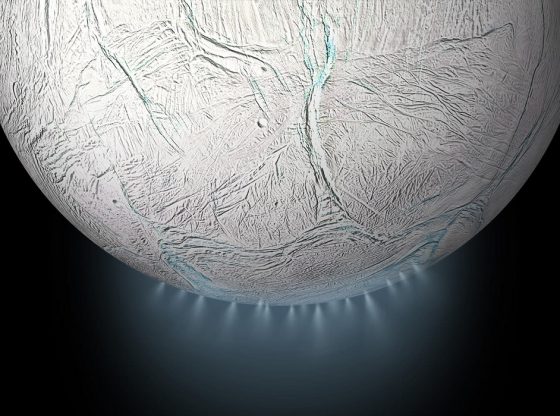
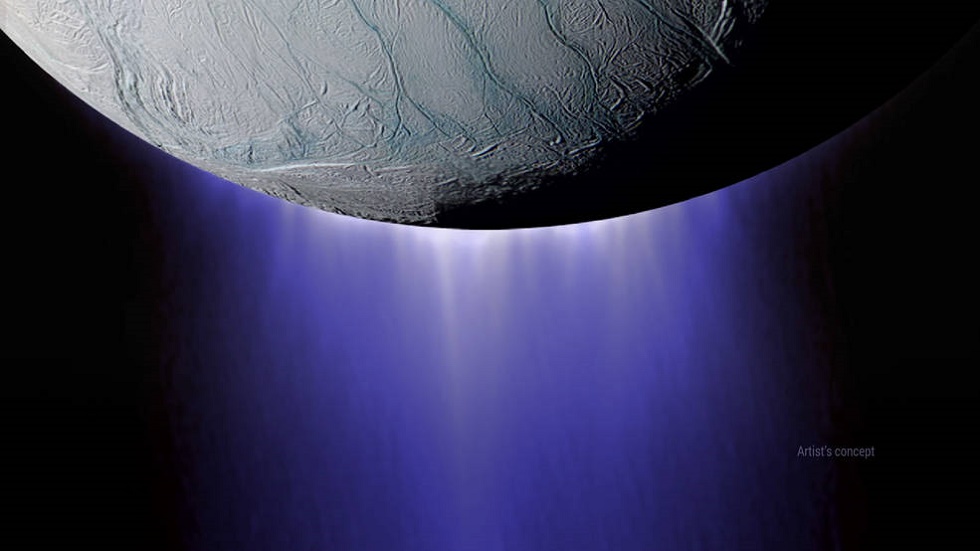
    NASA's Cassini spacecraft completed its deepest-ever dive through the icy plume of Enceladus on Oct. 28, 2015. Image: NASA/JPL-Caltech, Public Domain
    Share
    Facebook Twitter LinkedIn Pinterest Email

    The spacecraft Cassini will be flying through one of Enceladus’ plumes of water and ice today. According to NASA, chances are that it will detect conditions for life.

    The Cassini spacecraft will undertake one of the most spectacular maneuvers in space history, as it will do a very close passage past Saturn’s moon Enceladus.

    Water = Life?

    NASA deems it very interesting to further examine Enceladus, as it was concluded recently that the moon harbors a global ocean beneath its frozen surface.

    This ocean is kept liquid, as evidenced by the plumes of water regularly blown out into space. Since liquid water is a prerequisite for life as we know it, this little moon might just also be harboring some fantastic secrets.

    However, Cassini isn’t equipped to detect signs of life directly, as it wasn’t designed to do that. But it is equipped with instruments able to measure how the ocean is composed. As it can measure the amount of molecular hydrogen in the plumes of whatever it is.

    Through The Plumes

    Cassini will pass Enceladus at an altitude of only 49 kilometers and will fly through the plumes of ice and water jets at the moon’s south pole.

    Cassini has done similar moves before. But not this close. And as it will be passing by so very close, it will potentially be able to detect molecules previously undetectable.

    Since quite a lot of material that comes up through the vents only goes up so far before returning to the surface. Just as with one of the geysers of Iceland or Yellowstone National Park, the further up, the fewer water droplets.

    The Last Voyage

    Cassini’s mission has been extended a number of times. As it was first launched in 1997, it reached orbit around Saturn in 2004. Its mission was planned to last for four years.

    Then it was prolonged initially by two years to 2010 and then further to 2017.

    After the flyby of Enceladus today, it will explore Saturn’s rings and their possible ionosphere at very close range before finally being forced to crash into Saturn. To disintegrate in the immense atmosphere to prevent persistent organisms carried from Earth from contaminating the environments on any of the various moons.

    Hopefully, the measurements today will provide more data than the scientists could even hope for when the mission was planned. But with every more dangerous maneuver, the risk increases.

    _____________
    Cassini | NASA
    Deepest-Ever Dive Through Enceladus Plume Completed
    __________________________
    Enceladus (Moon) Extraterrestrial Life Saturn (Planet)
    Share. Facebook Twitter Pinterest LinkedIn Tumblr Email Copy Link

    Related Posts

    Europa Clipper: NASA’s Mission to Unlock the Secrets of Jupiter’s Icy Moon

    October 20, 2024

    The Phosphine Discovered in Venus’ Clouds May Be a Big Deal

    September 21, 2020

    There Is Definitely Methane on Mars, Scientists Say. But Is It a Sign of Life?

    April 4, 2019

    NASA Is Working With Billionaire Yuri Milner To Search For Life On Enceladus

    November 12, 2018

    Salty Water Under the Surface of Mars Could Have Enough Oxygen for Life

    November 2, 2018

    NASA Finds ‘Organic’ Substances on Mars

    June 18, 2018
    Recent Posts
    • The Strait of Hormuz Dilemma: Power, Energy, and an Irreversible Turning Point
    • Eggs, Cholesterol, and Heart Disease: What the Science Actually Says in 2026
    • Oil Shocks, Policy Mistakes, and the Risk of a Second Inflation Wave (Part II)
    • Oil Shocks, Policy Mistakes, and the Risk of a Second Inflation Wave (Part I)
    • Microsoft Stored a Movie on Glass — And It Could Last Centuries
    • AI, Automatic Stabilizers & Inflation
    • Largest Battles in History: Cannae — Rome’s Darkest Day
    • The Day the Alliance Died
    • Evaluating Heart Disease: How Cumulative Diet Choices Compound Your Risk
    • What Would Happen If China Attacked Taiwan?
    © 2025 Illustrated Curiosity

    Type above and press Enter to search. Press Esc to cancel.