Close Menu
Illustrated Curiosity
    Facebook X (Twitter) Instagram YouTube
    Illustrated Curiosity
    • Earth
    • Economics
    • Environment
      • Climate
      • Environmental Tech
      • Pollution
      • Wildlife
    • Health
      • Health Tech
      • Medicine
      • Nutrition
      • Exercise
    • History
      • Prehistory
      • Ancient History
      • Postclassical Era
      • Modern History
    • Humans
      • Human Brain
      • Psychology
    • Life
      • Animals & Plants
      • Genetics
      • Paleontology
      • Evolution
      • Genetic Engineering
    • Physics
    • Space
      • Astrobiology
      • Astronomy
      • Extrasolar Planets
      • Space Tech
      • Spaceflight
    • Technology
      • Artificial Intelligence
      • Energy
      • Engineering
      • Materials
      • Robotics
      • Vehicles
    Illustrated Curiosity
    Home » ESA green lights PLATO mission to search for Earth-sized planets
    Astrobiology

    ESA green lights PLATO mission to search for Earth-sized planets

    June 23, 2017No Comments3 Mins Read
    Share
    Facebook Twitter LinkedIn Pinterest Email

    The European Space Agency has approved PLATO, the space telescope, to search for extrasolar planets in the universe. This will mean that the project is given the green light to go from drawing board to construction.
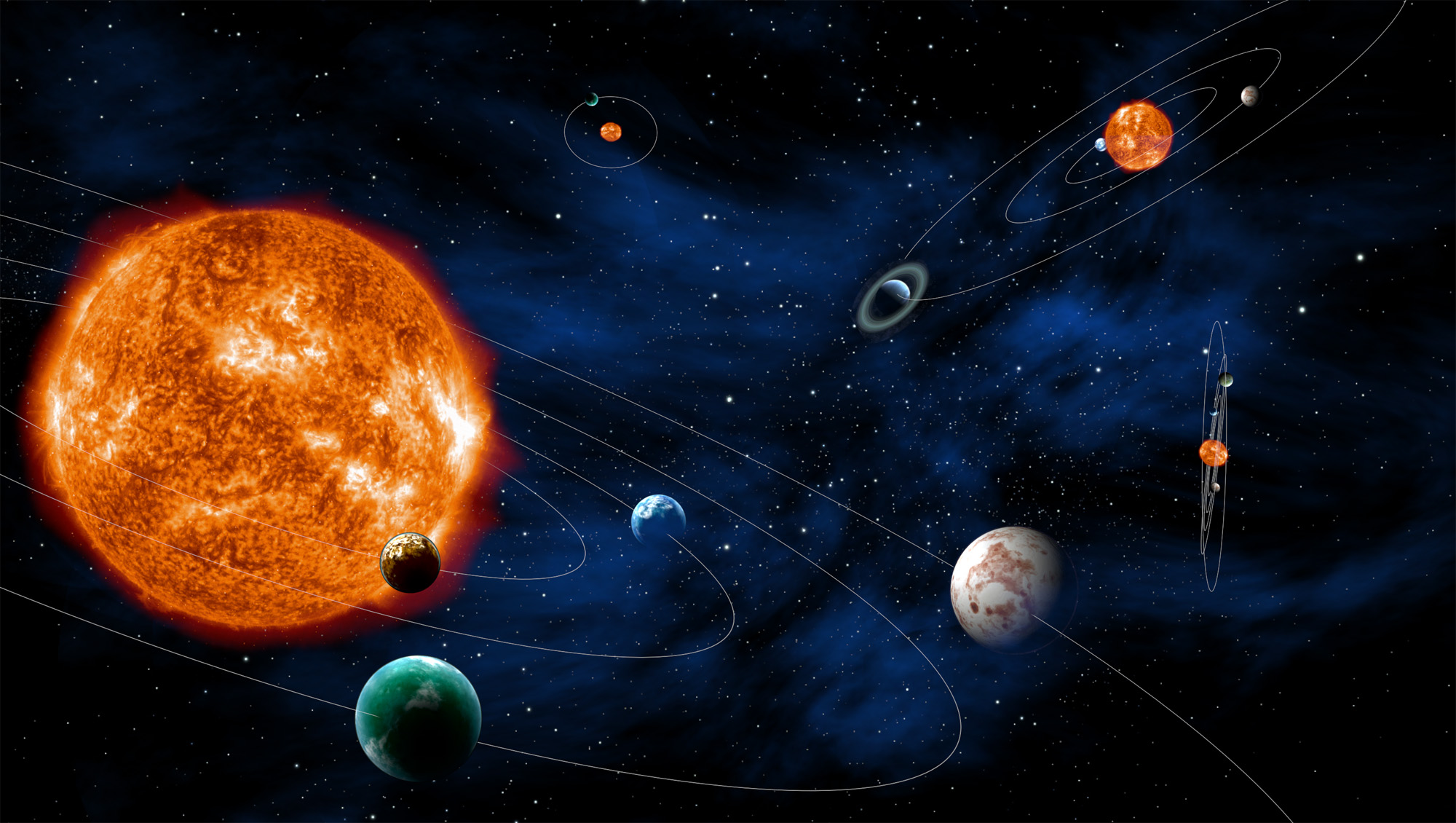
    Image: ESA – C. Carreau

    The Planetary Transits and Oscillations of stars (PLATO) telescope has been designed and studied theoretically for many years, but now, construction of the big space telescope can begin.

    Plato’s special mission is to search for earthlike planets that orbit around stars that resemble the Sun, and which are at such a distance from its parent star to allow life as we know it to persist, i.e. the habitable zone.

    Such planets are hard to find, but scientists hope that Plato will be able to achieve this feat by observing hundreds of thousands of bright stars at the same time for a long time.

    The PLATO will be launched into the Lagrange point ‘L2’ in space — 1.5 million kilometers away from the Earth, as seen from the Sun — and will monitor thousands of bright stars over a large area of the sky.

    PLATO will use the transit method (Transit Photometry) to search for Earth-sized planets, searching for tiny, regular dips in brightness as their planets cross in front of the stars, temporarily blocking out a small fraction of the starlight. The same method used by the NASA Kepler space telescope.

    The mission is led by the University of Warwick in the U.K. and will address fundamental questions such as “how common are Earth-like planets?” and “is our solar system unusual or even unique?” and could eventually lead to the detection of extra-terrestrial life.

    PLATO will also investigate seismic activity in some of the host stars, and determine their masses, sizes, and ages—with unprecedented accuracy — giving us a greater understanding of exoplanet systems.

    The ESA Science Programme Committee meeting on June 20 agreed to the adoption of the PLATO mission as the third medium-class mission in ESA’s Cosmic Vision program, following its selection in February 2014. This means it can move from a blueprint into construction. The next step will be to find industry partners that can manufacture the parts of the space telescope, scheduled for launch mid-2020s.

    Also part of the Cosmic Vision program – decided upon at a meeting of ESA’s Science Programme Committee – is the ESA’s LISA Pathfinder mission to demonstrate key technologies needed to detect gravitational waves from space.

    Reference:
    ESA: PLAnetary Transits and Oscillations of stars

    Transit Photometry - Transit Method
    Share. Facebook Twitter Pinterest LinkedIn Tumblr Email Copy Link

    Related Posts

    Europa Clipper: NASA’s Mission to Unlock the Secrets of Jupiter’s Icy Moon

    October 20, 2024

    The Phosphine Discovered in Venus’ Clouds May Be a Big Deal

    September 21, 2020

    There Is Definitely Methane on Mars, Scientists Say. But Is It a Sign of Life?

    April 4, 2019

    NASA Is Working With Billionaire Yuri Milner To Search For Life On Enceladus

    November 12, 2018

    Salty Water Under the Surface of Mars Could Have Enough Oxygen for Life

    November 2, 2018

    Video | Professor Abraham: The Search for Primitive and Intelligent Life on Other Planets

    October 16, 2018
    Recent Posts
    • How the End of Bretton Woods Reshaped Our Economies — and Our Politics
    • Can the U.S. Really Handle 250% Debt-to-GDP? Why Jackson Hole’s Daring Paper Is Wrong
    • Japan’s Fiscal Trap: What Happens If Austerity Is No Longer an Option?
    • The Rise of Range Extended Electric Vehicles (REEVs): A New Era of Hybrid Mobility
    • The Great Capital Rotation: A Shift from U.S. Treasuries to Gold and Real Assets
    • The Hidden Risks of Short-Term Debt: A Balancing Act in U.S. Fiscal Policy
    • The Looming U.S. Debt Spiral: Understanding the Risks
    • The Looming Recession: Seven Economic Indicators Flashing Red for 2025
    • Europa Clipper: NASA’s Mission to Unlock the Secrets of Jupiter’s Icy Moon
    • Could Hedge Funds Cause Chaos in the U.S. Treasury Market? And What About Inflation?
    © 2025 Illustrated Curiosity

    Type above and press Enter to search. Press Esc to cancel.

    This website uses cookies to improve your experience. We'll assume you're ok with this, but you can opt-out if you wish.Accept Reject Read More
    Privacy & Cookies Policy

    Privacy Overview

    This website uses cookies to improve your experience while you navigate through the website. Out of these, the cookies that are categorized as necessary are stored on your browser as they are essential for the working of basic functionalities of the website. We also use third-party cookies that help us analyze and understand how you use this website. These cookies will be stored in your browser only with your consent. You also have the option to opt-out of these cookies. But opting out of some of these cookies may affect your browsing experience.
    Necessary
    Always Enabled
    Necessary cookies are absolutely essential for the website to function properly. This category only includes cookies that ensures basic functionalities and security features of the website. These cookies do not store any personal information.
    Non-necessary
    Any cookies that may not be particularly necessary for the website to function and is used specifically to collect user personal data via analytics, ads, other embedded contents are termed as non-necessary cookies. It is mandatory to procure user consent prior to running these cookies on your website.
    SAVE & ACCEPT