Close Menu
Illustrated Curiosity
    Facebook X (Twitter) Instagram YouTube
    Illustrated Curiosity
    • Earth
    • Economics
    • Environment
      • Climate
      • Environmental Tech
      • Pollution
      • Wildlife
    • Health
      • Health Tech
      • Medicine
      • Nutrition
      • Exercise
    • History
      • Prehistory
      • Ancient History
      • Postclassical Era
      • Modern History
    • Humans
      • Human Brain
      • Psychology
    • Life
      • Animals & Plants
      • Genetics
      • Paleontology
      • Evolution
      • Genetic Engineering
    • Physics
    • Space
      • Astrobiology
      • Astronomy
      • Extrasolar Planets
      • Space Tech
      • Spaceflight
    • Technology
      • Artificial Intelligence
      • Energy
      • Engineering
      • Materials
      • Robotics
      • Vehicles
    Illustrated Curiosity
    Home » WFIRST: Next generation space telescope to search for habitable planets
    Space Tech

    WFIRST: Next generation space telescope to search for habitable planets

    February 20, 2016No Comments3 Mins Read
    Share
    Facebook Twitter LinkedIn Pinterest Email
    Illustration of what WFIRST will look like once launched. Credit: NASA's Goddard Space Flight Center/CI Lab
    Illustration of what WFIRST will look like once launched.
    Credit: NASA’s Goddard Space Flight Center/CI Lab

    NASA will build a new space-based telescope whose field of view is 100 times larger than the Hubble Space Telescope. It will primarily be used to look for exoplanets, planets orbiting around distant stars.

    The telescope is called The Wide-Field Infrared Survey Telescope, WFIRST for short. It will be ready for launch within about ten years according to NASA.

    Coronagraph

    FIRST will use a coronagraph to enable a more careful examination of exoplanets as it blocks out the bright light from the parent star for which the planet is orbiting.

    Coronagraphs are extreme examples of stray light rejection and precise photometry. It essentially uses a disk to block the Sun’s bright surface, revealing the faint solar corona, stars, planets and sungrazing comets. In essence, it produces an artificial solar eclipse.

    Signs of Life

    The planet’s atmosphere will then be explored in more detail to reveal if there is an atmosphere and also to probe if there are any chemical signs of life present.

    The researchers also hope that WFIRST will be able to uncover secrets of dark matter and dark energy. Providing answers to whether dark energy really is an unknown form of energy or possibly a modification of Einstein’s general theory of relativity.

    The telescope’s huge field of view allows a single image of 300 megapixels to cover over a million galaxies and provide information about their shape, position, and distance. Categorizing and cataloging all this is such a comprehensive work that NASA will turn to the public for help.

    The Next Generation

    Much of the heavy lifting of identifying exoplanets has been shouldered by the Kepler Space Telescope. It is however far past its prime and continues to operate in a mechanically crippled condition.

    Now with the impending launches of the Transiting Exoplanet Survey Satellite (TESS) and the James Webb Space Telescope (JWST), set for 2017 and 2018, respectively. The WFIRST will follow those into space in the 2020s, succeeding The Hubble, Kepler, and the Spitzer Space Telescope.

    These three will create a next-generation of a three-pronged attack to find new planets, including possibly habitable planets and provide humanity with deeper insight and understanding of the universe around us.

    _____________
    NASA Introduces New, Wider Set of Eyes on the Universe: Baltimore’s Space Telescope Science Institute to Partner on New NASA ‘Wide-View’ Space Telescope
    WFIRST
    __________________________
    Exoplanets Hubble Space Telescope (NASA) Kepler Space Telescope (NASA) Space Telescopes Spitzer Space Telescope (NASA) Wide-Field Infrared Survey Telescope (NASA)
    Share. Facebook Twitter Pinterest LinkedIn Tumblr Email Copy Link

    Related Posts

    NASA Unleashes the Future of Rocketry with the Rotating Detonation Rocket Engine

    December 25, 2023

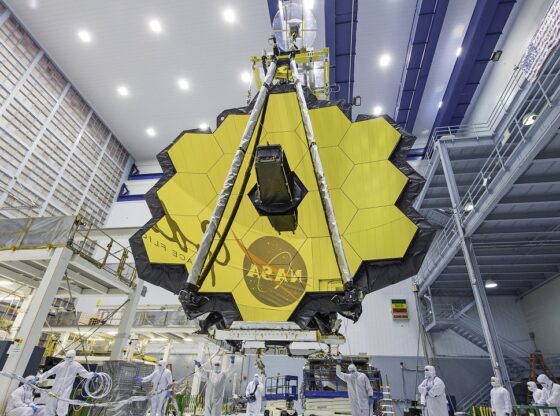
    Follow the Journey of the James Webb Telescope to its Final Destination

    December 27, 2021

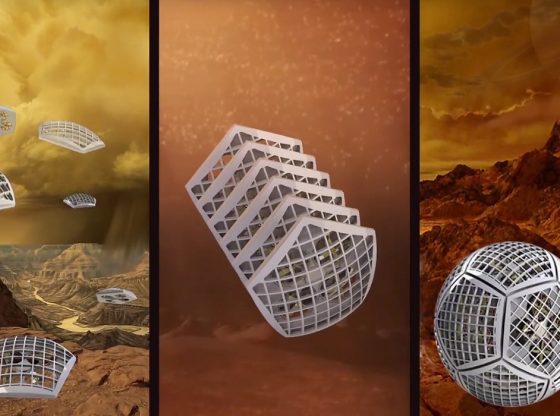
    NASA Designing Advanced Shapeshifting Robots for Saturn’s Moons

    October 21, 2019

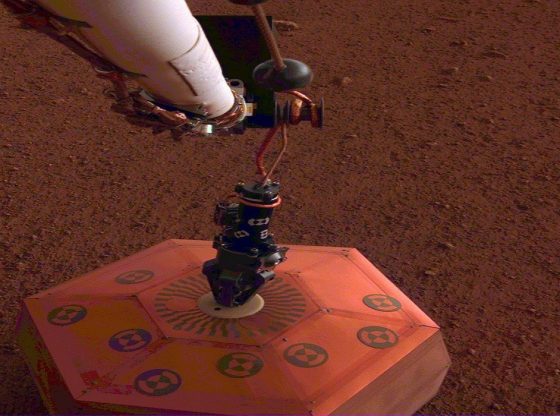
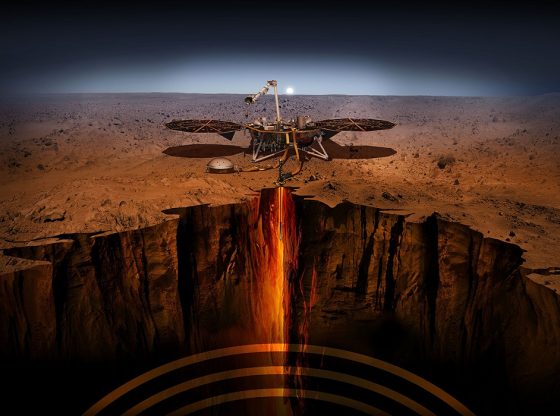
    NASA’s InSight Lander Plops Seismometer on Mars to Hunt Marsquakes

    December 24, 2018

    Video | InSight Landing on Mars

    November 9, 2018

    Waning Martian Dust Storm Could Herald the Return of NASA’s Opportunity Rover

    September 4, 2018
    Recent Posts
    • How the End of Bretton Woods Reshaped Our Economies — and Our Politics
    • Can the U.S. Really Handle 250% Debt-to-GDP? Why Jackson Hole’s Daring Paper Is Wrong
    • Japan’s Fiscal Trap: What Happens If Austerity Is No Longer an Option?
    • The Rise of Range Extended Electric Vehicles (REEVs): A New Era of Hybrid Mobility
    • The Great Capital Rotation: A Shift from U.S. Treasuries to Gold and Real Assets
    • The Hidden Risks of Short-Term Debt: A Balancing Act in U.S. Fiscal Policy
    • The Looming U.S. Debt Spiral: Understanding the Risks
    • The Looming Recession: Seven Economic Indicators Flashing Red for 2025
    • Europa Clipper: NASA’s Mission to Unlock the Secrets of Jupiter’s Icy Moon
    • Could Hedge Funds Cause Chaos in the U.S. Treasury Market? And What About Inflation?
    © 2025 Illustrated Curiosity

    Type above and press Enter to search. Press Esc to cancel.

    This website uses cookies to improve your experience. We'll assume you're ok with this, but you can opt-out if you wish.Accept Reject Read More
    Privacy & Cookies Policy

    Privacy Overview

    This website uses cookies to improve your experience while you navigate through the website. Out of these, the cookies that are categorized as necessary are stored on your browser as they are essential for the working of basic functionalities of the website. We also use third-party cookies that help us analyze and understand how you use this website. These cookies will be stored in your browser only with your consent. You also have the option to opt-out of these cookies. But opting out of some of these cookies may affect your browsing experience.
    Necessary
    Always Enabled
    Necessary cookies are absolutely essential for the website to function properly. This category only includes cookies that ensures basic functionalities and security features of the website. These cookies do not store any personal information.
    Non-necessary
    Any cookies that may not be particularly necessary for the website to function and is used specifically to collect user personal data via analytics, ads, other embedded contents are termed as non-necessary cookies. It is mandatory to procure user consent prior to running these cookies on your website.
    SAVE & ACCEPT