Close Menu
Illustrated Curiosity
    Facebook X (Twitter) Instagram YouTube
    Illustrated Curiosity
    • Earth
    • Economics
    • Environment
      • Climate
      • Environmental Tech
      • Pollution
      • Wildlife
    • Health
      • Health Tech
      • Medicine
      • Nutrition
      • Exercise
    • History
      • Prehistory
      • Ancient History
      • Postclassical Era
      • Modern History
    • Humans
      • Human Brain
      • Psychology
    • Life
      • Animals & Plants
      • Genetics
      • Paleontology
      • Evolution
      • Genetic Engineering
    • Physics
    • Space
      • Astrobiology
      • Astronomy
      • Extrasolar Planets
      • Space Tech
      • Spaceflight
    • Technology
      • Artificial Intelligence
      • Energy
      • Engineering
      • Materials
      • Robotics
      • Vehicles
    Illustrated Curiosity
    Home » Japan Plans Nuclear Reactor Meltdown
    Energy

    Japan Plans Nuclear Reactor Meltdown

    January 12, 2014No Comments2 Mins Read
    Share
    Facebook Twitter LinkedIn Pinterest Email
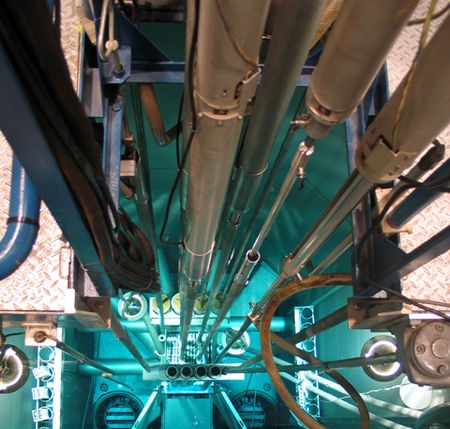
    Credit: Zereshk

    Japanese researchers will soon create a controlled meltdown to prepare and help find ways to avoid disasters like the Fukushima nuclear accident that took place almost two years ago.

    A Mini Meltdown

    Using a mini-reactor about a meter long. The experiment will test a small fuel rod in a very rapid fission process. The project will begin sometime later this year as they will first start the fission process and then turn off the cooling for the mini-reactor, resulting in a meltdown.

    Tomoyuki Sugiyama from Japan Atomic Energy Agency said to MSN, “We want to study exactly how meltdowns happen and apply what we will learn to help improve ways to deal with severe accidents in the future.”

    It will be the first experiment of such to be carried out by the Japanese agency. But similar projects have been done in several major nations with atomic power such as the United States and France.

    The Fukushima disaster

    Following a big earthquake in March 2011 and a resulting tsunami shortly afterward, the cooling system of Fukushima Nuclear Power plant failed to result in the release of radioactivity.

    Immediately after the earthquake, reactors 1–3 shut down via control rods. But when the tsunami arrived 50 minutes later, the 14-meter tall tsunami overwhelmed the plant’s seawall and the water flooded the rooms in which the emergency generators were housed. This caused the diesel generators to fail and power was cut to the critical pumps that should continuously circulate coolant water keeping the fuel rods from melting. The secondary emergency backup pumps ran on electrical batteries, but these ran out of power the day after.

    Eventually, the cooling was successfully restarted, but not until radioactive materials had escaped into the surrounding lands, sea, and air.

    No deaths followed the short term radiation exposure but future cancer deaths rates caused by radiation exposure among the population living near Fukushima are predicted to be elevated.

    _______________
    http://www.jaea.go.jp/english/index.html
    ______________________________
     

    Fukushima Disaster Japan Nuclear Fission Nuclear Meltdown
    Share. Facebook Twitter Pinterest LinkedIn Tumblr Email Copy Link

    Related Posts

    A Fusion Energy Breakthrough? Major Announcement Expected From US Scientists

    December 12, 2022

    New Efficiency Record for Transparent Solar Cells

    August 26, 2020

    IBM’s Lithium Battery Uses Seawater Materials Instead of Heavy Metals

    May 31, 2020

    Demand for batteries will increase tenfold

    May 20, 2020

    Samsung Unveils Groundbreaking All-solid-state Battery Technology

    May 5, 2020

    Global Carbon Dioxide Emissions Leveled Off Last Year

    February 17, 2020
    Recent Posts
    • How the End of Bretton Woods Reshaped Our Economies — and Our Politics
    • Can the U.S. Really Handle 250% Debt-to-GDP? Why Jackson Hole’s Daring Paper Is Wrong
    • Japan’s Fiscal Trap: What Happens If Austerity Is No Longer an Option?
    • The Rise of Range Extended Electric Vehicles (REEVs): A New Era of Hybrid Mobility
    • The Great Capital Rotation: A Shift from U.S. Treasuries to Gold and Real Assets
    • The Hidden Risks of Short-Term Debt: A Balancing Act in U.S. Fiscal Policy
    • The Looming U.S. Debt Spiral: Understanding the Risks
    • The Looming Recession: Seven Economic Indicators Flashing Red for 2025
    • Europa Clipper: NASA’s Mission to Unlock the Secrets of Jupiter’s Icy Moon
    • Could Hedge Funds Cause Chaos in the U.S. Treasury Market? And What About Inflation?
    © 2025 Illustrated Curiosity

    Type above and press Enter to search. Press Esc to cancel.

    This website uses cookies to improve your experience. We'll assume you're ok with this, but you can opt-out if you wish.Accept Reject Read More
    Privacy & Cookies Policy

    Privacy Overview

    This website uses cookies to improve your experience while you navigate through the website. Out of these, the cookies that are categorized as necessary are stored on your browser as they are essential for the working of basic functionalities of the website. We also use third-party cookies that help us analyze and understand how you use this website. These cookies will be stored in your browser only with your consent. You also have the option to opt-out of these cookies. But opting out of some of these cookies may affect your browsing experience.
    Necessary
    Always Enabled
    Necessary cookies are absolutely essential for the website to function properly. This category only includes cookies that ensures basic functionalities and security features of the website. These cookies do not store any personal information.
    Non-necessary
    Any cookies that may not be particularly necessary for the website to function and is used specifically to collect user personal data via analytics, ads, other embedded contents are termed as non-necessary cookies. It is mandatory to procure user consent prior to running these cookies on your website.
    SAVE & ACCEPT