Close Menu
Illustrated Curiosity
    Facebook X (Twitter) Instagram YouTube
    Illustrated Curiosity
    • Earth
    • Economics
    • Environment
      • Climate
      • Environmental Tech
      • Pollution
      • Wildlife
    • Health
      • Health Tech
      • Medicine
      • Nutrition
      • Exercise
    • History
      • Prehistory
      • Ancient History
      • Postclassical Era
      • Modern History
    • Humans
      • Human Brain
      • Psychology
    • Life
      • Animals & Plants
      • Genetics
      • Paleontology
      • Evolution
      • Genetic Engineering
    • Physics
    • Space
      • Astrobiology
      • Astronomy
      • Extrasolar Planets
      • Space Tech
      • Spaceflight
    • Technology
      • Artificial Intelligence
      • Energy
      • Engineering
      • Materials
      • Robotics
      • Vehicles
    Illustrated Curiosity
    Home » Molybdenum Sulfide: A Technological Leap in Hydrogen Production from Water?
    Energy

    Molybdenum Sulfide: A Technological Leap in Hydrogen Production from Water?

    July 27, 2014No Comments3 Mins Read
    Share
    Facebook Twitter LinkedIn Pinterest Email
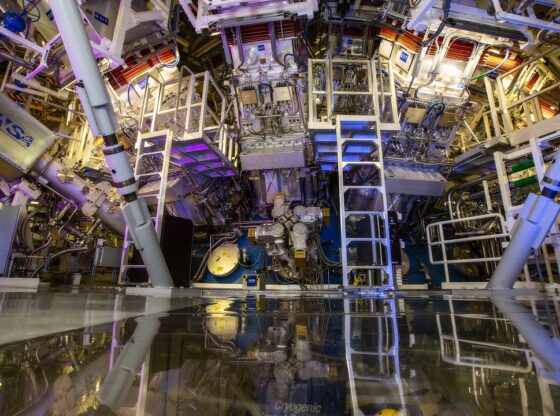
    eft: A nanocluster of molybdenum sulfide attached to graphite. Right: hydrogen ions receiving an electron each.and creates a hydrogen molecule. Credit: Thomas Jaramillo/Stanford

    Making use of the oceans as an abundant and cheap source of hydrogen is a dream for all those who believe in hydrogen being the future fuel of choice and a general source of energy.

    Recently a study was published in Nature Chemistry presenting a new catalyst that could imply a technological leap for hydrogen production from water. The new catalyst is so cheap it can compete with hydrogen produced from fossil fuels.

    Water is usually separated into hydrogen and oxygen through a process called electrolysis, applying electrical currents via a series of immersed electrodes, these electrodes act as chemical catalysts for the reaction (2 H2O(l) → 2 H2(g) + O2(g)).

    This new catalyst is a novel approach made using a nanocluster of molybdenum sulfide (MoS2) attached to a surface of graphite. The electrolysis catalyzed by the use of molybdenum sulfide attached to graphite makes for the reaction when two hydrogen ions each receive an electron when they come in contact with the molybdenum sulfide (see featured image), and then forms a hydrogen molecule. It is a new method of breaking the bonds between hydrogen (H2) and oxygen (O) in water.

    Molybdenum sulfide has not been known for this catalytic property previously. It has been used to refine oil since the Second World War. But the scientists now managed to create several new properties by changing the molecular structure of the molybdenum sulfide and then attach it to the graphite.

    Platinum is generally regarded as the ideal material for such electrodes, but with its price being very high, a device made with platinum cannot compete with other methods to produce hydrogen, such as producing hydrogen from methane. This is a dirty process though and carbon dioxide is created in the process.

    In order to compete with hydrogen produced from fossil fuels, the costs must come down to between 1 and 2 dollars per kilo of hydrogen and the current production costs using this new method would be between 1,6 and 10,4 dollars per kilo, according to the researchers.

    If hydrogen can be produced in a cheap and efficient way from water, it would potentially imply a totally clean cycle of water. Hydrogen fuel cells make use of hydrogen to produce energy, with water being the only waste product.

    The research has been done by teams at Stanford University in the United States and the University of Aarhus in Denmark. Thomas Jaramillo is a professor of chemical engineering at Stanford University, “There are many pieces of the puzzle still needed to make this work, and much effort ahead to realize them. However, we can get huge returns by moving from carbon-intensive resources to renewable, sustainable technologies to produce the chemicals we need for food and energy,”.

    _______________
    Nature: Building an appropriate active-site motif into a hydrogen-evolution catalyst with thiomolybdate [Mo3S13]2− clusters

    Stanford University Press Release
    ______________________________
    Clean Energy Hydrogen Hydrogen Fuel Cell Water
    Share. Facebook Twitter Pinterest LinkedIn Tumblr Email Copy Link

    Related Posts

    A Fusion Energy Breakthrough? Major Announcement Expected From US Scientists

    December 12, 2022

    Across The Atlantic On Hydrogen? A Liquid Hydrogen Plane Paves Way for Zero Emission Flight

    December 12, 2021

    New Efficiency Record for Transparent Solar Cells

    August 26, 2020

    IBM’s Lithium Battery Uses Seawater Materials Instead of Heavy Metals

    May 31, 2020

    Demand for batteries will increase tenfold

    May 20, 2020

    Samsung Unveils Groundbreaking All-solid-state Battery Technology

    May 5, 2020
    Recent Posts
    • How the End of Bretton Woods Reshaped Our Economies — and Our Politics
    • Can the U.S. Really Handle 250% Debt-to-GDP? Why Jackson Hole’s Daring Paper Is Wrong
    • Japan’s Fiscal Trap: What Happens If Austerity Is No Longer an Option?
    • The Rise of Range Extended Electric Vehicles (REEVs): A New Era of Hybrid Mobility
    • The Great Capital Rotation: A Shift from U.S. Treasuries to Gold and Real Assets
    • The Hidden Risks of Short-Term Debt: A Balancing Act in U.S. Fiscal Policy
    • The Looming U.S. Debt Spiral: Understanding the Risks
    • The Looming Recession: Seven Economic Indicators Flashing Red for 2025
    • Europa Clipper: NASA’s Mission to Unlock the Secrets of Jupiter’s Icy Moon
    • Could Hedge Funds Cause Chaos in the U.S. Treasury Market? And What About Inflation?
    © 2025 Illustrated Curiosity

    Type above and press Enter to search. Press Esc to cancel.

    This website uses cookies to improve your experience. We'll assume you're ok with this, but you can opt-out if you wish.Accept Reject Read More
    Privacy & Cookies Policy

    Privacy Overview

    This website uses cookies to improve your experience while you navigate through the website. Out of these, the cookies that are categorized as necessary are stored on your browser as they are essential for the working of basic functionalities of the website. We also use third-party cookies that help us analyze and understand how you use this website. These cookies will be stored in your browser only with your consent. You also have the option to opt-out of these cookies. But opting out of some of these cookies may affect your browsing experience.
    Necessary
    Always Enabled
    Necessary cookies are absolutely essential for the website to function properly. This category only includes cookies that ensures basic functionalities and security features of the website. These cookies do not store any personal information.
    Non-necessary
    Any cookies that may not be particularly necessary for the website to function and is used specifically to collect user personal data via analytics, ads, other embedded contents are termed as non-necessary cookies. It is mandatory to procure user consent prior to running these cookies on your website.
    SAVE & ACCEPT