Close Menu
Illustrated Curiosity
    Facebook X (Twitter) Instagram YouTube
    Illustrated Curiosity
    • Earth
    • Economics
    • Environment
      • Climate
      • Environmental Tech
      • Pollution
      • Wildlife
    • Health
      • Health Tech
      • Medicine
      • Nutrition
      • Exercise
    • History
      • Prehistory
      • Ancient History
      • Postclassical Era
      • Modern History
    • Humans
      • Human Brain
      • Psychology
    • Life
      • Animals & Plants
      • Genetics
      • Paleontology
      • Evolution
      • Genetic Engineering
    • Physics
    • Space
      • Astrobiology
      • Astronomy
      • Extrasolar Planets
      • Space Tech
      • Spaceflight
    • Technology
      • Artificial Intelligence
      • Energy
      • Engineering
      • Materials
      • Robotics
      • Vehicles
    Illustrated Curiosity
    Home » Fungi Recycle Rechargeable Lithium-Ion Batteries
    Environmental Tech

    Fungi Recycle Rechargeable Lithium-Ion Batteries

    August 24, 2016No Comments2 Mins Read
    Share
    Facebook Twitter LinkedIn Pinterest Email
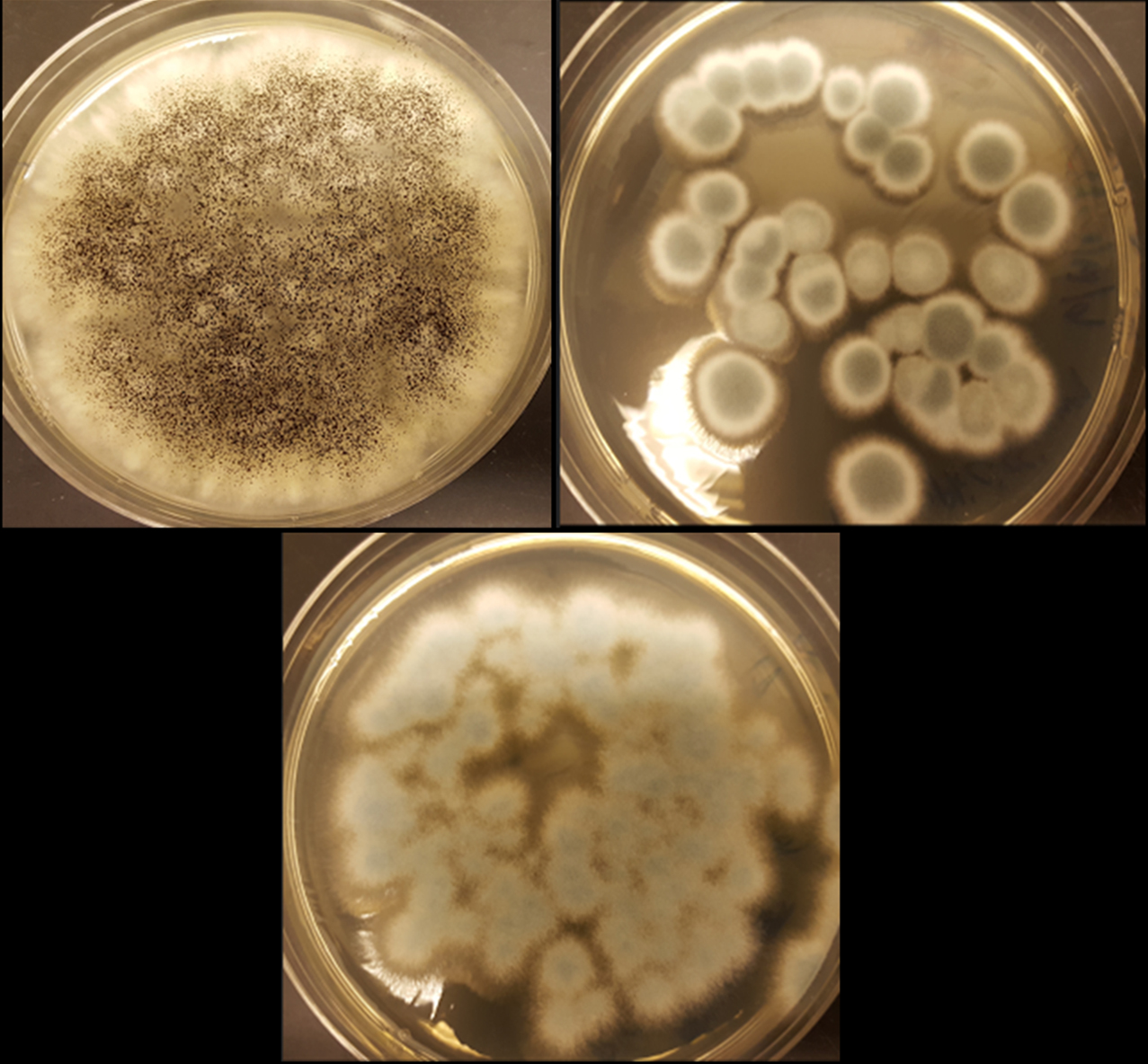
    The fungi Aspergillus niger (top left), Penicillium simplicissimum (top right) and Penicillium chrysogenum (bottom) can recycle cobalt and lithium from rechargeable batteries. Credit: Aldo Lobos
    The fungi Aspergillus niger (top left), Penicillium simplicissimum (top right) and Penicillium chrysogenum (bottom) can recycle cobalt and lithium from rechargeable batteries. Credit: Aldo Lobos

    Scientists from the University of South Florida unveiled this week how they have been able to get fungi to separate lithium and cobalt from old rechargeable lithium ion batteries.

    Some fungi produce various kinds of acids such as citric acid. This acid can be used to “pull out” metals such as lithium and cobalt from the batteries, through a sort of leaching. The use of biological organisms to extract metals from products in this way is called “bioleaching”.

    Bioleaching has been demonstrated to extract metals from various electronic products using a fungus, but this is the fist time bioleaching has been used on batteries, according to the researchers.

    The team of scientists began to pulverize cathodes in batteries where the metals are seated. Then exposing three different kinds of molds to the powder and they were slowly but surely extracting metals using acid.

    It represents an environmentally friendly alternative use of recycling to the otherwise so environmental problematic batteries. There are other ways to take care of lithium and cobalt from batteries using chemicals and high heat. But the scientists believe that using fungi could become significantly cheaper and more environmentally friendly.

    The next step in the research is to figure out a way to get the metals from the acid. So far they have been able to do this on a small scale in the laboratory and the challenge is to transfer the method as cheaply as possible to a large scale.

    _____________
    Fungi recycle rechargeable lithium-ion batteries

    __________________________
    Battery Bioleaching Fungi Recycling
    Share. Facebook Twitter Pinterest LinkedIn Tumblr Email Copy Link

    Related Posts

    IBM’s Lithium Battery Uses Seawater Materials Instead of Heavy Metals

    May 31, 2020

    BYD Opens What It Claims Will Be World’s Largest Battery Factory

    July 11, 2018

    This Plastic Can Be Recycled An “Infinite” Number of Times

    May 8, 2018

    New $1 Billion Venture Capital Fund for Battery Tech Launched by Renault-Nissan-Mitsubishi

    January 22, 2018

    Hyundai Will Overtake Tesla’s Record with the Largest Battery in the World

    December 12, 2017

    Solid-state Battery Breakthrough Promises One Minute Charge Time

    November 27, 2017
    Recent Posts
    • How the End of Bretton Woods Reshaped Our Economies — and Our Politics
    • Can the U.S. Really Handle 250% Debt-to-GDP? Why Jackson Hole’s Daring Paper Is Wrong
    • Japan’s Fiscal Trap: What Happens If Austerity Is No Longer an Option?
    • The Rise of Range Extended Electric Vehicles (REEVs): A New Era of Hybrid Mobility
    • The Great Capital Rotation: A Shift from U.S. Treasuries to Gold and Real Assets
    • The Hidden Risks of Short-Term Debt: A Balancing Act in U.S. Fiscal Policy
    • The Looming U.S. Debt Spiral: Understanding the Risks
    • The Looming Recession: Seven Economic Indicators Flashing Red for 2025
    • Europa Clipper: NASA’s Mission to Unlock the Secrets of Jupiter’s Icy Moon
    • Could Hedge Funds Cause Chaos in the U.S. Treasury Market? And What About Inflation?
    © 2025 Illustrated Curiosity

    Type above and press Enter to search. Press Esc to cancel.

    This website uses cookies to improve your experience. We'll assume you're ok with this, but you can opt-out if you wish.Accept Reject Read More
    Privacy & Cookies Policy

    Privacy Overview

    This website uses cookies to improve your experience while you navigate through the website. Out of these, the cookies that are categorized as necessary are stored on your browser as they are essential for the working of basic functionalities of the website. We also use third-party cookies that help us analyze and understand how you use this website. These cookies will be stored in your browser only with your consent. You also have the option to opt-out of these cookies. But opting out of some of these cookies may affect your browsing experience.
    Necessary
    Always Enabled
    Necessary cookies are absolutely essential for the website to function properly. This category only includes cookies that ensures basic functionalities and security features of the website. These cookies do not store any personal information.
    Non-necessary
    Any cookies that may not be particularly necessary for the website to function and is used specifically to collect user personal data via analytics, ads, other embedded contents are termed as non-necessary cookies. It is mandatory to procure user consent prior to running these cookies on your website.
    SAVE & ACCEPT