Close Menu
Illustrated Curiosity | Economics, History, Science, Space, Technology, Health, Physics, Earth
    Facebook X (Twitter) Instagram YouTube
    Illustrated Curiosity | Economics, History, Science, Space, Technology, Health, Physics, Earth
    • Earth
    • Economics
    • Environment
      • Environmental Tech
      • Pollution
      • Wildlife
    • Health
      • Health Tech
      • Medicine
      • Nutrition
      • Exercise
    • History
      • Prehistory
      • Ancient History
      • Postclassical Era
      • Modern History
    • Humans
      • Human Brain
      • Psychology
    • Life
      • Animals & Plants
      • Genetics
      • Paleontology
      • Evolution
      • Genetic Engineering
    • Physics
    • Space
      • Astrobiology
      • Astronomy
      • Extrasolar Planets
      • Space Tech
      • Spaceflight
    • Technology
      • Artificial Intelligence
      • Energy
      • Engineering
      • Materials
      • Robotics
      • Vehicles
    Illustrated Curiosity | Economics, History, Science, Space, Technology, Health, Physics, Earth
    Home » First Baby Born Thanks to Womb Transplant from Deceased Donor
    Medicine

    First Baby Born Thanks to Womb Transplant from Deceased Donor

    December 14, 20183 Mins Read
    CC0 Creative Commons
    Image: Pixabay
    Share
    Facebook Twitter LinkedIn Pinterest Email

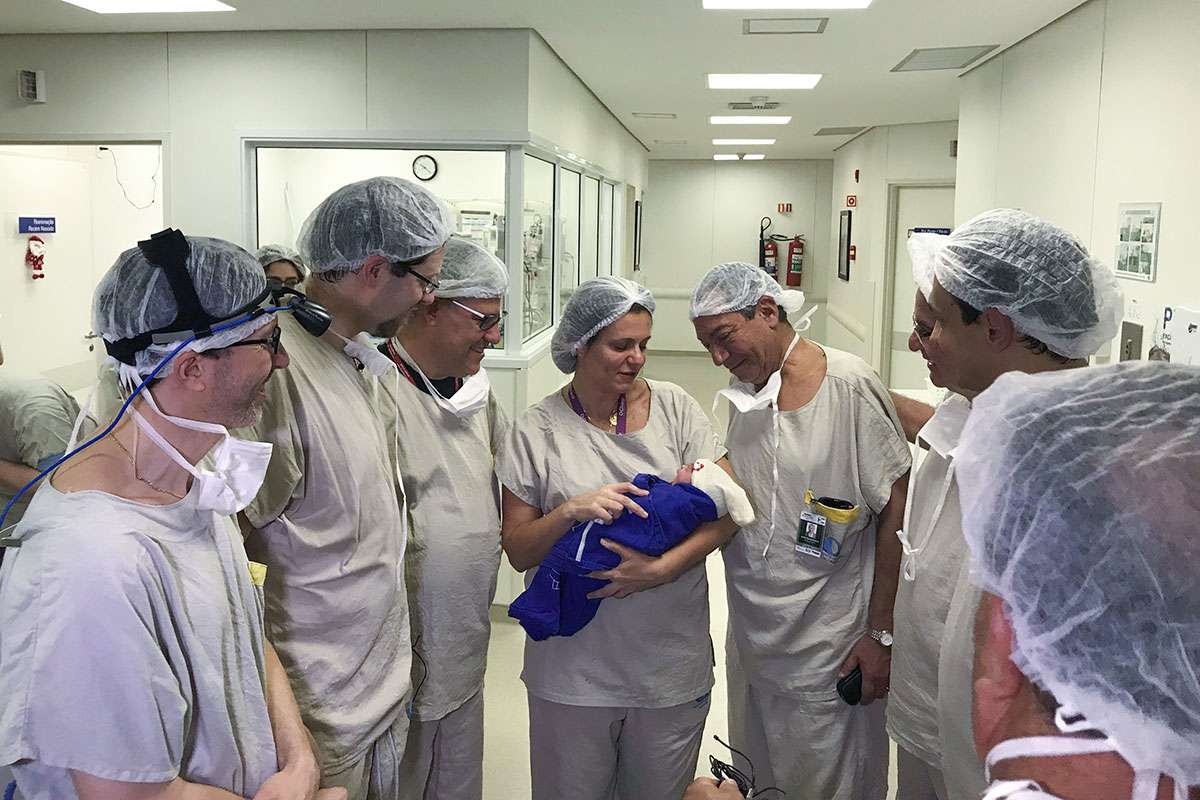
    A woman has given birth to a healthy baby girl after surgeons implanted a uterus in her body, taken from a dead person. The birth in Brazil is the first reported involving a deceased donor uterus transplant.

    For the first time, a baby has been born to a woman who received a uterus transplant from a deceased donor, according to Hospital das Clínicas at the University of São Paulo School of Medicine in Brazil.

    The uterus (or womb) is shaped like a topsy-turvy pear and sits within the pelvis. It is the female reproductive organ that houses and nourishes the fetus until birth.

    At least a dozen children have been born to women with transplanted uteri donated by a living relative, but this is the first transplantation from a deceased donor, noted the authors of the study, which was published Tuesday in the medical journal The Lancet.

    Using a deceased donor relies on keeping the organ viable after the death of the donor, and the team working with the 32-year old Brazilian mother transplanted the uterus after it had been without an oxygen supply for eight hours. The success could greatly expand the number of women with uterine infertility who have previously only had the option of adoption or surrogacy to become mothers.

    “The results provide proof-of-concept for a new treatment option for absolute uterine factor infertility,”

    Wrote co-authors Dr. Dani Ejzenberg, an ob/gyn at the University of São Paulo and Hospital das Clínicas in Brazil, and Dr. Wellington Andraus, a transplant surgeon at the São Paulo University School of Medicine, in the study.

    Surgeons spent 10 and a half hours plumbing in the organ by connecting veins, arteries, ligaments, and vaginal canals. After surgery, the anonymous recipient remained in intensive care for two days before spending another six days on a specialized transplant ward.

    She received five immunosuppression drugs to prevent her body from rejecting the new organ, as well as other treatments to combat infection and blood clotting. Once the uterus was successfully incorporated into her body, she received fertilized eggs produced by IVF.

    A baby girl weighing 2.55 kilos was born by cesarean section after a pregnancy lasting 35 weeks and three days. During the delivery, the transplanted uterus was removed and showed no abnormalities.

    “The use of deceased donors could greatly broaden access to this treatment, and our results provide proof-of-concept for a new option for women with uterine infertility.”

    – Dani Ejzenberg, at São Paulo University, Brazil, who led the team.

    Reference:

    Dani Ejzenberg et al. Livebirth after uterus transplantation from a deceased donor in a recipient with uterine infertility DOI:https://doi.org/10.1016/S0140-6736(18)31766-5

    Transplantation Uterus
    Share. Facebook Twitter Pinterest LinkedIn Tumblr Email Copy Link

    Related Posts

    Groundbreaking Breakthrough: A Potential Cure for Cancer Targets Proliferating Cell Nuclear Antigen (PCNA)

    August 3, 2023

    Data Modeling Can Predict How COVID-19 Will Spread in a Big City

    November 13, 2020

    Air Pollution May Be a Contributing Factor behind High Death Rates in COVID-19

    June 8, 2020

    Evidence of Stray Dogs as Possible Intermediate Host of COVID-19 Pandemic

    April 28, 2020

    Promising Progress on Urine Tests for Prostate Cancer

    March 23, 2020

    Machine Learning Found Surprising Potential New Antibiotics to Combat Resistant Bacteria

    February 25, 2020
    Recent Posts
    • Oil Shocks, Policy Mistakes, and the Risk of a Second Inflation Wave (Part II)
    • Oil Shocks, Policy Mistakes, and the Risk of a Second Inflation Wave (Part I)
    • Microsoft Stored a Movie on Glass — And It Could Last Centuries
    • AI, Automatic Stabilizers & Inflation
    • Largest Battles in History: Cannae — Rome’s Darkest Day
    • The Day the Alliance Died
    • Evaluating Heart Disease: How Cumulative Diet Choices Compound Your Risk
    • What Would Happen If China Attacked Taiwan?
    • Geopoliticisation as a Structural Tailwind for Commodity Prices
    • America’s Economic Remodel: Who’s Really Paying the Bill?
    © 2025 Illustrated Curiosity

    Type above and press Enter to search. Press Esc to cancel.