Close Menu
Illustrated Curiosity
    Facebook X (Twitter) Instagram YouTube
    Illustrated Curiosity
    • Earth
    • Economics
    • Environment
      • Climate
      • Environmental Tech
      • Pollution
      • Wildlife
    • Health
      • Health Tech
      • Medicine
      • Nutrition
      • Exercise
    • History
      • Prehistory
      • Ancient History
      • Postclassical Era
      • Modern History
    • Humans
      • Human Brain
      • Psychology
    • Life
      • Animals & Plants
      • Genetics
      • Paleontology
      • Evolution
      • Genetic Engineering
    • Physics
    • Space
      • Astrobiology
      • Astronomy
      • Extrasolar Planets
      • Space Tech
      • Spaceflight
    • Technology
      • Artificial Intelligence
      • Energy
      • Engineering
      • Materials
      • Robotics
      • Vehicles
    Illustrated Curiosity
    Home » Robots are now better surgeons than human
    Health Tech

    Robots are now better surgeons than human

    May 16, 2017No Comments2 Mins Read
    Share
    Facebook Twitter LinkedIn Pinterest Email

    For the first time, a robot has performed an operation so precariously difficult that most surgeons would probably admit themselves defeated.
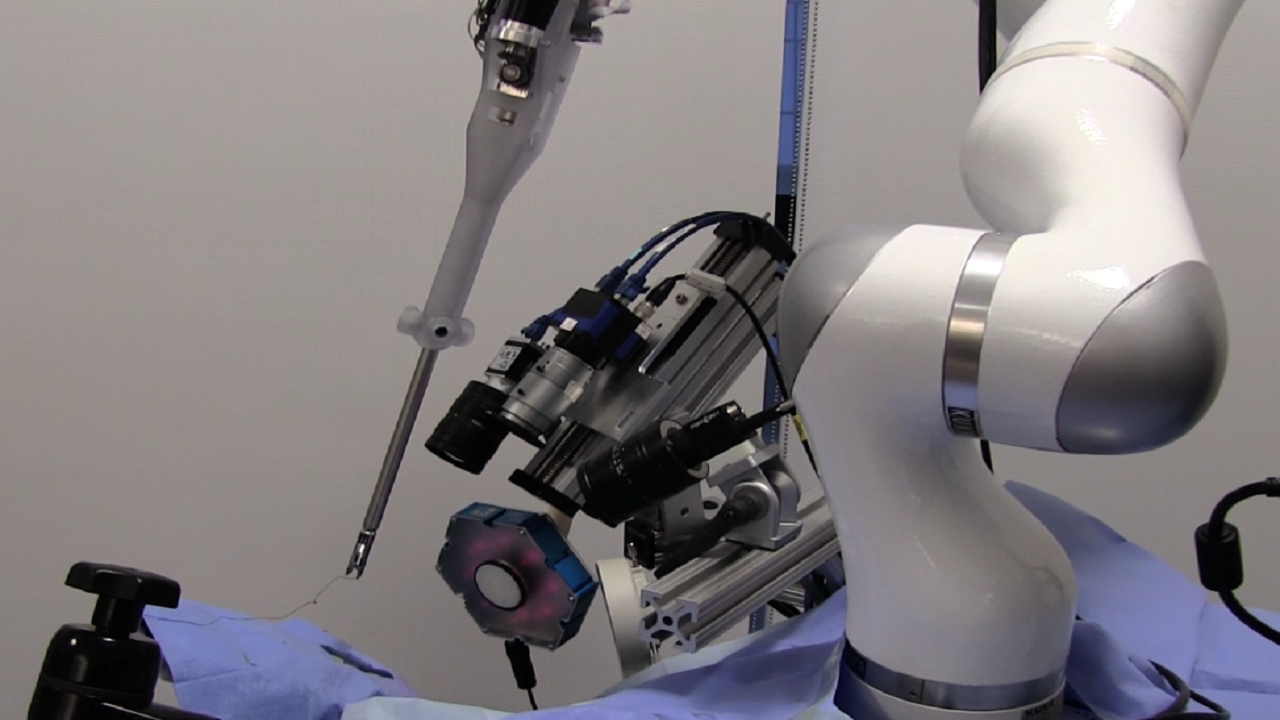
    The STAR (Smart Tissue Autonomous Robot). Credit: John Hopkins

    Robotic surgeons are here to stay, they can perform operations more precise, faster and significantly more painless compared to their human counterparts.

    We are used to thinking of human dexterity as second to none, however, human patience is a limited resource, and even the best surgeons are sometimes faced with their limits. A robot, however, doesn’t tire and can theoretically cut and suture in places the human hand can’t ever reach.

    With its efficient mechanical movements, the robot threads a needle and thread through the cervical tissue. The robot, called STAR (Smart Tissue Autonomous Robot), is the first ever to perform this type of very difficult type of sewing on two intestines – something only human surgeons have done so far.

    STAR is joined by human researchers from Johns Hopkins University in the U.S. and they are in full swing to move the technological frontline for robot surgery a great deal into the future.

    A new study published in Science describes the progress of a team that includes computer scientists, robotic engineers, and medical professionals at the Johns Hopkins University – developing STAR to performing sewing surgery ex vivo tissue in the lab, as well as on in vivo tissue in an anesthetized pig.
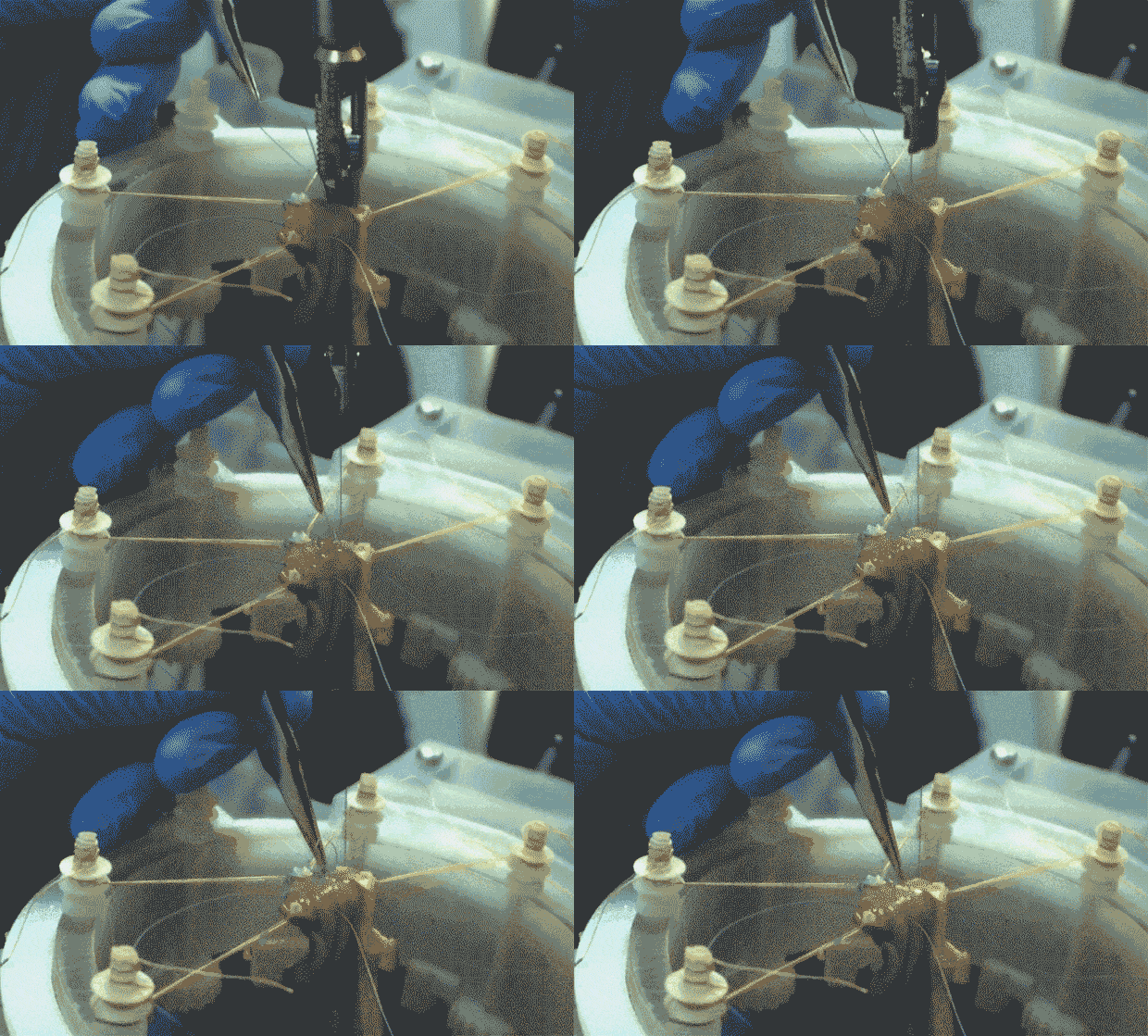
    Credit: John Hopkins

    In 40 percent of the trials, STAR was assisted by a human, like pulling a loose thread and such. In 60 percent of the trials, STAR was fully autonomous.

    Robot surgeons may enter the operating rooms all over the world and take over the surgeons’ within a few years already.

    Sewing is far from the only medical discipline that the robots will surpass humans in doing. Robots with extremely accurate vision and precise motor skills can, for example, be able to perform complicated eye surgery.

    Artificial intelligence such as IBM’s Watson can already diagnose cancer patients significantly faster than the doctor can. An accurate diagnosis will soon be possible in a few minutes instead of taking several days or months.


    Reference:

    Azad Shademan et al. Supervised autonomous robotic soft tissue surgery DOI: 10.1126/scitranslmed.aad9398

    Robotic Surgeon Robots
    Share. Facebook Twitter Pinterest LinkedIn Tumblr Email Copy Link

    Related Posts

    Study Results Suggest Human Aging Can Be Reversed

    September 11, 2019

    Video | World Science Festival: Engineering Immortality: the End of Aging?

    December 20, 2018

    Spinal Cord Stimulation Helps Three Paralyzed People Walk Again

    November 8, 2018

    Man Against Machine: AI Is Better Than Dermatologists at Diagnosing Skin Cancer

    June 22, 2018

    Spikes of Graphene Can Kill Bacteria on Implants

    June 15, 2018

    Tiny Injectable Sensor Could Provide Unobtrusive Alcohol Monitoring

    June 3, 2018
    Recent Posts
    • How the End of Bretton Woods Reshaped Our Economies — and Our Politics
    • Can the U.S. Really Handle 250% Debt-to-GDP? Why Jackson Hole’s Daring Paper Is Wrong
    • Japan’s Fiscal Trap: What Happens If Austerity Is No Longer an Option?
    • The Rise of Range Extended Electric Vehicles (REEVs): A New Era of Hybrid Mobility
    • The Great Capital Rotation: A Shift from U.S. Treasuries to Gold and Real Assets
    • The Hidden Risks of Short-Term Debt: A Balancing Act in U.S. Fiscal Policy
    • The Looming U.S. Debt Spiral: Understanding the Risks
    • The Looming Recession: Seven Economic Indicators Flashing Red for 2025
    • Europa Clipper: NASA’s Mission to Unlock the Secrets of Jupiter’s Icy Moon
    • Could Hedge Funds Cause Chaos in the U.S. Treasury Market? And What About Inflation?
    © 2025 Illustrated Curiosity

    Type above and press Enter to search. Press Esc to cancel.

    This website uses cookies to improve your experience. We'll assume you're ok with this, but you can opt-out if you wish.Accept Reject Read More
    Privacy & Cookies Policy

    Privacy Overview

    This website uses cookies to improve your experience while you navigate through the website. Out of these, the cookies that are categorized as necessary are stored on your browser as they are essential for the working of basic functionalities of the website. We also use third-party cookies that help us analyze and understand how you use this website. These cookies will be stored in your browser only with your consent. You also have the option to opt-out of these cookies. But opting out of some of these cookies may affect your browsing experience.
    Necessary
    Always Enabled
    Necessary cookies are absolutely essential for the website to function properly. This category only includes cookies that ensures basic functionalities and security features of the website. These cookies do not store any personal information.
    Non-necessary
    Any cookies that may not be particularly necessary for the website to function and is used specifically to collect user personal data via analytics, ads, other embedded contents are termed as non-necessary cookies. It is mandatory to procure user consent prior to running these cookies on your website.
    SAVE & ACCEPT