
Twelve years ago, researchers at the Royal Institute of Technology (KTH) in Sweden started working on a technique for mending bone fractures, a method that allowed surgeons to glue together bones instead of using metal screws and plates in the future.
The concept has since progressed and the research detailing the teams’ effort to develop the medical adhesive was recently published in the scientific journal Advanced Functional Material.
“We have finally managed to identify a surgically-realizable adhesive to fix bone fractures,”
“The chemistry, materials, and methodology we used to result in extraordinary adhesion and fixation to the wet bone, which in most cases is incredibly difficult.”
– Michael Malkoch, Professor of Fiber and Polymer Technology at KTH, the team leader.
The ability to use an adhesive instead of temporary or permanently insert metal implants to fix fractures allows for a number of benefits for both the patient and for health care in general.
Among these benefits are reduced material costs, reduced surgery costs due to less time allocated to both surgery and then revisits by the patients to remove temporary implants.
Large cost savings can be achieved due to a short rehabilitation period, for example after surgery of a finger fracture. It would also reduce discomfort for the patient.
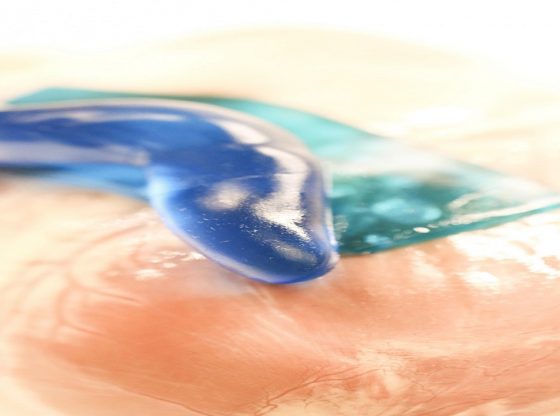
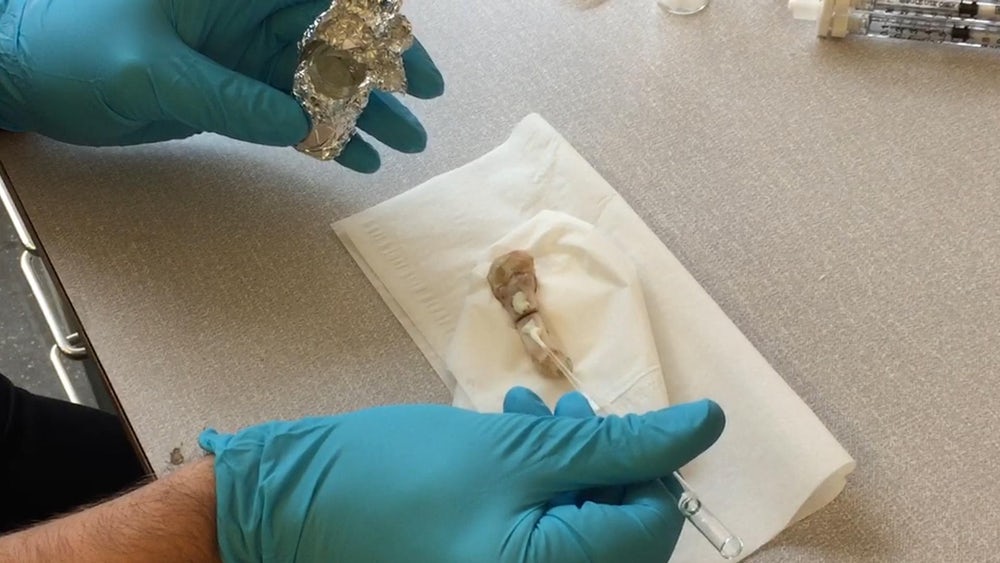
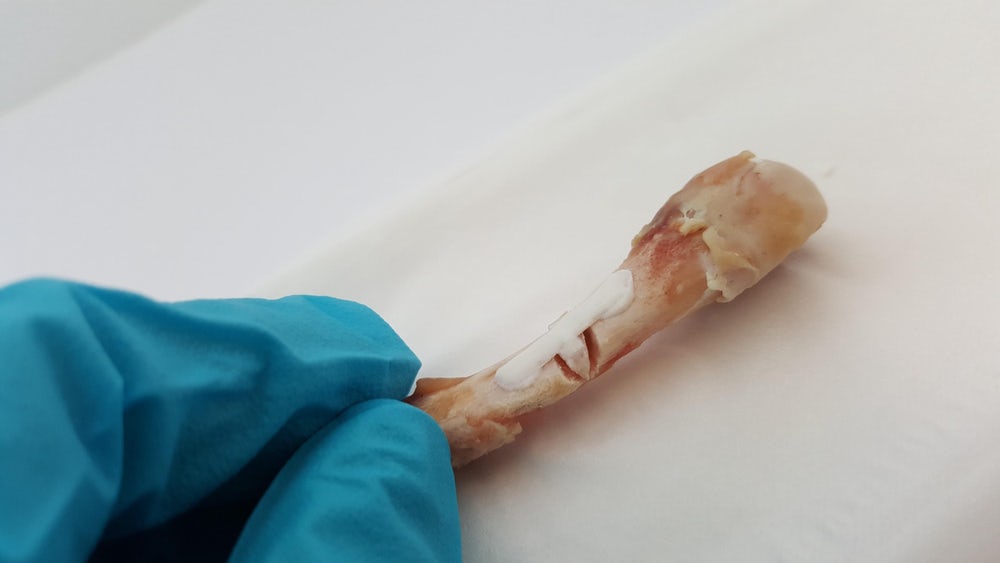
The bone glue consists of a fiber strip, an aqueous primer and the adhesive itself. During surgery, the fracture is cleansed, the boned is primed and then glued, and then the fiber strip is applied. Then additional glue, and between the applications, the glue is illuminated with LED to solidify. Several layers can be built up as needed. The procedure is relatively simple and fast.
“The chemistry, materials, and methodology we used result in extraordinary adhesion and fixation to the wet bone,”
– Michael Malkoch
The three components fix the fracture and the body will then be able to heal more naturally growing bone tissue. Unlike stiff metal plates, the patch can be easily adapted to the shape of the leg. The strength of the adhesive corresponds to the fixation given by the plates but without having the disadvantages of the bone plates.
The glue that the Swedish researchers have developed is also made with substances have no adverse effects on bone healing, and according to the researchers, it neither affects bone quality nor patient health in general. Unlike today’s dental adhesives which often contains Bisphenol A, a substance suspected of having adverse hormonal impacts and may affect human reproduction.
The research work has been carried out in collaboration with RISE Research Institutes of Sweden and the Surgical Hospital of Stockholm, Södersjukhuset in Stockholm. The researchers are currently in a patent phase, and the research will now move on to clinical trials.
The technology is deemed so mature that clinical studies and commercialization of the glue are in the work, a start-up company at KTH under the name of Biomedical Bonding AB will aim to bring the technology to the market.
Reference:
Viktor Granskog Sandra García‐Gallego et al. High‐Performance Thiol–Ene Composites Unveil a New Era of Adhesives Suited for Bone Repair https://doi.org/10.1002/adfm.201800372