Close Menu
Illustrated Curiosity | Economics, History, Science, Space, Technology, Health, Physics, Earth
    Facebook X (Twitter) Instagram YouTube
    Illustrated Curiosity | Economics, History, Science, Space, Technology, Health, Physics, Earth
    • Earth
    • Economics
    • Environment
      • Environmental Tech
      • Pollution
      • Wildlife
    • Health
      • Health Tech
      • Medicine
      • Nutrition
      • Exercise
    • History
      • Prehistory
      • Ancient History
      • Postclassical Era
      • Modern History
    • Humans
      • Human Brain
      • Psychology
    • Life
      • Animals & Plants
      • Genetics
      • Paleontology
      • Evolution
      • Genetic Engineering
    • Physics
    • Space
      • Astrobiology
      • Astronomy
      • Extrasolar Planets
      • Space Tech
      • Spaceflight
    • Technology
      • Artificial Intelligence
      • Energy
      • Engineering
      • Materials
      • Robotics
      • Vehicles
    Illustrated Curiosity | Economics, History, Science, Space, Technology, Health, Physics, Earth
    Home » Astronomers Glimpse Universe’s First Stars
    Astronomy

    Astronomers Glimpse Universe’s First Stars

    April 27, 20182 Mins Read
    Illustration by Illustrated Curiosity
    Share
    Facebook Twitter LinkedIn Pinterest Email

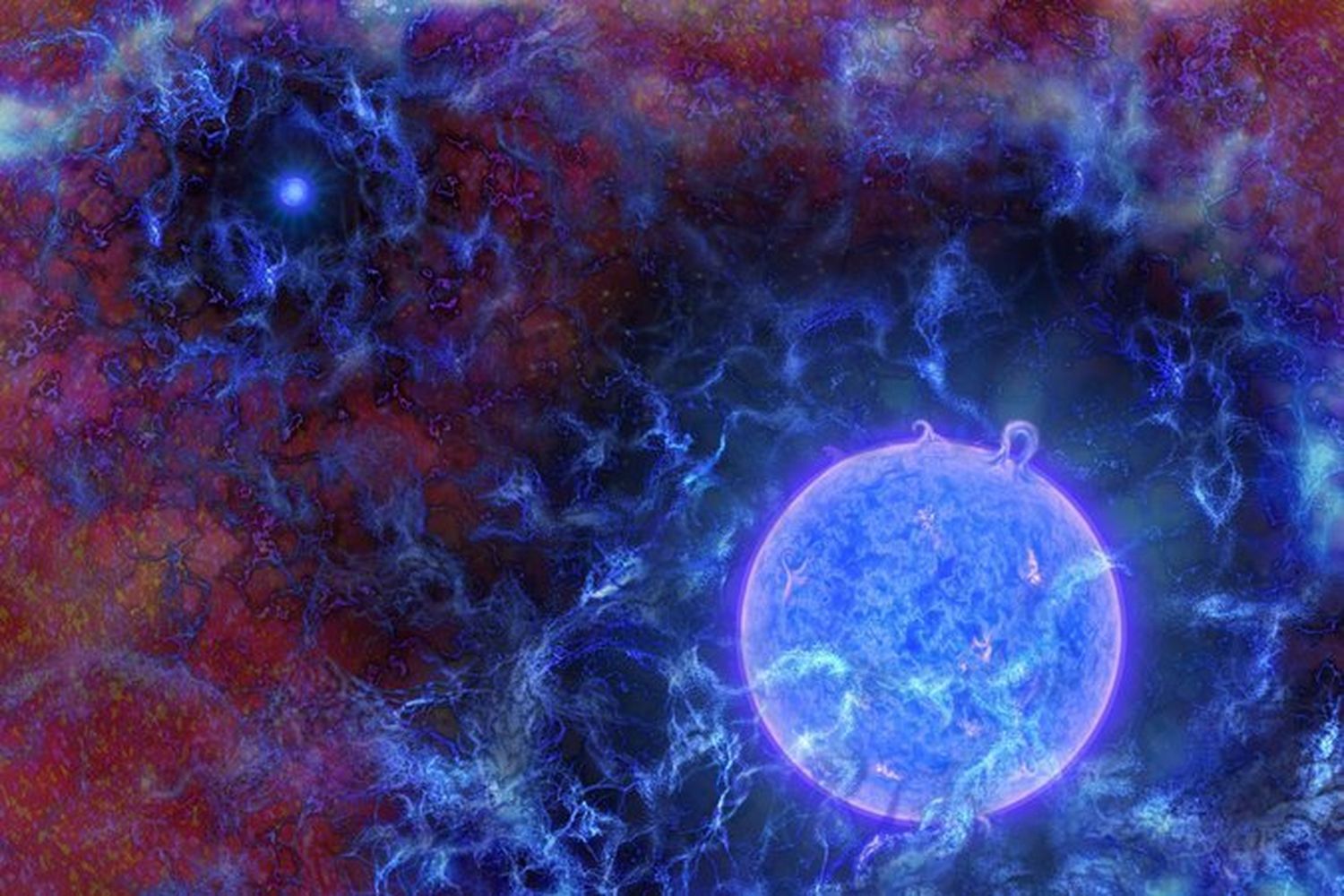
    A new study published in the journal Nature details the traces of the first-ever stars formed in the universe.

    What makes the study interesting is, among other things, that the proportion of matter in the universe seems to have shrunk significantly more than expected in the almost 200 million years that elapsed after the Big Bang until the first stars were formed.


    The explanation for this apparent discrepancy in the data could be dark matter. The researchers argue that the faster cooling than expected of visible matter in stars is due to the fact that the yet unknown dark matter cooled it down.

    The further back in time you go, the harder it is to spot stars directly, using instruments such as NASA’s Hubble Space Telescope. Therefore, the research team took an indirect route, searching for the fingerprints these early stars likely left on the cosmic background radiation (CMB)—the ancient light left over from the Big Bang.

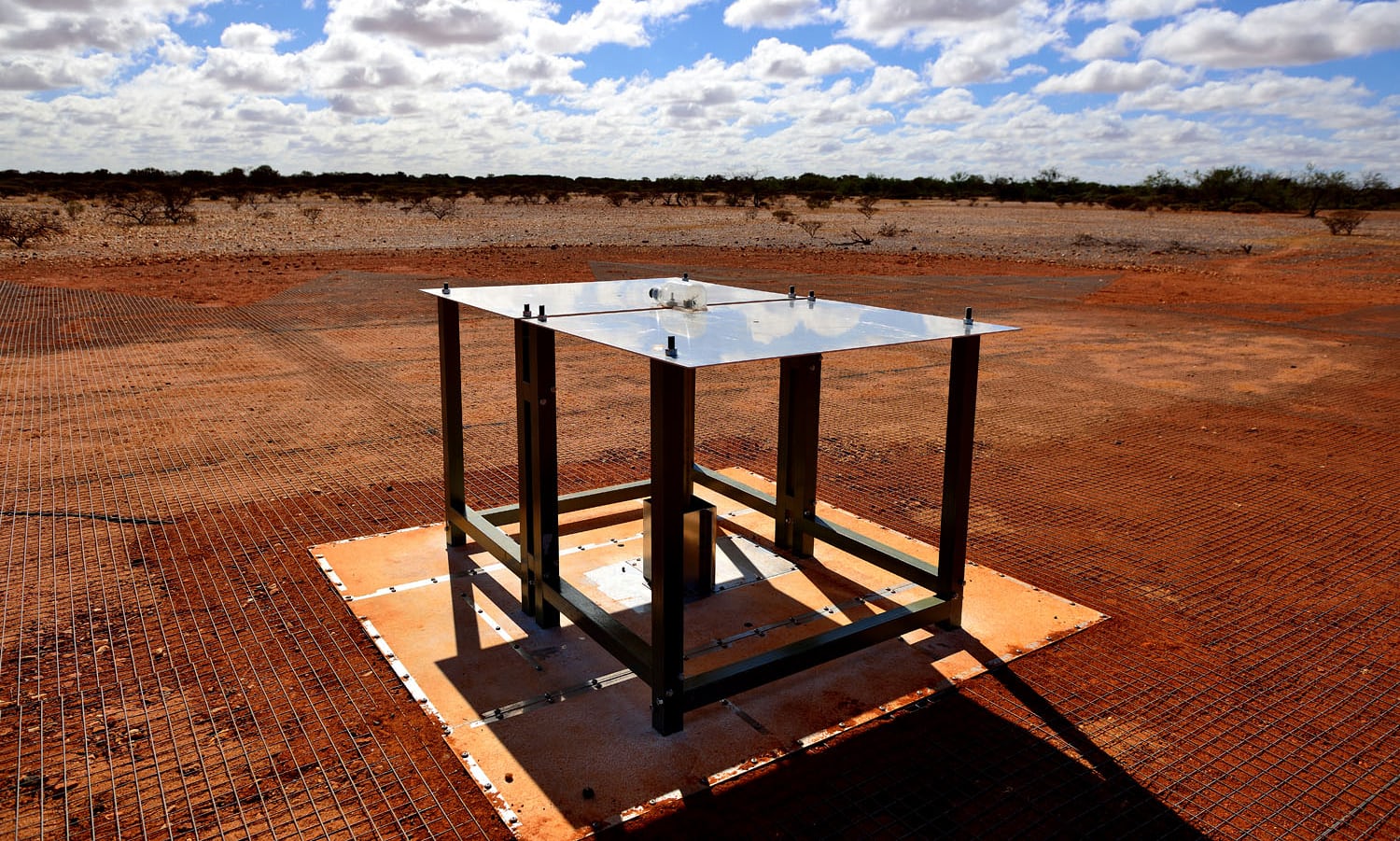
    The team used a crude-looking instrument the size of a small table, the Edges (Experiment to Detect Global EoR Signature) antenna that sits in a remote region of Western Australia, where there are few human sources of radio waves to interfere with incoming signals from the distant universe.
    The detected signal was about twice as strong as the team expected. There are two possible explanations for this surprising intensity: either the radio background was quite a bit stronger in those early days than scientists had thought, or the hydrogen gas was significantly cooler.

    Leaning towards the second possibility, because it’s tough to imagine a process that would increase the radio background to the necessary levels, there is a promising contender to possibly explain this: dark matter, the elusive substance that is thought to make up 85% of the matter in the universe.

    If confirmed, these results would suggest a new form of interaction between normal matter and dark matter, mediated by a fundamental force that until now has been entirely unknown.

    Reference:

    Judd D. Bowman, Alan E. E. Rogers, Raul A. Monsalve, Thomas J. Mozdzen & Nivedita Mahesh An absorption profile centred at 78 megahertz in the sky-averaged spectrum doi:10.1038/nature25792
    Dark Matter Stars
    Share. Facebook Twitter Pinterest LinkedIn Tumblr Email Copy Link

    Related Posts

    The James Webb Space Telescope DeliversThe Deepest Image of the Universe (yet)

    July 13, 2022

    There Is Now Rigorous Evidence for Water on the Moon

    November 2, 2020

    The Dwarf Planet Ceres Might Be Home to an Underground Ocean of Water

    August 12, 2020

    Mysterious Repeating Fast Radio Burst Traced to Nearby Galaxy

    January 13, 2020

    Mercury Transit 2019 4K UHD

    November 12, 2019

    A Second Interstellar Visitor Detected in Our Solar System

    September 20, 2019
    Recent Posts
    • The Day the Alliance Died
    • Evaluating Heart Disease: How Cumulative Diet Choices Compound Your Risk
    • What Would Happen If China Attacked Taiwan?
    • Geopoliticisation as a Structural Tailwind for Commodity Prices
    • America’s Economic Remodel: Who’s Really Paying the Bill?
    • Why Inflation May Be Preparing for a Second Act
    • How the End of Bretton Woods Reshaped Our Economies — and Our Politics
    • Can the U.S. Really Handle 250% Debt-to-GDP? Why Jackson Hole’s Daring Paper Is Wrong
    • Japan’s Fiscal Trap: What Happens If Austerity Is No Longer an Option?
    • The Rise of Range Extended Electric Vehicles (REEVs): A New Era of Hybrid Mobility
    © 2025 Illustrated Curiosity

    Type above and press Enter to search. Press Esc to cancel.