
New DNA research shows that the Vikings brought their families when they sailed out to raid, conquer and settle distant lands. It was previously assumed that the Vikings married local women from the area to which they came when settling down at distant colonies.
“It overthrows this 19th-century idea that the Vikings were just raiders and pillagers,” said study co-author Erika Hagelberg, an evolutionary biologist at the University of Oslo in Norway. “They established settlements and grew crops, and trade was very, very important.”
Hagelberg and her colleges compared the mitochondrial DNA, which is inherited from mother to daughter, among 45 Norwegian Viking women who lived during the period 796-1066 CE. The resulting data was then compared with DNA from 5,191 present Europeans, as well as with previously analyzed samples from 68 ancient Icelanders.
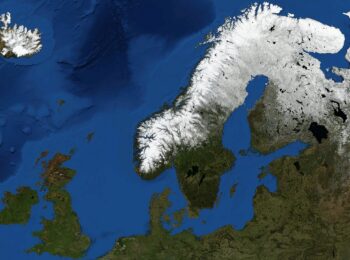
This comparison showed that Norwegian women are closely related to the present population of Orkney and the Shetland Islands, off Scotland’s north coast. The researchers, therefore, concluded that the Vikings must have brought their women when they came to these remote islands.
As a follow-up, the team would like to compare ancient Norse DNA to ancient DNA from Britain, Scotland and the North Atlantic Isles.
_______________
Ancient DNA: the first three decades
______________________________