Close Menu
Illustrated Curiosity
    Facebook X (Twitter) Instagram YouTube
    Illustrated Curiosity
    • Earth
    • Economics
    • Environment
      • Climate
      • Environmental Tech
      • Pollution
      • Wildlife
    • Health
      • Health Tech
      • Medicine
      • Nutrition
      • Exercise
    • History
      • Prehistory
      • Ancient History
      • Postclassical Era
      • Modern History
    • Humans
      • Human Brain
      • Psychology
    • Life
      • Animals & Plants
      • Genetics
      • Paleontology
      • Evolution
      • Genetic Engineering
    • Physics
    • Space
      • Astrobiology
      • Astronomy
      • Extrasolar Planets
      • Space Tech
      • Spaceflight
    • Technology
      • Artificial Intelligence
      • Energy
      • Engineering
      • Materials
      • Robotics
      • Vehicles
    Illustrated Curiosity
    Home » NASA aims to change the trajectory of an asteroid
    Astronomy

    NASA aims to change the trajectory of an asteroid

    July 6, 2017No Comments2 Mins Read
    Share
    Facebook Twitter LinkedIn Pinterest Email

    NASA has been given the green light to proceed with mission DART (Double Asteroid Redirection Test), which essentially means trying to change the course of an asteroid by crashing a satellite into it.
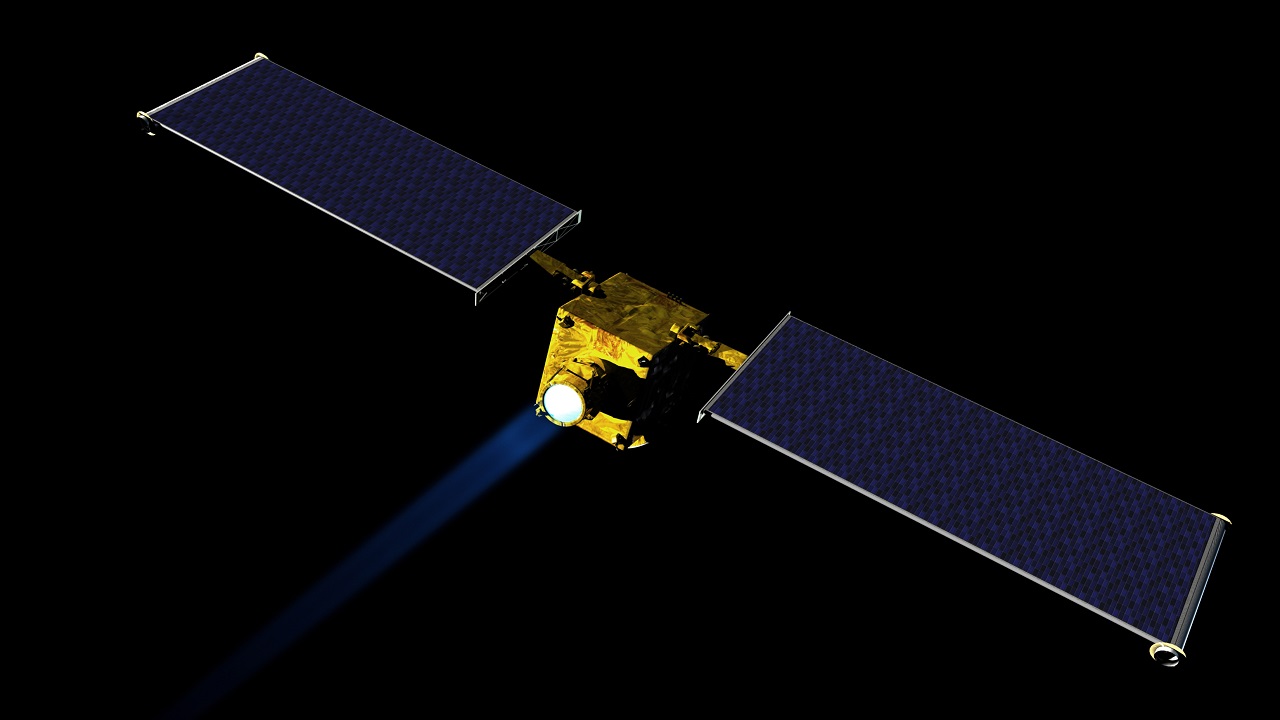
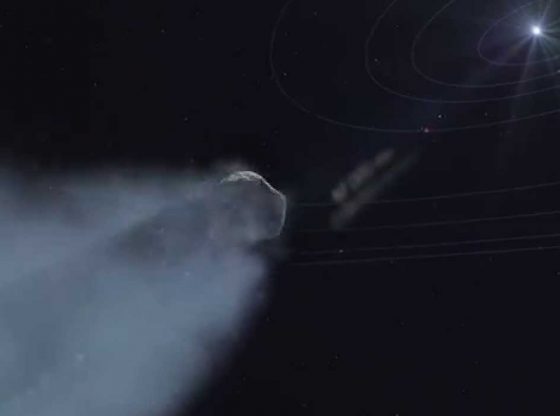
    Artist concept of NASA’s Double Asteroid Redirection Test (DART) spacecraft. DART, which is moving to preliminary design phase, would be NASA’s first mission to demonstrate an asteroid deflection technique for planetary defense.
    Credits: NASA/JHUAPL

    If a devastating large asteroid was headed right for Earth — although very unlikely – it is actually inevitable to happen eventually in the very long term. Therefore, NASA and other space institutions need to establish how to deal with this fact, and one idea is to build a spacecraft that could simply slam into an asteroid while it is still far away from Earth, altering its trajectory just enough for it to safely fly by our home planet instead of into it.

    NASA will now test this idea by crashing a refrigerator size object against the asteroid Didymos B, which is about 160 meters wide – wich is actually a binary asteroid with two bodies, hence the name Didymos, Greek for “twin.” – in order to get the asteroid Didymos A, which is about 800 meters wide, to change course.

    “A binary asteroid is the perfect natural laboratory for this test. The fact that Didymos B is in orbit around Didymos A makes it easier to see the results of the impact and ensures that the experiment does not change the orbit of the pair around The sun. “

    – Tom Statler from NASA’s DART program

    These asteroids are quite large and can be compared to the meteor strike in Chelyabinsk, Russia in 2013 which was only about 20 meters in diameter but exploded in a 400 to 500 kiloton blast, releasing roughly 30 times as much energy as the atomic bomb over Hiroshima.

    A target launch date has not been announced, but NASA mentioned their target asteroid, Didymos, will be making distant approaches to Earth in 2022 and 2024, suggesting a launch soon enough to hit the asteroid in the early 2020s is possible.

    Reference:
    NASA: Mission Page DART
    Asteroid Meteorites NASA - DART
    Share. Facebook Twitter Pinterest LinkedIn Tumblr Email Copy Link

    Related Posts

    The James Webb Space Telescope DeliversThe Deepest Image of the Universe (yet)

    July 13, 2022

    There Is Now Rigorous Evidence for Water on the Moon

    November 2, 2020

    The Dwarf Planet Ceres Might Be Home to an Underground Ocean of Water

    August 12, 2020

    Mysterious Repeating Fast Radio Burst Traced to Nearby Galaxy

    January 13, 2020

    Mercury Transit 2019 4K UHD

    November 12, 2019

    2019 Physics Nobel Awarded to 3 Scientists for Discoveries in Cosmology

    October 8, 2019
    Recent Posts
    • How the End of Bretton Woods Reshaped Our Economies — and Our Politics
    • Can the U.S. Really Handle 250% Debt-to-GDP? Why Jackson Hole’s Daring Paper Is Wrong
    • Japan’s Fiscal Trap: What Happens If Austerity Is No Longer an Option?
    • The Rise of Range Extended Electric Vehicles (REEVs): A New Era of Hybrid Mobility
    • The Great Capital Rotation: A Shift from U.S. Treasuries to Gold and Real Assets
    • The Hidden Risks of Short-Term Debt: A Balancing Act in U.S. Fiscal Policy
    • The Looming U.S. Debt Spiral: Understanding the Risks
    • The Looming Recession: Seven Economic Indicators Flashing Red for 2025
    • Europa Clipper: NASA’s Mission to Unlock the Secrets of Jupiter’s Icy Moon
    • Could Hedge Funds Cause Chaos in the U.S. Treasury Market? And What About Inflation?
    © 2025 Illustrated Curiosity

    Type above and press Enter to search. Press Esc to cancel.

    This website uses cookies to improve your experience. We'll assume you're ok with this, but you can opt-out if you wish.Accept Reject Read More
    Privacy & Cookies Policy

    Privacy Overview

    This website uses cookies to improve your experience while you navigate through the website. Out of these, the cookies that are categorized as necessary are stored on your browser as they are essential for the working of basic functionalities of the website. We also use third-party cookies that help us analyze and understand how you use this website. These cookies will be stored in your browser only with your consent. You also have the option to opt-out of these cookies. But opting out of some of these cookies may affect your browsing experience.
    Necessary
    Always Enabled
    Necessary cookies are absolutely essential for the website to function properly. This category only includes cookies that ensures basic functionalities and security features of the website. These cookies do not store any personal information.
    Non-necessary
    Any cookies that may not be particularly necessary for the website to function and is used specifically to collect user personal data via analytics, ads, other embedded contents are termed as non-necessary cookies. It is mandatory to procure user consent prior to running these cookies on your website.
    SAVE & ACCEPT