Close Menu
Illustrated Curiosity | Economics, History, Science, Space, Technology, Health, Physics, Earth
    Facebook X (Twitter) Instagram YouTube
    Illustrated Curiosity | Economics, History, Science, Space, Technology, Health, Physics, Earth
    • Earth
    • Economics
    • Environment
      • Environmental Tech
      • Pollution
      • Wildlife
    • Health
      • Health Tech
      • Medicine
      • Nutrition
      • Exercise
    • History
      • Prehistory
      • Ancient History
      • Postclassical Era
      • Modern History
    • Humans
      • Human Brain
      • Psychology
    • Life
      • Animals & Plants
      • Genetics
      • Paleontology
      • Evolution
      • Genetic Engineering
    • Physics
    • Space
      • Astrobiology
      • Astronomy
      • Extrasolar Planets
      • Space Tech
      • Spaceflight
    • Technology
      • Artificial Intelligence
      • Energy
      • Engineering
      • Materials
      • Robotics
      • Vehicles
    Illustrated Curiosity | Economics, History, Science, Space, Technology, Health, Physics, Earth
    Home » NASA’s Juno Reveal Deep Winds and Patterned Cyclones on Jupiter
    Astronomy

    NASA’s Juno Reveal Deep Winds and Patterned Cyclones on Jupiter

    March 13, 20182 Mins Read
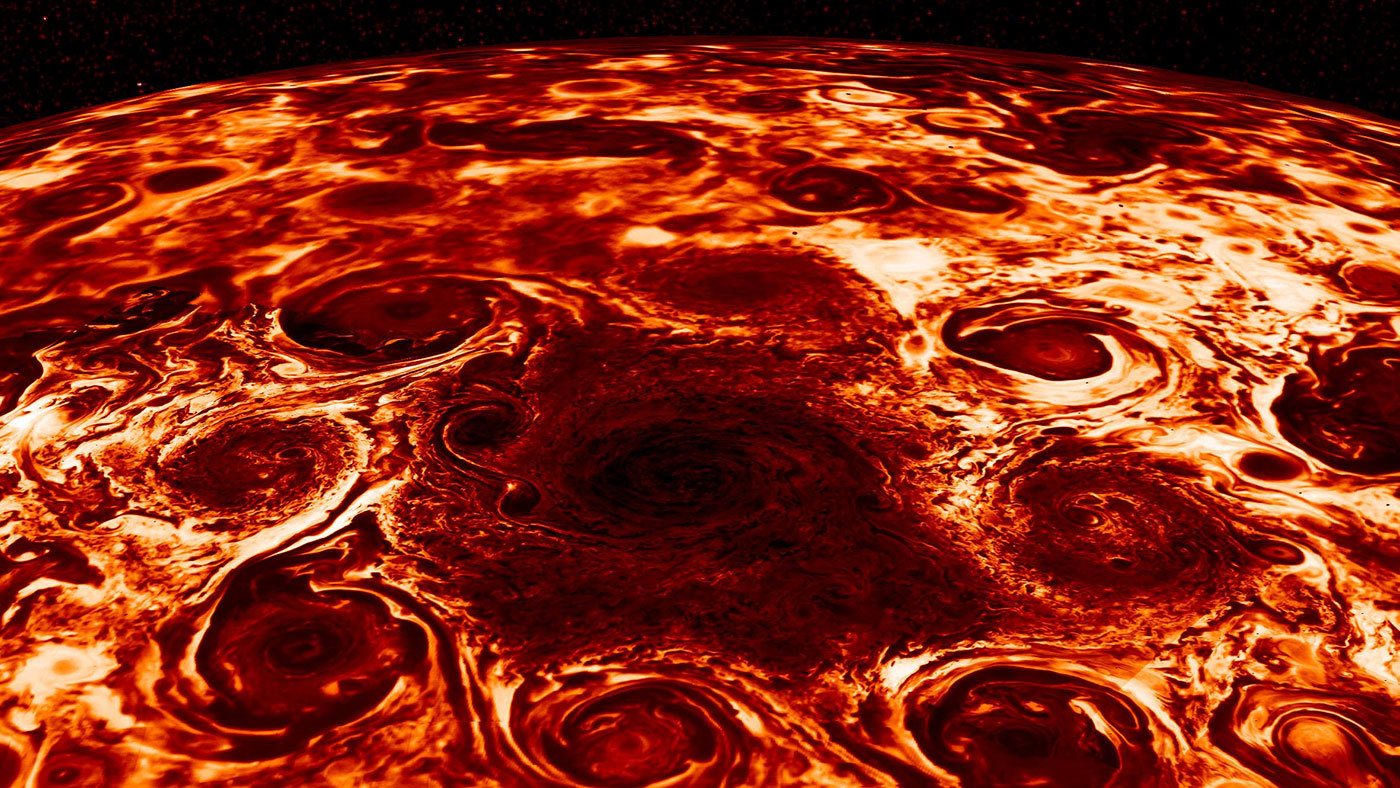
    Cyclones encircle Jupiter’s north pole in this composite infrared image. Image: NASA, Public Domain
    Share
    Facebook Twitter LinkedIn Pinterest Email

    The characteristic colorful bands of Jupiter, arranged in dark belts and light zones created by strong east-west winds in the planet’s upper atmosphere, are traveling more than 400 mph (640 km/h). Thanks to the Juno space probe, we now know how deep these are.

    These weather phenomena that swirl the atmosphere of the solar system’s largest planet were formed by forces that result from the rotation of the planet.

    The depth to which the roots of Jupiter’s famous zones and belts extend has been a mystery for decades. Gravity measurements collected by Juno during its close flybys of the planet have now
    provided an answer.

    Now, the depth of these storms has been measured, and it was found that these phenomena are three thousand kilometers deep. About half the Earth’s radius.

    NASA Juno spacecraft traveled closer to Jupiter than any other previous spacecraft and even crashed into the planet. In doing so, it was able to measure what the planet looks like inside its cloud-covered atmosphere.


    Below its windy and thick layer, the rest of the atmosphere seems to be arranged like a dense mass, rotating at the same speed as the actual planet inside.

    “These astonishing science results are yet another example of Jupiter’s curve balls, and a testimony to the value of exploring the unknown from a new perspective with next-generation instruments. Juno’s unique orbit and evolutionary high-precision radio science and infrared technologies enabled these paradigm-shifting discoveries,”

    – Scott Bolton, principal investigator of Juno from the Southwest Research Institute, San Antonio.

    The finding is important for understanding the nature and possible mechanisms driving these strong jet streams. In addition, the gravity signature of the jets is entangled with the gravity signal of Jupiter’s core.

    Reference:

    Luciano Iess et al. “Measurement of Jupiter’s asymmetric gravity field”. Nature. March 7, 2018. DOI: 10.1038 / nature25776

    Yohai Kaspi et al. “Jupiter’s atmospheric jet streams extend thousands of miles deep”. Nature. March 7, 2018. DOI: 10.1038 / nature25793

    Tristan Guillot et al. “A suppression of differential rotation in Jupiter’s deep interior”. Nature. March 7, 2018. DOI: 10.1038 / nature25775

    Alberto Adriani et al. “Clusters of cyclones encircling Jupiter’s pole”. Nature: March 7, 2018. DOI: 10.1038 / nature25491
    Jupiter (Planet)
    Share. Facebook Twitter Pinterest LinkedIn Tumblr Email Copy Link

    Related Posts

    The James Webb Space Telescope DeliversThe Deepest Image of the Universe (yet)

    July 13, 2022

    There Is Now Rigorous Evidence for Water on the Moon

    November 2, 2020

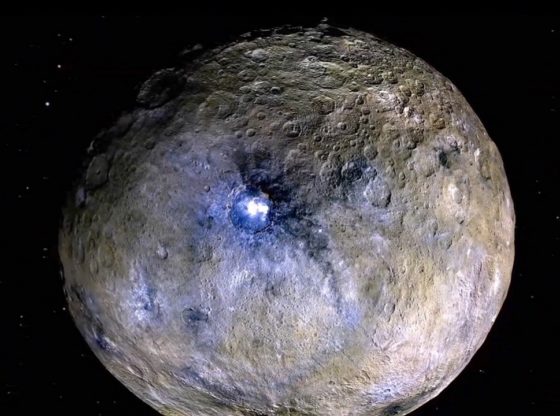
    The Dwarf Planet Ceres Might Be Home to an Underground Ocean of Water

    August 12, 2020

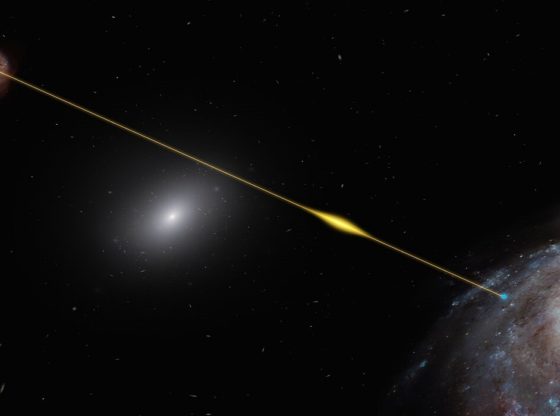
    Mysterious Repeating Fast Radio Burst Traced to Nearby Galaxy

    January 13, 2020

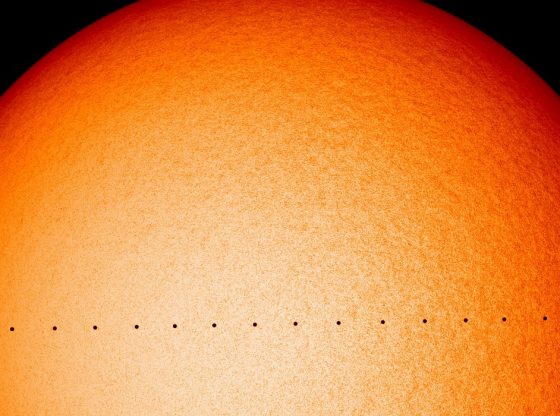
    Mercury Transit 2019 4K UHD

    November 12, 2019

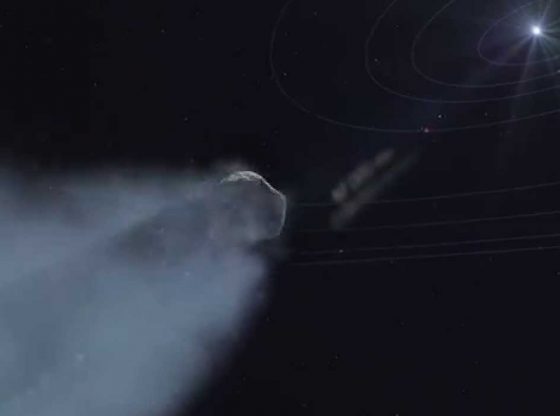
    A Second Interstellar Visitor Detected in Our Solar System

    September 20, 2019
    Recent Posts
    • Oil Shocks, Policy Mistakes, and the Risk of a Second Inflation Wave (Part II)
    • Oil Shocks, Policy Mistakes, and the Risk of a Second Inflation Wave (Part I)
    • Microsoft Stored a Movie on Glass — And It Could Last Centuries
    • AI, Automatic Stabilizers & Inflation
    • Largest Battles in History: Cannae — Rome’s Darkest Day
    • The Day the Alliance Died
    • Evaluating Heart Disease: How Cumulative Diet Choices Compound Your Risk
    • What Would Happen If China Attacked Taiwan?
    • Geopoliticisation as a Structural Tailwind for Commodity Prices
    • America’s Economic Remodel: Who’s Really Paying the Bill?
    © 2025 Illustrated Curiosity

    Type above and press Enter to search. Press Esc to cancel.