Close Menu
Illustrated Curiosity
    Facebook X (Twitter) Instagram YouTube
    Illustrated Curiosity
    • Earth
    • Economics
    • Environment
      • Climate
      • Environmental Tech
      • Pollution
      • Wildlife
    • Health
      • Health Tech
      • Medicine
      • Nutrition
      • Exercise
    • History
      • Prehistory
      • Ancient History
      • Postclassical Era
      • Modern History
    • Humans
      • Human Brain
      • Psychology
    • Life
      • Animals & Plants
      • Genetics
      • Paleontology
      • Evolution
      • Genetic Engineering
    • Physics
    • Space
      • Astrobiology
      • Astronomy
      • Extrasolar Planets
      • Space Tech
      • Spaceflight
    • Technology
      • Artificial Intelligence
      • Energy
      • Engineering
      • Materials
      • Robotics
      • Vehicles
    Illustrated Curiosity
    Home » The Kepler Space Telescope has Been Retired
    Space Tech

    The Kepler Space Telescope has Been Retired

    August 19, 2013No Comments4 Mins Read
    Share
    Facebook Twitter LinkedIn Pinterest Email
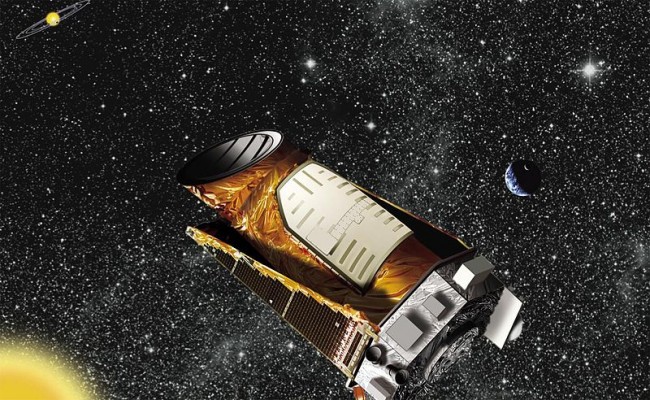
    Artist concept of the Kepler Telescope. Credit: NASA/Ames/JPL-Caltech

    Following a failure in the stabilization system and then a period during which engineers were trying desperately solve the problem – the space telescope Kepler is now sadly considered a hopeless cause and will, therefore, be retired.

    The problem first emerged in 2012 when the first so-called “reaction wheel” broke down. This reaction wheel is used to keep the telescope steady when looking towards the stars, a gyro of sorts. The problem then became even worse after losing another one of these wheels only three months ago.

    A reaction wheel is a sort of “flywheel” used for attitude control and stabilization. They work via gyroscopic stabilization without using fuel for rockets or other reaction devices.
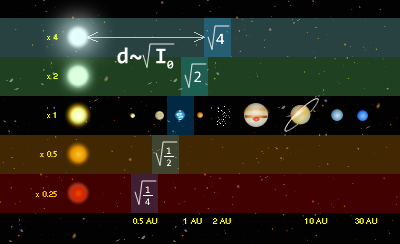
    The habitable zone is a region around a star where, given the right atmospheric conditions, temperatures might allow water to persist on a rocky surface in a liquid state. Above diagram with the habitable zone that differs relative to star luminosity. Our own star in the middle as a reference.

    Exoplanet-Hunting

    The Kepler telescope was specifically designed to find exoplanets with its primary mission objectives being to survey a portion of the Milky Way galaxy to find exoplanets in general, but Earth-size planets in particular.

    Naturally, Earth-size planets are especially interesting. The scientists, therefore, are on the lookout for planets that orbits their host star near or within the so-called habitable zone (Goldilocks zone). With enough data on planets within this zone, this information would help to determine how many of the billions of stars in our galaxy that might have planets suitable for life as we know it.

    It has yet found 135 confirmed planets beyond our Solar System, but the telescope has actually collected data of more than 3,500 candidate planets and this is data that certainly contains information on future planets to be confirmed within due course.

    The space telescope was named after the Renaissance astronomer Johannes Kepler and was launched on March 7, 2009. It was first planned for a 3,5-year mission, which was later extended to 2016. But since its reaction wheels started failing the mission was ended short.
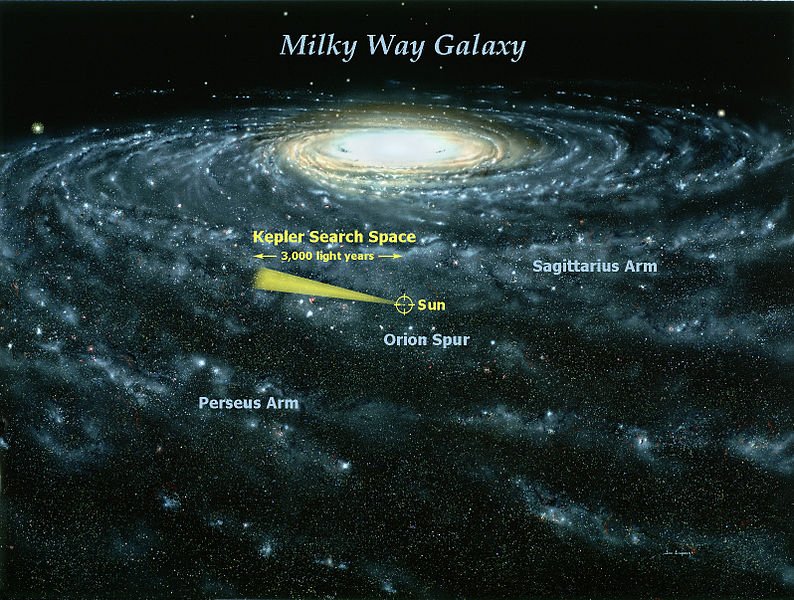
    Kepler’s search volume relative to the Milky Way galaxy.

    Just before it started breaking down, the space telescope had identified a number of “super-Earths” (very large planets) within the so-called habitable zones. But more planets will probably follow as more data is analyzed.

    Transit photometry and The Future

    The method of detection used by the Kepler telescope is looking for tiny dips in light of stars as planets pass in front of them, a method called Transit photometry. Since detection of so tiny object is very delicate, stability during the process is determinate, keeping the spacecraft absolutely still. And the spacecraft needs at least three spinning reaction wheels in operation, of its four wheels in total.

    It has been suggested though that the telescope can still be used for other things in the future, such as looking for asteroids and comets. It remains to be seen if it will be approved, though.

    NASA’s astrophysics director Paul Hertz, told reporters, “In this era of constrained resources for continued operations of any of our operations of any of our mission that has already completed their prime phases, NASA may use a senior review to help us prioritize a two-wheeled Kepler mission against the continued operations of other NASA astrophysics missions.”

    With Kepler retired from its planet searching, other planet-hunting missions will be needed to replace it in the coming years if we are to continue the search for planets similar to Earth.

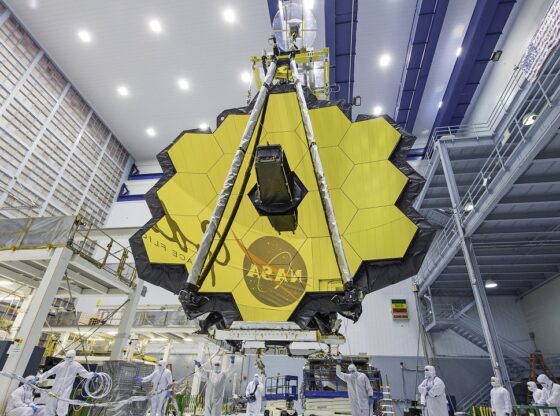
    ESA will launch its Gaia observatory before the end of 2013. Its main goal is to map the positions of stars, but in doing so, it should be able to discover thousands of orbiting worlds in the process. Then, the James Webb Telescope will be launched in 2018. Webb is an infrared telescope with a large aperture, ideally suited for spectroscopy, it will be able to precisely measure what elements exoplanets consists of.

    _______________
    Kepler Mission Page/
    ______________________________
    Exoplanets GAIA Space Telescope (ESA) JWST - James Webb Telescope (NASA) Kepler Space Telescope (NASA) Transit Photometry - Transit Method
    Share. Facebook Twitter Pinterest LinkedIn Tumblr Email Copy Link

    Related Posts

    NASA Unleashes the Future of Rocketry with the Rotating Detonation Rocket Engine

    December 25, 2023

    Follow the Journey of the James Webb Telescope to its Final Destination

    December 27, 2021

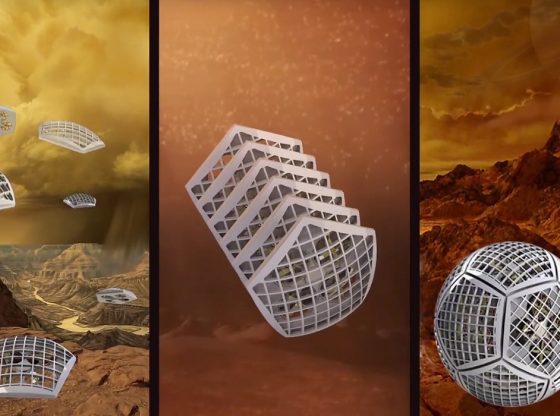
    NASA Designing Advanced Shapeshifting Robots for Saturn’s Moons

    October 21, 2019

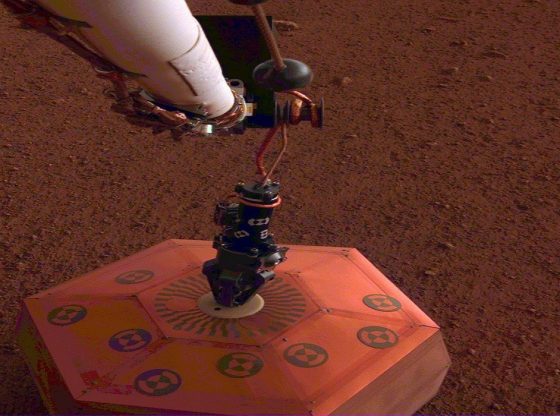
    NASA’s InSight Lander Plops Seismometer on Mars to Hunt Marsquakes

    December 24, 2018

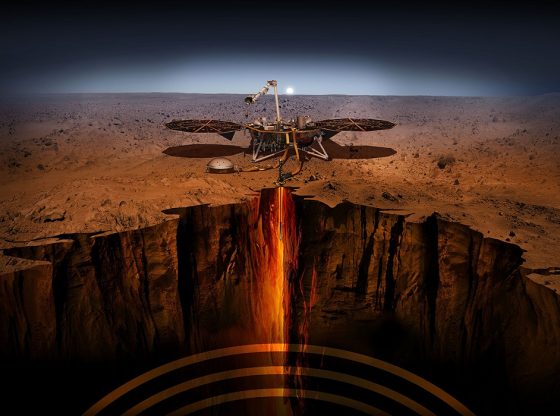
    Video | InSight Landing on Mars

    November 9, 2018

    Waning Martian Dust Storm Could Herald the Return of NASA’s Opportunity Rover

    September 4, 2018
    Recent Posts
    • How the End of Bretton Woods Reshaped Our Economies — and Our Politics
    • Can the U.S. Really Handle 250% Debt-to-GDP? Why Jackson Hole’s Daring Paper Is Wrong
    • Japan’s Fiscal Trap: What Happens If Austerity Is No Longer an Option?
    • The Rise of Range Extended Electric Vehicles (REEVs): A New Era of Hybrid Mobility
    • The Great Capital Rotation: A Shift from U.S. Treasuries to Gold and Real Assets
    • The Hidden Risks of Short-Term Debt: A Balancing Act in U.S. Fiscal Policy
    • The Looming U.S. Debt Spiral: Understanding the Risks
    • The Looming Recession: Seven Economic Indicators Flashing Red for 2025
    • Europa Clipper: NASA’s Mission to Unlock the Secrets of Jupiter’s Icy Moon
    • Could Hedge Funds Cause Chaos in the U.S. Treasury Market? And What About Inflation?
    © 2025 Illustrated Curiosity

    Type above and press Enter to search. Press Esc to cancel.

    This website uses cookies to improve your experience. We'll assume you're ok with this, but you can opt-out if you wish.Accept Reject Read More
    Privacy & Cookies Policy

    Privacy Overview

    This website uses cookies to improve your experience while you navigate through the website. Out of these, the cookies that are categorized as necessary are stored on your browser as they are essential for the working of basic functionalities of the website. We also use third-party cookies that help us analyze and understand how you use this website. These cookies will be stored in your browser only with your consent. You also have the option to opt-out of these cookies. But opting out of some of these cookies may affect your browsing experience.
    Necessary
    Always Enabled
    Necessary cookies are absolutely essential for the website to function properly. This category only includes cookies that ensures basic functionalities and security features of the website. These cookies do not store any personal information.
    Non-necessary
    Any cookies that may not be particularly necessary for the website to function and is used specifically to collect user personal data via analytics, ads, other embedded contents are termed as non-necessary cookies. It is mandatory to procure user consent prior to running these cookies on your website.
    SAVE & ACCEPT