Close Menu
Illustrated Curiosity
    Facebook X (Twitter) Instagram YouTube
    Illustrated Curiosity
    • Earth
    • Economics
    • Environment
      • Climate
      • Environmental Tech
      • Pollution
      • Wildlife
    • Health
      • Health Tech
      • Medicine
      • Nutrition
      • Exercise
    • History
      • Prehistory
      • Ancient History
      • Postclassical Era
      • Modern History
    • Humans
      • Human Brain
      • Psychology
    • Life
      • Animals & Plants
      • Genetics
      • Paleontology
      • Evolution
      • Genetic Engineering
    • Physics
    • Space
      • Astrobiology
      • Astronomy
      • Extrasolar Planets
      • Space Tech
      • Spaceflight
    • Technology
      • Artificial Intelligence
      • Energy
      • Engineering
      • Materials
      • Robotics
      • Vehicles
    Illustrated Curiosity
    Home » Oldest Mediterranean Cheese Found in Croatia is Over 7,000 Years Ago
    Ancient History

    Oldest Mediterranean Cheese Found in Croatia is Over 7,000 Years Ago

    September 10, 2018No Comments3 Mins Read
    Share
    Facebook Twitter LinkedIn Pinterest Email
    Oldest Mediterranean Cheese From Over 7,000 Years Ago Found


    The earliest evidence for cheese making in the Mediterranean has been found in pottery from Croatia’s Dalmatian coast, according to a new study.

    Fatty acids detected on potsherds from Croatian archaeological sites contain evidence of the earliest known cheese production in the Mediterranean region, according to a study published September 5, 2018 in the open-access journal PLOS ONE by Sarah McClure of the Pennsylvania State University and colleagues.
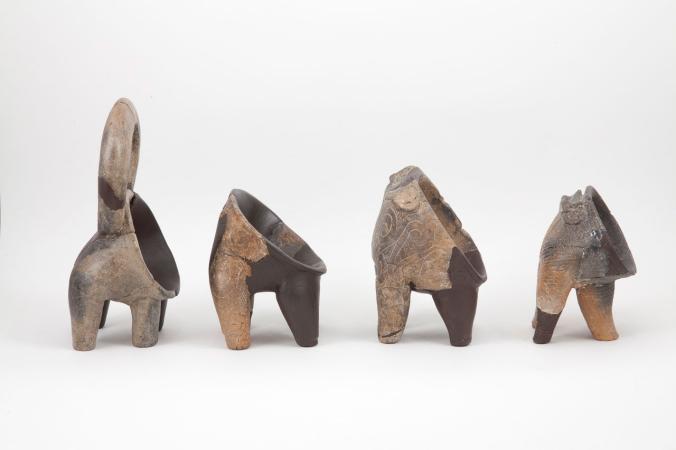
    Credit: Sibenik City Museum
    Known as rhyta, these large-handled Neolithic pots are the same type as the ones researchers claim harbor traces of ancient cheese.

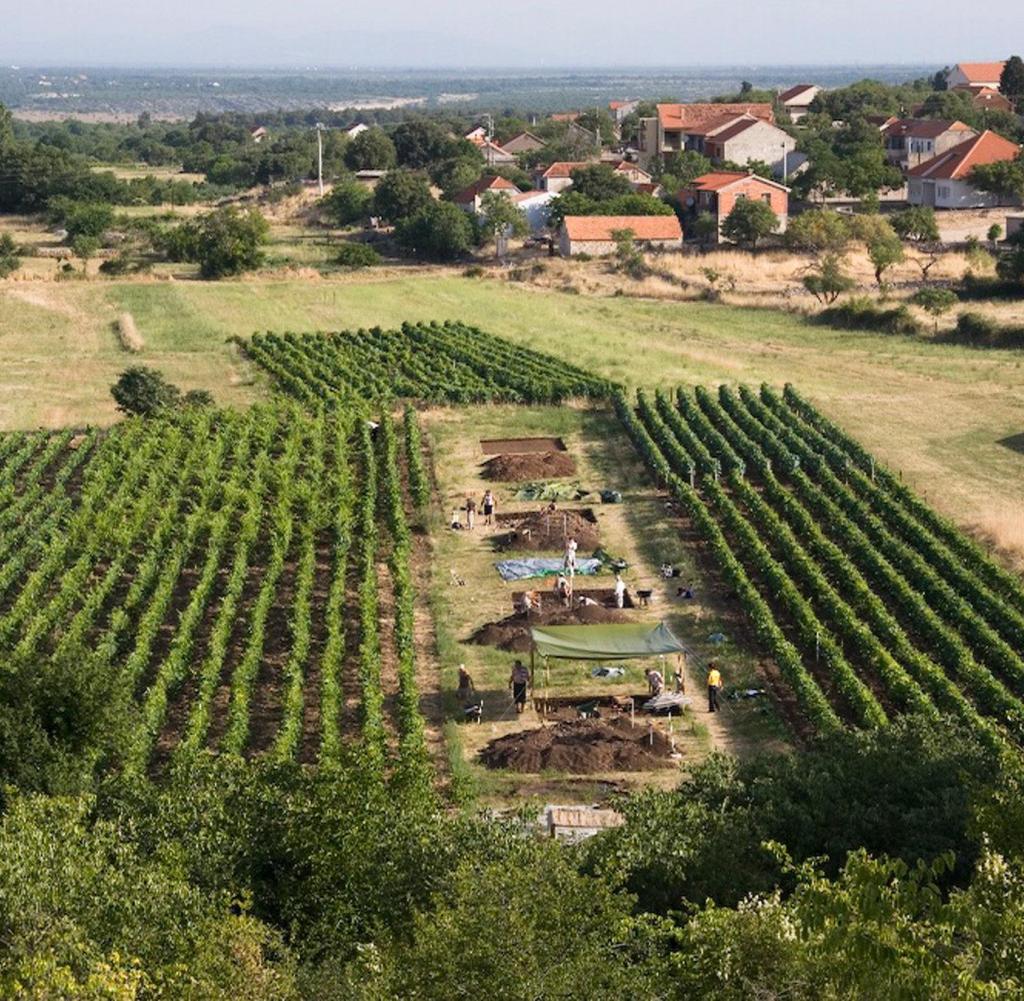
    The signs of cheese were found during an expedition to two ancient villages called Pokrovnik and Danilo Bitinj on the Dalmatian coast, east of the Adriatic Sea in Croatia. As the sites hosted early farming populations between 6,000 BCE and 4,800 BCE, the team decided to explore the region, hoping to find and study some archaeological artifacts from the same time period.

    Credit: Sibenik City Museum
    Examples of pottery types from the Dalmatian Neolithic.

    The team found pottery shards that date to between 6,000 and 5,000 B.C. They extracted traces of fats from the surface of the pottery and analyzed them based on mass and their carbon isotope fingerprints to figure out whether they came from meat, liquid milk, or cheese. The analysis revealed evidence of fermented dairy products — soft cheeses and yogurts — from about 7,200 years ago

    “This pushes back cheese-making by 4,000 years,”
     

    – Lead study author Sarah McClure, an associate professor of anthropology with Pennsylvania State University’s Department of Anthropology

    DNA analysis of the populations in this area indicate that the adults were lactose-intolerant, but the children remained able to consume milk comfortably up to the age of ten.

    “First, we have milking around, and it was probably geared for kids because it is a good source of hydration and is relatively pathogen-free,”

    “It wouldn’t be a surprise for people to give children milk from another mammal.”
     

    – Said McClure.

    According to the researchers, dairying — and especially cheese and fermented milk products — may have opened northern European areas for farming because it reduced infant mortality and allowed for earlier weaning, decreasing the birth interval and potentially increasing population. It also supplied a storable form of nutrition for adults, because the fermentation of cheese and yogurt reduce the lactose content of milk products, making it palatable for adults as well as children.

    With a food source that could buffer the risk of farming in colder northern climates, farmers could expand their territories.

    Reference:

    Sarah B. McClure et al. Fatty acid specific d13C values reveal earliest Mediterranean cheese production 7,200 years ago. PLOS ONE 5 september 2018. DOI: 10.1371/journal.pone.0202807


    Share. Facebook Twitter Pinterest LinkedIn Tumblr Email Copy Link

    Related Posts

    Native Americans of South America sailed to Polynesia in the 12th century

    July 27, 2020

    Oldest and Largest Maya Structure on Record Discovered in Southern Mexico

    June 22, 2020

    Archaeologists in Greece Find 3,500-Year-Old Royal Tombs

    December 23, 2019

    World’s Oldest Intact Shipwreck Discovered in Black Sea

    November 1, 2018

    What Farmers Ate 8,000 Years Ago in Çatalhöyük

    October 9, 2018

    A Remarkably Preserved Sandstone Sphinx Discovered in Egypt

    September 26, 2018
    Recent Posts
    • How the End of Bretton Woods Reshaped Our Economies — and Our Politics
    • Can the U.S. Really Handle 250% Debt-to-GDP? Why Jackson Hole’s Daring Paper Is Wrong
    • Japan’s Fiscal Trap: What Happens If Austerity Is No Longer an Option?
    • The Rise of Range Extended Electric Vehicles (REEVs): A New Era of Hybrid Mobility
    • The Great Capital Rotation: A Shift from U.S. Treasuries to Gold and Real Assets
    • The Hidden Risks of Short-Term Debt: A Balancing Act in U.S. Fiscal Policy
    • The Looming U.S. Debt Spiral: Understanding the Risks
    • The Looming Recession: Seven Economic Indicators Flashing Red for 2025
    • Europa Clipper: NASA’s Mission to Unlock the Secrets of Jupiter’s Icy Moon
    • Could Hedge Funds Cause Chaos in the U.S. Treasury Market? And What About Inflation?
    © 2025 Illustrated Curiosity

    Type above and press Enter to search. Press Esc to cancel.

    This website uses cookies to improve your experience. We'll assume you're ok with this, but you can opt-out if you wish.Accept Reject Read More
    Privacy & Cookies Policy

    Privacy Overview

    This website uses cookies to improve your experience while you navigate through the website. Out of these, the cookies that are categorized as necessary are stored on your browser as they are essential for the working of basic functionalities of the website. We also use third-party cookies that help us analyze and understand how you use this website. These cookies will be stored in your browser only with your consent. You also have the option to opt-out of these cookies. But opting out of some of these cookies may affect your browsing experience.
    Necessary
    Always Enabled
    Necessary cookies are absolutely essential for the website to function properly. This category only includes cookies that ensures basic functionalities and security features of the website. These cookies do not store any personal information.
    Non-necessary
    Any cookies that may not be particularly necessary for the website to function and is used specifically to collect user personal data via analytics, ads, other embedded contents are termed as non-necessary cookies. It is mandatory to procure user consent prior to running these cookies on your website.
    SAVE & ACCEPT