
Greek democracy
Athens had by 500 BCE gone from a society dominated by an aristocratic political elite to a democratic system, with Solon and later Cleisthenes. The people of Athens had gained more and greater influence in politics.
During Solon rule, Athens’ population was divided according to four ‘fylen’ (classes) according to wealth. They were to choose nine archons for one year at a time. In addition, there was a popular assembly (ekklesia), which was sort of a people’s assembly, a general meeting where citizens had the right to vote. Then there was also the so-called people’s counsels (boules) with 500 members each. Each with a function as a preparatory body for the people’s assembly.
The Athenian democracy (dêmos/δῆμος – people and krátos/κράτος- “force” or “power”) was a direct democracy. A political system by which the people do not elect representatives to vote on their behalf but vote directly themselves on an issue, legislation, in their own right.
The Golden Age
The latter period in Ancient Greece between 500 and 338 BCE came to be called the classical period. This period was the golden age of the ancient Greek civilization, with advancements in politics, philosophy, science, and artistry.
And during this period, the writing of history began. With Greek philosophers such as Socrates, Plato and Aristotle philosophizing about nature, the meaning of the universe, human nature and our place in the universe.
With pre-Socratic philosophers primarily concerned with cosmology, ontology, and mathematics. Socrates himself, born in Athens in the 5th century BCE, marks a watershed in ancient Greek philosophy. While philosophy was an established pursuit prior to Socrates, Cicero credits him as “the first who brought philosophy down from the heavens, placed it in cities, introduced it into families, and obliged it to examine into life and morals, and good and evil.” ).
Although Socrates himself wrote nothing, he is depicted in conversation in compositions by a small circle of his admirers—Plato and Xenophon first among them. Socrates can probably be credited as an important first step towards the scientific method, the Socratic method, (elenctic method, or Socratic debate) is a form of inquiry and discussion between individuals, based on asking and answering questions to stimulate critical thinking and to illuminate ideas.
The influence and heritage of Greek philosophy cannot be underestimated. Many philosophers today concede that Greek philosophy has influenced much of Western thought since its inception. Alfred North Whitehead noted: “The safest general characterization of the European philosophical tradition is that it consists of a series of footnotes to Plato.”
The Greek drama and tragedy were born, it is entertainment as it is very much an investigating of the world the ancient Greeks lived in, and what it meant to be human.
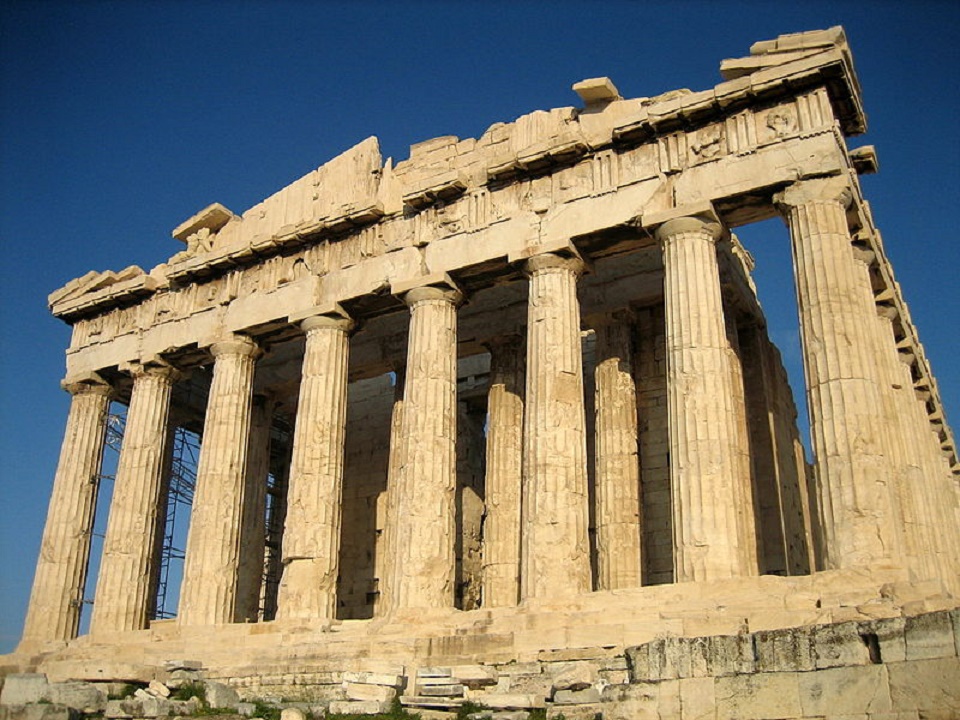
Greek architecture and art flourished. The architecture was distinguished by its highly formalized characteristics, both of structure and decoration. A style of architecture that were to influence the Romans later in history as well as it still is today, not least in the United States.
The Persian Wars
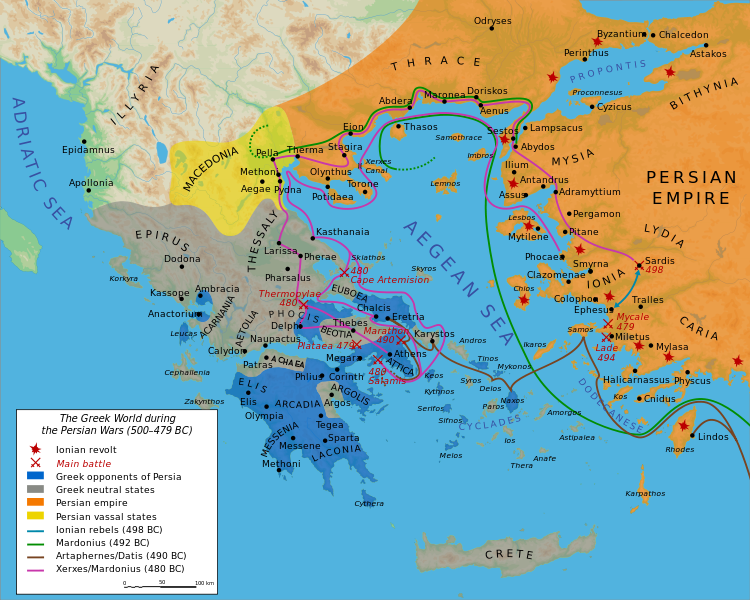
Classical Greece was also the scene of several devastating wars against Persia, and a long civil war within the Greek world itself. Xerxes I of Persia was the son and successor of Darius I. And he attempted to invade Greece just like his father before him. But despite Xerxes superiority in manpower, the Persian Empire suffered heavy casualties, and the famous rearguard action at Thermopylae and victories for the allied Greeks at the Battles of Salamis and Plataea – the Greeks would ultimately be victorious. The Greco-Persian Wars ended in 449 BCE when The Athenian-led alliance called The Delian League was successful in expelling Persian influence away from the Greek world.
The Peloponnesian War
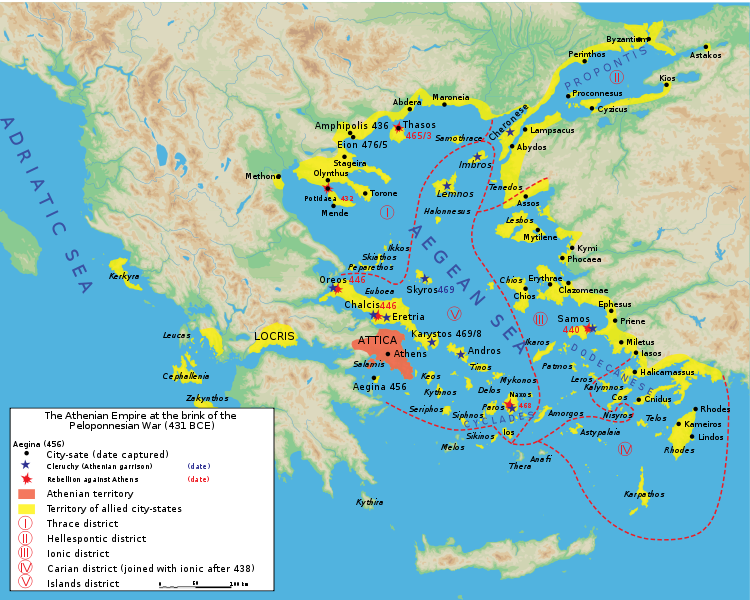
After Persia was finally and ultimately defeated in a series of devastating battles on both land and water, the dominant position of the maritime Athenian ‘Empire’ threatened the other city-states of the Greek world. Athens had an ever more dominant role within the Delian League with its mighty navy. It was a dominant role that was much deprecated by the other parties in the alliance. Conflicts broke out which that led to civil war, the so-called Peloponnesian War (431-404 BCE).
It was effectively a stalemate for much of the war, but Athens did suffer a series of setbacks. The Plague of Athens in 430 BCE was followed by a disastrous military campaign known as the Sicilian Expedition, these setbacks severely weakened Athens and ultimately led to its defeat. An estimated one-third of all Athenians died. An exhausted and ruined Greece was all that was left after the war.
Philosophy and Aftermath of Civil War
As Socrates apprentice, Plato (427-347 BCE) described the Civil War aftermath, “how and why had it gone so wrong?”. Plato saw a need for a new social model, a model as he explained, would give happiness to all its citizens.
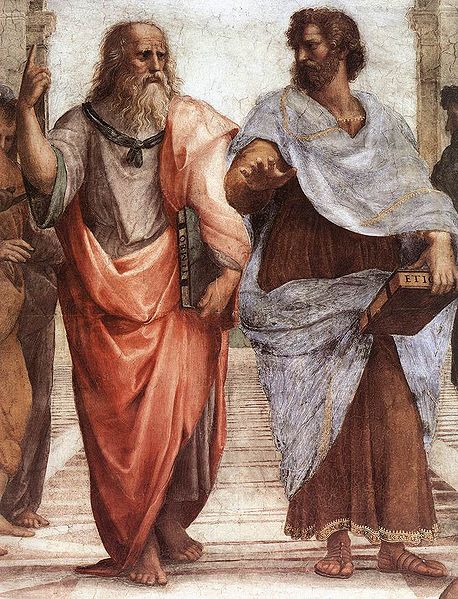
Plato presented his Utopian model of society, by which the top layer would consist of a political elite of well-trained philosophers that was to exert power over all the other people within society. This idea of this ideal state was presented in The Republic.
He modeled a society that should consist of three levels:
1. Productive, Workers — the laborer’s carpenters, plumbers, masons, merchants, farmers, ranchers, etc.
2. Protective, Warriors or Guardians — those who are adventurous, strong and brave; in the armed forces.
3. Governing, Rulers or Philosopher Kings — those who are intelligent, rational, self-controlled, in love with wisdom, well suited to make decisions for the community.
Thoughts can possibly be seen from the perspective of a kind of political dismalness prevailing in Greece after the war.
Besides The Republic, Plato along with his mentor, Socrates, and his student, Aristotle, helped to lay the foundations of Western philosophy and science.
After the civil war, Sparta was the dominant city-state, and just as Athens earlier in the Delian Alliance, so were Sparta to redo the same mistakes. It’s arrogance and imperialistic attitude made their allies turn against them. And an army of Thebes was to defeat Sparta in a battle 371 BCE.
Greece would remain divided until Philip II, the king of Macedonia. A kingdom just north of Ancient Greece, about where we today find Greece and its northern neighbor Macedonia. Philip saw his chance to conquer a broken Greece and he defeated a combined Theban and Athenian army in 338 BCE.
Greece was so largely defeated that Philip II was crowned as king of all of Greece and Macedonia. He was thus ruler over all of the Greek city-states, united under a single monarchical rule. Philip had seven children, one of which was named Alexander, commonly known as Alexander the Great.