Close Menu
Illustrated Curiosity
    Facebook X (Twitter) Instagram YouTube
    Illustrated Curiosity
    • Earth
    • Economics
    • Environment
      • Climate
      • Environmental Tech
      • Pollution
      • Wildlife
    • Health
      • Health Tech
      • Medicine
      • Nutrition
      • Exercise
    • History
      • Prehistory
      • Ancient History
      • Postclassical Era
      • Modern History
    • Humans
      • Human Brain
      • Psychology
    • Life
      • Animals & Plants
      • Genetics
      • Paleontology
      • Evolution
      • Genetic Engineering
    • Physics
    • Space
      • Astrobiology
      • Astronomy
      • Extrasolar Planets
      • Space Tech
      • Spaceflight
    • Technology
      • Artificial Intelligence
      • Energy
      • Engineering
      • Materials
      • Robotics
      • Vehicles
    Illustrated Curiosity
    Home » The Inuit Adapted to Cold Through Mixing with Archaic Humans
    Evolution

    The Inuit Adapted to Cold Through Mixing with Archaic Humans

    December 24, 2016No Comments4 Mins Read
    Share
    Facebook Twitter LinkedIn Pinterest Email

    The Inuit’s inhabiting the Arctic regions have a specific gene from the extinct Denisovan hominin – which allows them to withstand cold better. This, according to new research published in the scientific journal Molecular Biology and Evolution.
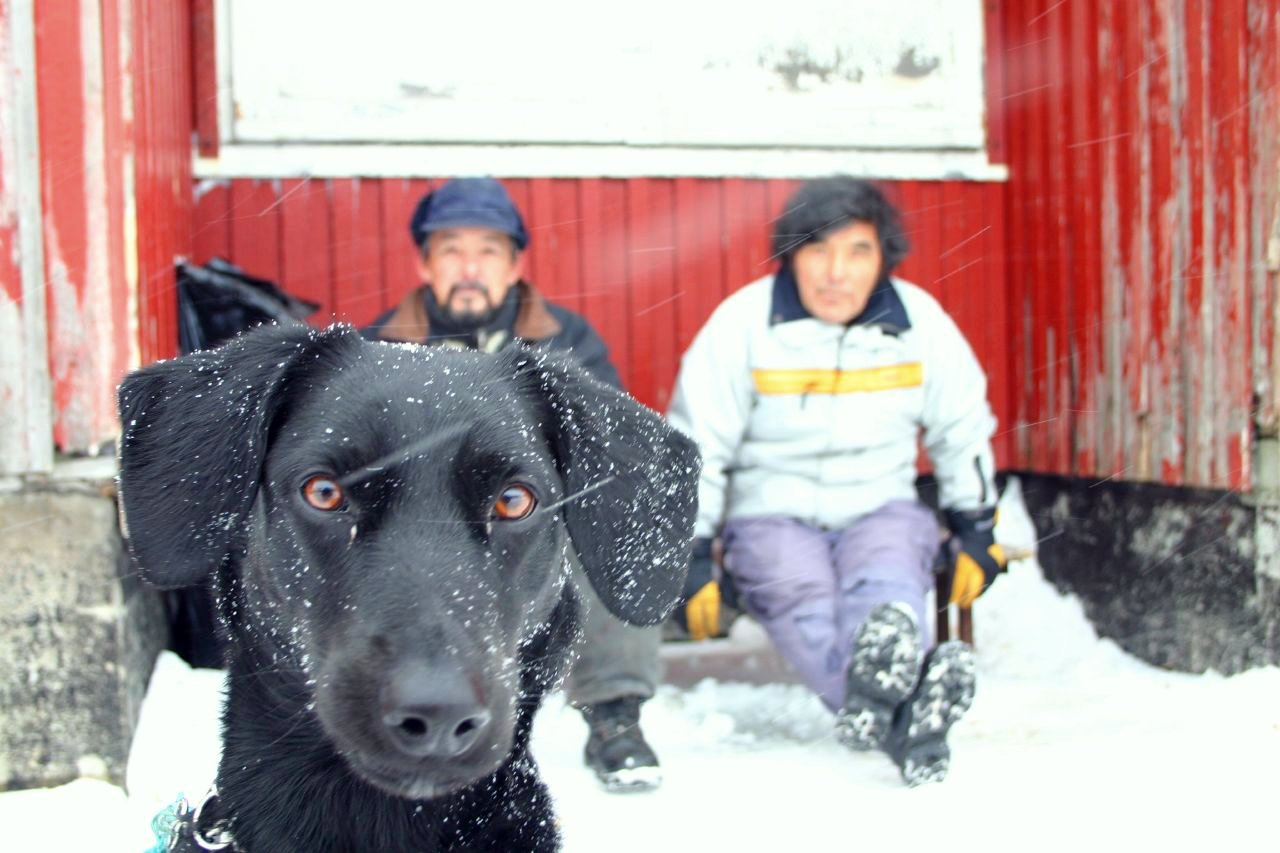
    A photobomb dog and two Native Greenlanders. Photo credit Thiago Fernandes / Flickr

    The Inuit homeland stretches from Alaska to Greenland on the northern hemisphere.

    Winter can be as cold as minus 40 degrees in these regions, and the reason to why the Inuit people for thousands of years have been so successful in this extreme climate may be due to their genes.
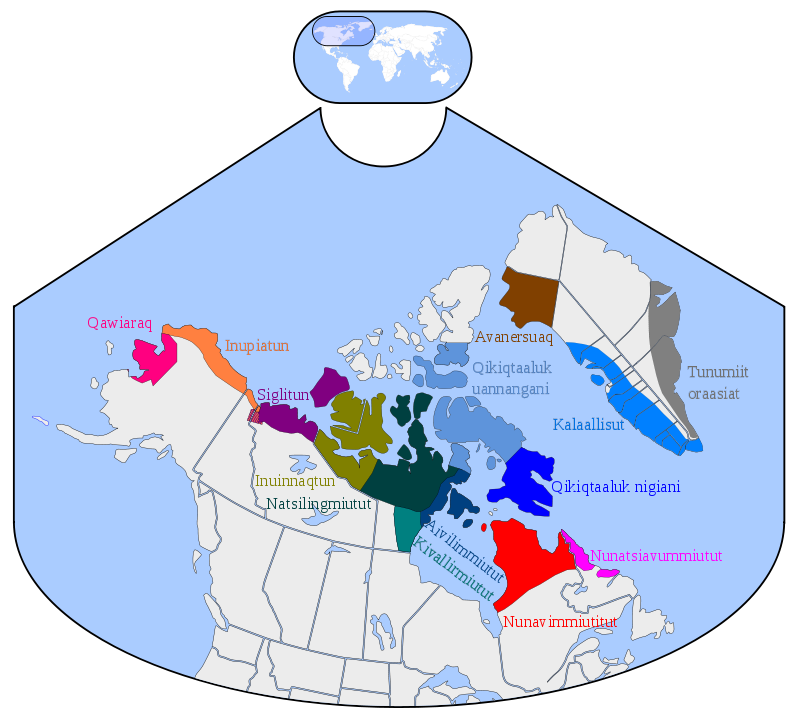
    Distribution of Inuit dialects.

    The new study may explain how the Inuit, the indigenous peoples of North America, Greenland and Siberia may have coped with the cold a little better, thanks to a specific gene – a gene that they received from the now extinct Denisova hominin, which was closely related to Neanderthals.

    The gene is called TBX15 and has in earlier studies been linked to what is called brown fat cells. These fat cells use a lot of energy and generate a lot of heat. Brown fat also contains more capillaries than white fat, to supply the tissue with oxygen and nutrients and distribute the produced heat throughout the body. The TBX15 gene appears to be more common among peoples who live in cold arctic climate.

    This gene variation was probably introduced into our genome 20,000 to 40,000 years ago and was favored by evolution. Where this genetic exchange took place is more difficult to pinpoint based on the little data currently available to science about the Denisovian hominin. So far, the only remains found is a piece of a finger and a tooth from a cave in Siberia.

    Researchers at the Max Planck institute for molecular biology in Germany were able to extract intact mitochondrial DNA (mtDNA) from the finger bone that showed it to be genetically distinct from the mtDNAs of Neanderthals and modern humans.

    Subsequent study of the nuclear genome from this specimen suggests that Denisovans shared a common origin with Neanderthals and that they inhabited a large region spanning from Siberia to Southeast Asia, and that they lived among and interbred with the ancestors of some modern humans, with about 3% to 5% of the DNA of Melanesians and Aboriginal Australians deriving from Denisovans.
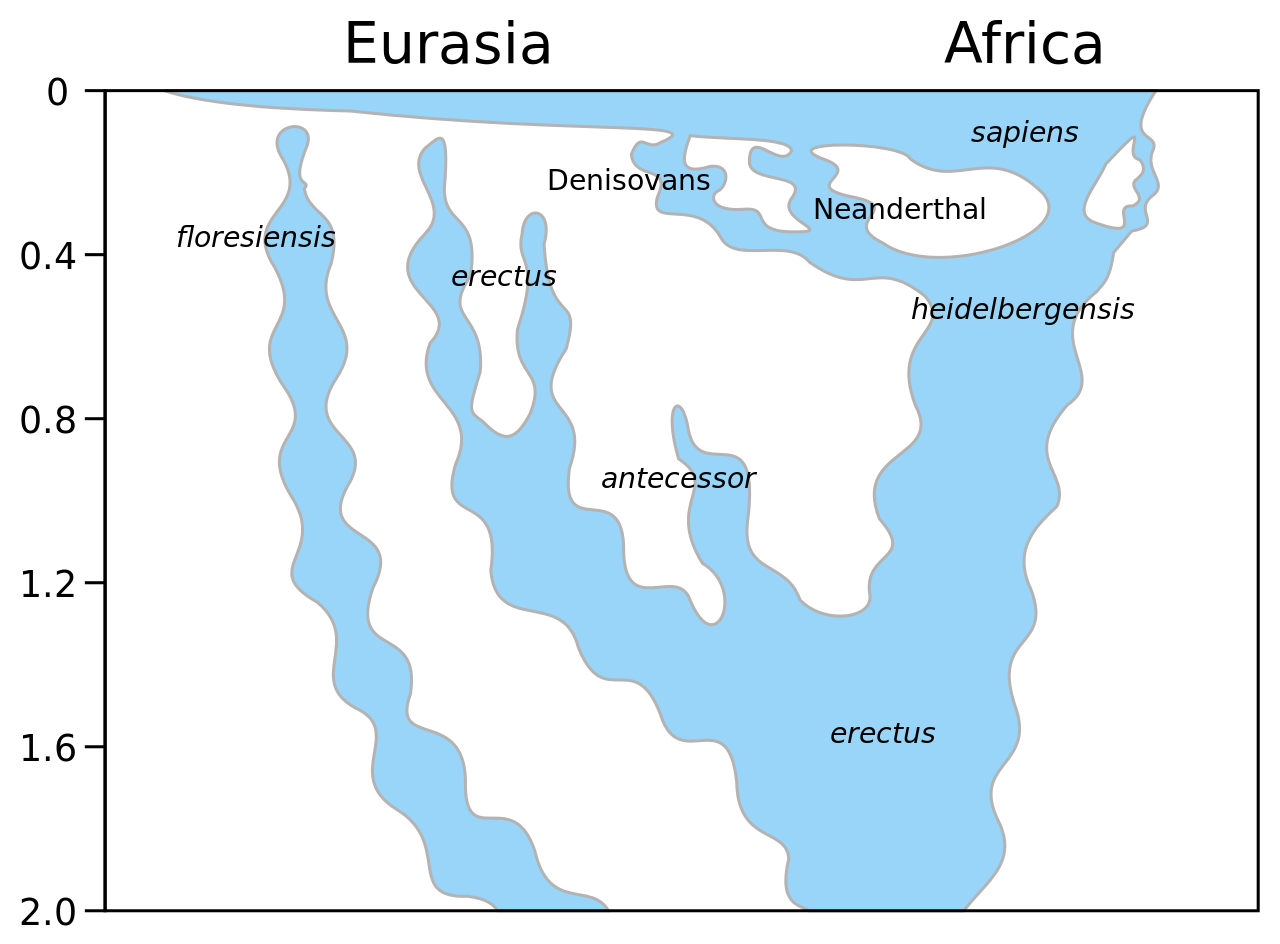
    Nature 485 (7396): 33–35. doi:10.1038/485033a.
    Chris Stringers’ hypothesis of the family tree of genus Homo, published in Stringer, C. (2012). “What makes a modern human”.

    Rasmus Nielsen is one of the researchers behind the new study, he is a professor of computational biology at the University of Berkeley in California and was previously involved in another study that showed how other genetic variants at different locations in the genome were unusually common among the Inuit. They found another gene that enables the Inuit to benefit more from omega-3 fats. The omega 3 fat molecule is special since it has a very low freezing point, making it beneficial for fish swimming in cold water.

    The processes behind the body’s metabolism occur in the cells. Fatty acid molecules are broken down and generate energy, including heat. The cell membranes are like a kind of pacemaker
    for the body’s metabolism, and how fast metabolism occur seems largely dependent on the membrane’s fatty acid composition. Polyunsaturated fatty acids, especially those found in fish oil, have a more branched structure than saturated animal fats.

    “Our study is perhaps the most extreme example to date of a genetic adaptation to a specific diet,” said computational biology professor Rasmus Nielsen of the University of California, Berkeley and the University of Copenhagen.

    “The mutations we find seem to compensate physiologically for a large intake of animal fat and are largely an adaptation to a lifestyle in which you have a high-caloric intake of fat from marine mammals, and possibly also from other mammals.”

    The researchers will now continue to analyze the newly identified TBX15 gene to try and achieve a better understanding of the role TBX15 gene have played for Denisovans.

    References:

    Fernando Racimo et al. Archaic adaptive introgression into TBX15 / WARS2. Molecular Biology and Evolution, in 2016.

    Matteo Fumagalli1,2,*, Ida Moltke3,*, Niels Grarup4, Fernando Racimo et al. Greenlandic Inuit show genetic signatures of diet and climate adaptation Science 18 Sep 2015: Vol. 349, Issue 6254, pp. 1343-1347 DOI: 10.1126/science.aab2319
    Homo Denisovan Human Evolution Omega 3
    Share. Facebook Twitter Pinterest LinkedIn Tumblr Email Copy Link

    Related Posts

    Use of Evolution to Design Molecules Nets Nobel Prize in Chemistry for 3 Scientists

    October 4, 2018

    Offspring of Neanderthal and Denisovan Identified for First Time

    August 28, 2018

    This Is How the Bottlenose Dolphin Avoids Divers’ Disease

    August 14, 2018

    Indonesian Divers Have Evolved Bigger Spleens to Hunt Underwater

    May 7, 2018

    These Skates Are Made for Walking

    February 23, 2018

    Modern Humans have Even more Neanderthal DNA than we thought

    October 6, 2017
    Recent Posts
    • How the End of Bretton Woods Reshaped Our Economies — and Our Politics
    • Can the U.S. Really Handle 250% Debt-to-GDP? Why Jackson Hole’s Daring Paper Is Wrong
    • Japan’s Fiscal Trap: What Happens If Austerity Is No Longer an Option?
    • The Rise of Range Extended Electric Vehicles (REEVs): A New Era of Hybrid Mobility
    • The Great Capital Rotation: A Shift from U.S. Treasuries to Gold and Real Assets
    • The Hidden Risks of Short-Term Debt: A Balancing Act in U.S. Fiscal Policy
    • The Looming U.S. Debt Spiral: Understanding the Risks
    • The Looming Recession: Seven Economic Indicators Flashing Red for 2025
    • Europa Clipper: NASA’s Mission to Unlock the Secrets of Jupiter’s Icy Moon
    • Could Hedge Funds Cause Chaos in the U.S. Treasury Market? And What About Inflation?
    © 2025 Illustrated Curiosity

    Type above and press Enter to search. Press Esc to cancel.

    This website uses cookies to improve your experience. We'll assume you're ok with this, but you can opt-out if you wish.Accept Reject Read More
    Privacy & Cookies Policy

    Privacy Overview

    This website uses cookies to improve your experience while you navigate through the website. Out of these, the cookies that are categorized as necessary are stored on your browser as they are essential for the working of basic functionalities of the website. We also use third-party cookies that help us analyze and understand how you use this website. These cookies will be stored in your browser only with your consent. You also have the option to opt-out of these cookies. But opting out of some of these cookies may affect your browsing experience.
    Necessary
    Always Enabled
    Necessary cookies are absolutely essential for the website to function properly. This category only includes cookies that ensures basic functionalities and security features of the website. These cookies do not store any personal information.
    Non-necessary
    Any cookies that may not be particularly necessary for the website to function and is used specifically to collect user personal data via analytics, ads, other embedded contents are termed as non-necessary cookies. It is mandatory to procure user consent prior to running these cookies on your website.
    SAVE & ACCEPT