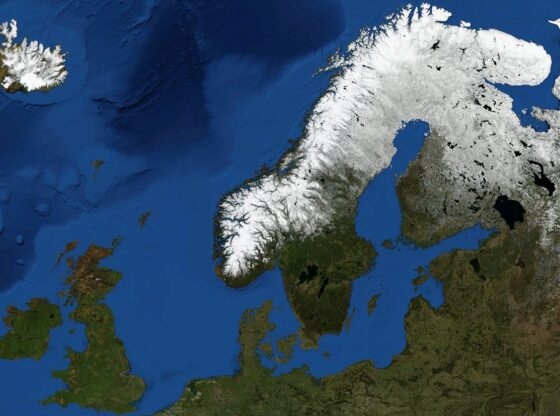

A new study aimed to assess the DNA heritage of all Europeans using DNA from several ancient individuals and from more than 2,000 modern Europeans.
The study reveals that all Europeans are a mix of hunter-gatherers and farmers arriving via the Middle East and the Near East many thousands of years ago. It also reveals that later larger immigration’s to Europe was by people who were also related to the indigenous peoples of the Americas.
Prehistoric DNA
The DNA indicates that Europe was populated in three large waves of immigrating Homo Sapiens, this is contrary to previous belief that there were only two waves in total.
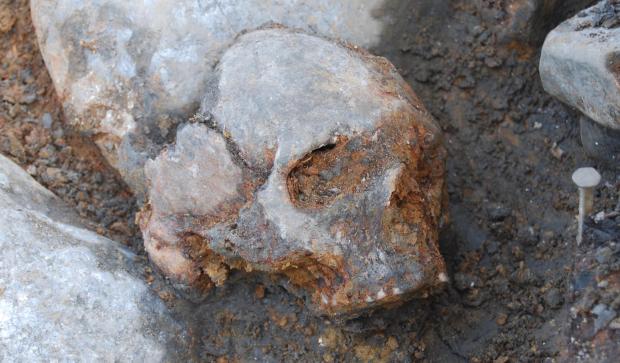
Johannes Krause is a professor of archaeogenetics at the Eberhard Karls University of Tübingen, Germany. He and his team mapped DNA from ancient peoples around Europe. For example, they extracted DNA from bones of an 8,000-year-old corpse found at a burial site on the bottom of a small lake in Sweden. Another ancient corpse was a 7,000-year-old farmer found in Germany, see featured image to the left.
Krause concludes that all modern Europeans are a mixture of three genetic components. Excluding those who are unable to trace their ancestors to Europe before modern migrations and globalization.
Three Waves
The first humans who arrived in Europe more than 40,000 years ago were hunters and gatherers. Later, around 8,000 years ago, the second wave of immigrating humans came via the near East and the Middle East and brought agriculture to the European continent.
These two waves have been well established by previous scientific evidence. But this new study shows that there was a third wave of humans moving into Europe at the beginning of the bronze age. These humans came from the steppe lands of eastern Europe and Asia and arrived in Europe less than 7,000 years ago.
This last group of European ancestors came via Siberia and thereby also constitute a genetic link to the first Americans. Making Europeans actually more closely related to Native Americans than people living in Southeast Asia, as America was first colonized via northern Asia over the Bering land bridge.
“It seems clear now that the third group linking Europeans and Native Americans arrives in Central Europe after the early farmers,” explains Johannes Krause from the University of Tübingen and director of the Max Planck Institute for History and Sciences in Jena, Germany. “We are however not sure yet when the Northern Eurasian component enters central Europe”
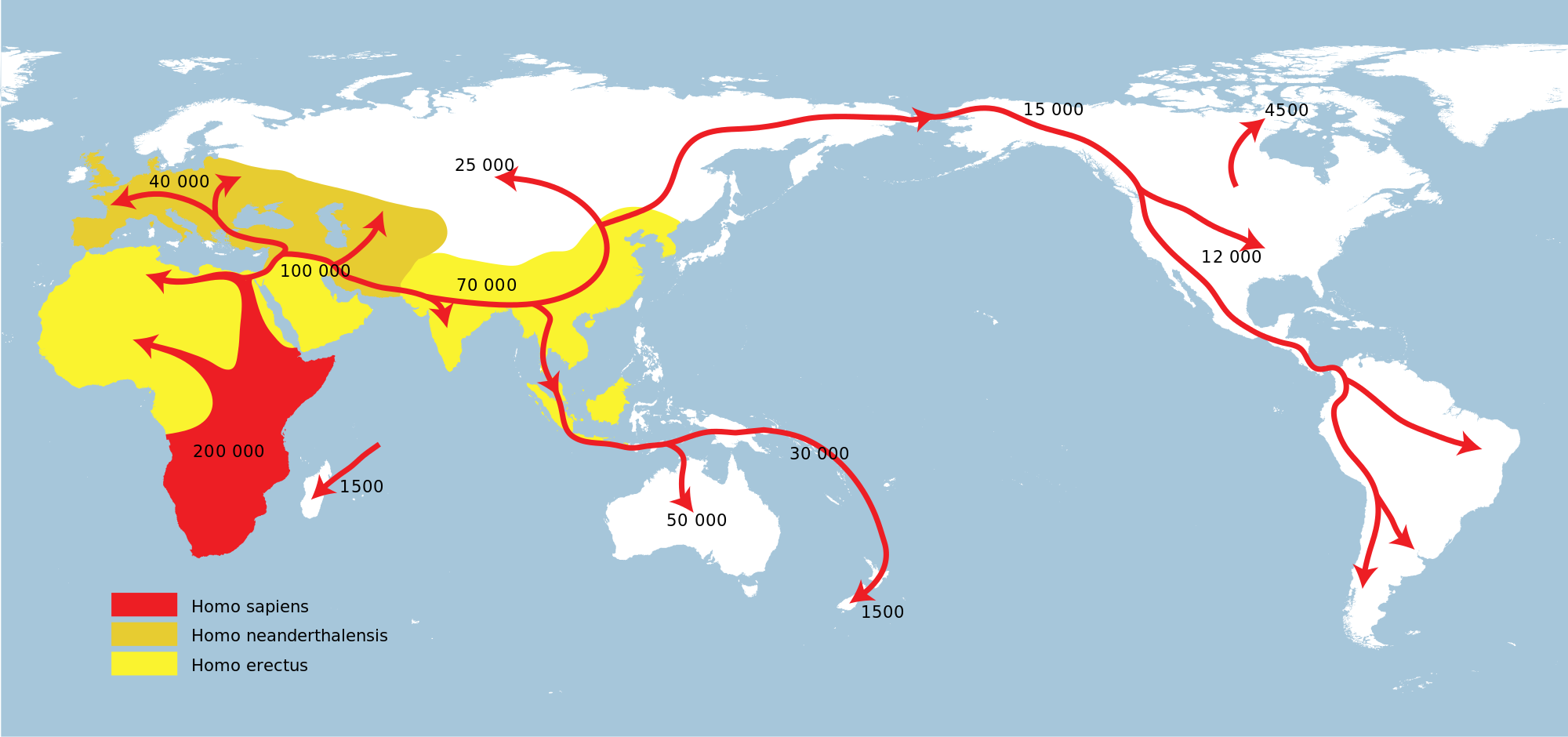
After this last wave of immigrants arriving during the Bronze Age, the genetic makeup of Europe remained largely stable. With no signs of any major migration until the globalization and population movements of the modern era.
Blue Eyes and Blonde Hair
The researchers made another major finding. The typical northern European appearance with fair skin, hair, and blue or green eyes appear to have existed in Europe before any of the later migrations. It was previously thought that these genetic traits resulted from mutations among the later immigrating agricultural humans. As fair skin produce more vitamin D. The previous notion was that agricultural humans had adapted to less meat and therefore less dietary vitamin D and were, therefore, more dependent on receiving vitamin D from sunlight.
But since blonde hair and blue eyes existed among the first humans in Europe, before later immigrants, the adaptations to less sunlight must be much older. The first humans migrating into Europe were hunter and gatherers, and they too must have suffered from vitamin D deficiency. Even though they ate a diet more abundant in vitamin D compared to later immigrating humans. These first Europeans were probably who first developed these quite unique European traits of appearance.
Mitochondrial DNA
Recent genetic studies of Mitochondrial DNA (mtDNA or mDNA), the DNA located in mitochondria, provides us with more evidence about these early migrating human populations. Differences in human mitochondrial DNA haplogroups can define human mitochondrial DNA and be used to represent the major branch points on the historical mitochondrial phylogenetic tree. To enable us to understand the evolutionary path of the female lineage and trace the inheritance of modern humans back to human origins in Africa and our subsequent spread around the globe. These studies indicate that the first Europeans belonged to Haplogroup U.
This is the oldest mtDNA in Europe that’s Homo Sapien with an estimated age being 50,000 years old but could be as old as 60,500 years. So the presence of haplogroup U5 in Europe pre-dates the expansion of agriculture in Europe. Haplogroup U5 is today found throughout Europe with an average frequency ranging from 5% to 12% in most regions. Most common in north-east Europe with nearly half of all Sami and one-fifth of Finnish maternal lineages belong to U5 as shown in among other studies, A recent genetic link between Sami and the Volga-Ural region of Russia.
Neanderthal Origin?
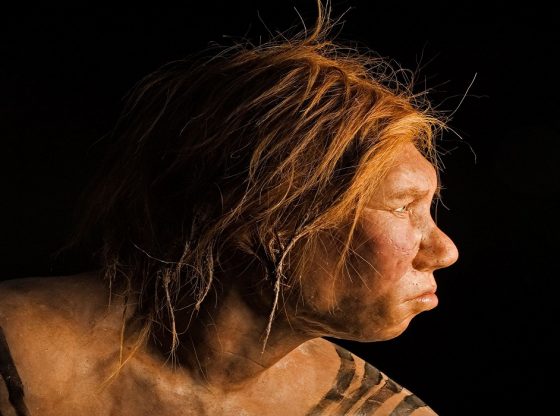
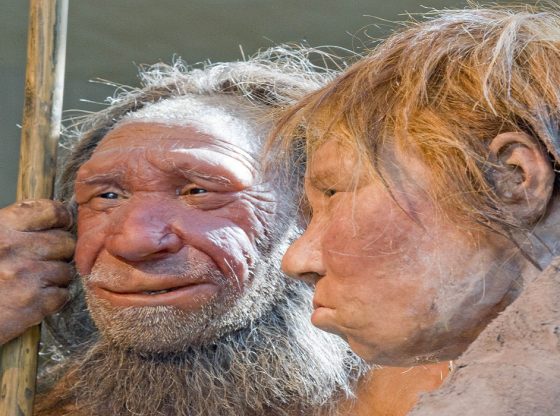
It can also be hypothesized that many northern European traits are in fact a genetic heritage from Neanderthals. As Neanderthals existed in Europe for many hundreds of thousands of years longer than Homo Sapiens. They had a head start of about 200,000 years of evolution and potential adaptation to a colder and darker Europe.
As shown in more recent research, most Europeans have a few percentage of Neanderthal DNA. And as a 2007 genetic study A Melanocortin 1 Receptor Allele Suggests Varying Pigmentation Among Neanderthals suggest, some Neanderthals may have had red hair and blond hair, along with a light skin tone.
The study Ancient human genomes suggest three ancestral populations for present-day Europeans has been published in this week’s issue of Nature.
_______________
A Melanocortin 1 Receptor Allele Suggests Varying Pigmentation Among Neanderthals
Ancient human genomes suggest three ancestral populations for present-day Europeans
The Western and Eastern Roots of the Saami—the Story of Genetic “Outliers” Told by Mitochondrial DNA and Y Chromosomes
Genetics and the population history of Europe
A recent genetic link between Sami and the Volga-Ural region of Russia
______________________________