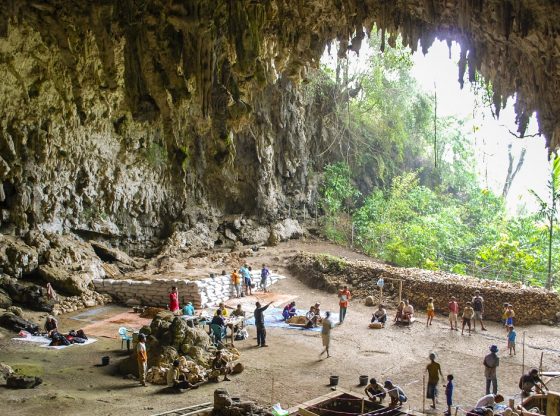

A single cave in the mountains of Siberia has produced a string of remarkable archaeological discoveries. In 2008, scientists there found a 41,000-year-old pinky bone, whose DNA matched neither humans nor Neanderthals. Instead, it belonged to a previously unknown group of hominins they named Denisovans.
Since then, traces of Denisovan DNA have been found in humans living today in Asia and Melanesia—suggesting that long ago, humans and Denisovans met, had sex, and had children.
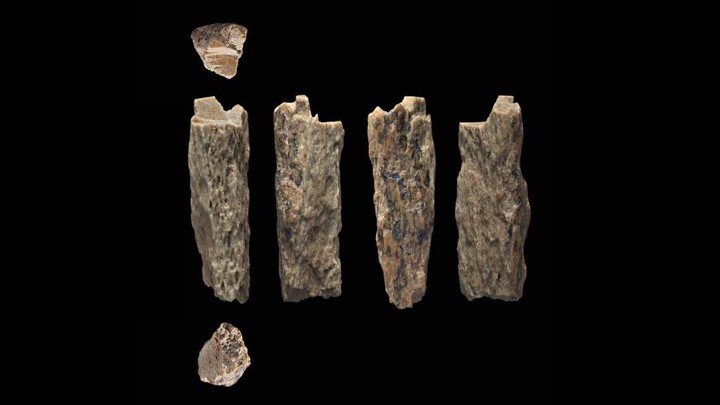
Now, a bone fragment from the same Siberian cave, perhaps from a teenage girl, has revealed the first known hybrid of these groups, a new study concludes. The finding confirms interbreeding that had been only hinted at in earlier genetic studies.
The landmark find, published this week in Nature, marks the first definitive evidence for offspring that came directly from interbreeding of these ancient species and is helping shape our understanding of hominin interactions.
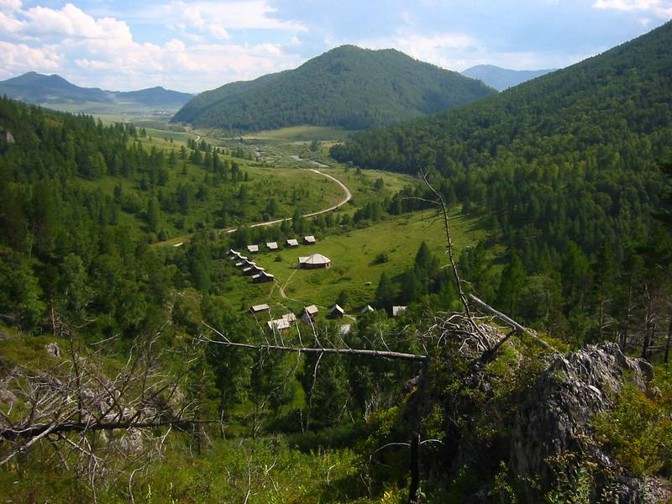
The team, led by palaeogeneticists Viviane Slon and Svante Pääbo of the Max Planck Institute for Evolutionary Anthropology in Leipzig, Germany, conducted the genome analysis on a single bone fragment recovered from Denisova Cave in the Altai Mountains of Russia.
According to the genetic analysis, the fragment belonged to a young, potentially early-teenage girl who died about 90,000 years ago. The fragment marks the first time scientists have found evidence of an ancient human whose parents belonged to two extinct hominin groups: The girl’s mother was a Neanderthal and her father was a Denisovan.
“If you had asked me beforehand, I would have said we will never find this, it is like finding a needle in a haystack,”
“And then we stumbled across it. I was very surprised.”
– Svante Pääbo, director of the Max Planck Institute for Evolutionary Anthropology in Leipzig, Germany.
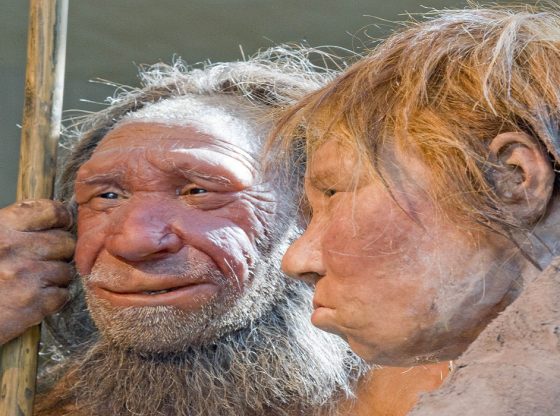
Neanderthals and Denisovans split off from each other some 400,000 years ago, making them far more distinct than any two groups of modern humans living today. Yet both appeared to have lived in or around the Denisova Cave.
Neanderthal bones ranging from 200,000 to 40,000 years old has been unearthed mostly in western Eurasia and Denisovans is so far only known from fossils ranging from 200,000 to 30,000 years old found in eastern Eurasia.
However, genetic analysis comparing the Denisova hominin genome with those of six modern humans – a South African, a Nigerian, a Frenchman, a Papua New Guinean, a Bougainville Islander and a Han Chinese – showed that between 4 and 6% of the genome of Melanesians (represented by the Papua New Guinean and Bougainville Islander) derives from a Denisovan population; a later study puts the amount at 1.11% (with an additional contribution from some different and yet unknown ancestor).
Scientists have little idea what the Denisovans looked like, but some hints have emerged. A handful of Denisovan teeth recovered from the cave are much larger than those of Neanderthals, and work that will be published soon finds that a piece of Denisovan skull is thick compared with other ancient humans.
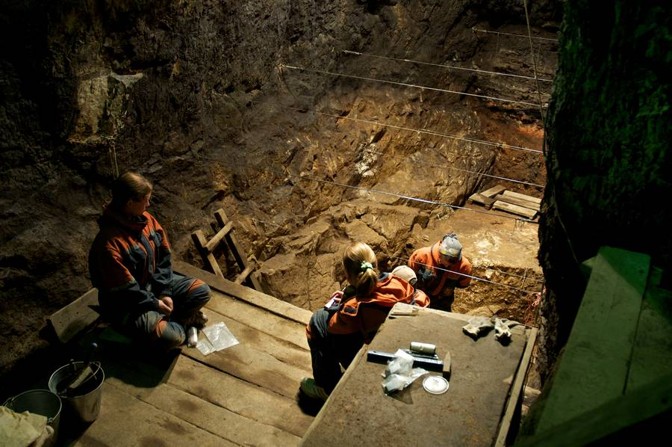
The researchers are now analysing sediment from the Denisova cave for traces of DNA that will clarify when different groups of humans sheltered in the refuge. Somewhere in the cave there might be more pieces of bone that reveal further details of the girl’s story.
Reference:
Viviane Slon, Fabrizio Mafessoni, Benjamin Vernot et al. The genome of the offspring of a Neanderthal mother and a Denisovan father, Published: 22 August 2018 Nature